Key Takeaways
- Inspect trees seasonally for snow, ice, wind, heat, pests, disease, and storm damage.
- Watch for warning signs such as cracks, hanging limbs, cavities, root lifting, deadwood, and sudden leaning.
- Protect young trees with proper watering, mulch, staking, and protection from lawn equipment.
- Diagnose problems before treatment, since similar symptoms can have different causes.
- Use safe storm practices and stay away from downed trees or branches touching power lines.
- Prepare trees before winter by addressing deadwood, weak branches, and other visible concerns.
- Call a qualified professional when trees are large, damaged, leaning, near structures, or difficult to assess safely.
Rochester trees face a full range of Midwest conditions, including snow loading, ice, spring thaw, summer heat, compacted soil, wind, and severe storms. A seasonal routine helps homeowners spot developing concerns before a broken limb, declining canopy, or root problem becomes a larger safety or property issue. For concerns that are beyond safe ground-level maintenance, an arborist Rochester, MN, can provide a more informed next step. ArborWise Tree Management serves Rochester and nearby communities with science-based tree evaluations, pruning, removals, planting, stump grinding, and plant health care. Its ISA-certified arborists are equipped to assess tree health, structural conditions, local soils, weather exposure, and safety risks around homes, sidewalks, and driveways.
Winter: Check for Snow, Ice, and Structural Damage
After heavy snow or freezing rain, inspect trees from the ground. Look for cracked limbs, split branch unions, hanging wood, fresh trunk damage, or a tree that appears to be leaning more than before. Pay particular attention to limbs over roofs, parked vehicles, sidewalks, and areas where people regularly walk. Do not climb a damaged tree or attempt to cut a large suspended limb. Snow and ice can hide fractures, and a branch may shift unexpectedly as it thaws. Keep family members and pets away from the area, photograph the damage from a safe distance, and arrange an inspection when a large limb or trunk is involved. If any branch is touching a power line or has fallen onto one, stay clear and contact the utility provider immediately.
Early Spring: Inspect Roots, Trunks, and Branches
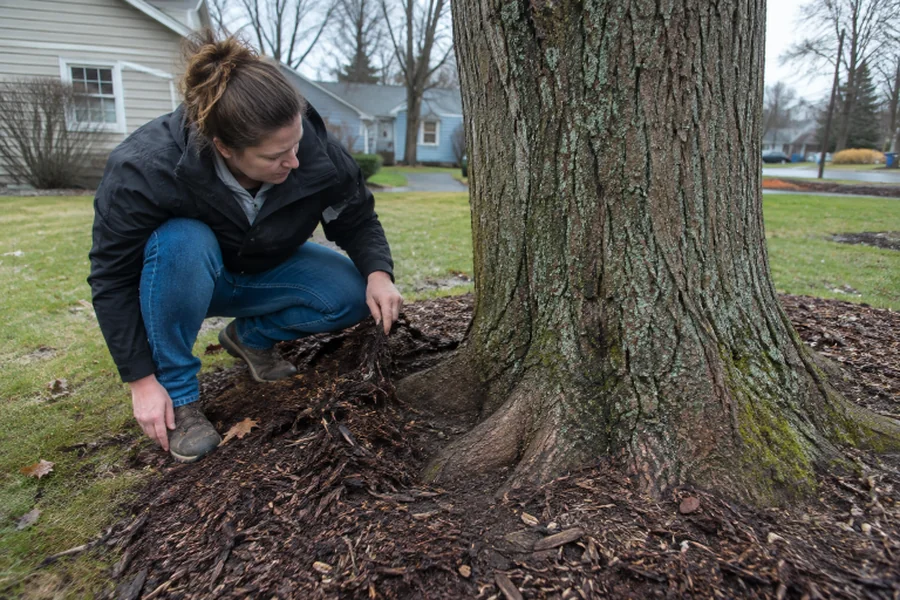
Before leaves fill in, it is easier to see a tree’s structure. Walk around each tree and check for loose bark, trunk cracks, broken branch tips, cavities, fungal growth near the base, and soil that has lifted around the root area. Winter injury can be subtle, so compare the tree’s appearance with that of the previous year when possible. Check the base of the trunk, too. Mulch piled directly against bark can hold excess moisture against the tree and conceal problems. Pull mulch back so the trunk flare is visible, then maintain a broad mulch ring rather than a narrow mound. Avoid random cutting when you find broken branches. Proper pruning cuts protect the branch collar and reduce unnecessary wounds.
Late Spring: Support New Growth Without Overwatering
Newly planted and young trees need special attention as temperatures rise. Water slowly enough for moisture to soak into the root zone rather than run across the lawn. A two- to four-inch mulch layer can help conserve soil moisture and limit competing weeds, but it should not touch the trunk.
Young Tree Checklist
- Check soil moisture below the mulch before watering.
- Inspect ties, stakes, and trunk guards for rubbing or restriction.
- Refresh mulch only where it has thinned or washed away.
- Remove grass and weeds that compete close to the trunk.
- Watch for chewed leaves, leaf spots, wilt, or unusual discoloration.
Keep lawn mowers and string trimmers away from trunks. Repeated cuts to the bark can damage the tissues that move water and nutrients through a young tree.
Summer: Watch for Heat Stress, Pests, and Disease
Summer is the time to notice changes in the canopy. Wilting, early leaf drop, scorched leaf edges, dead branch tips, small holes, cankers, thinning needles, and unusual leaf color all deserve attention. One symptom does not automatically identify one cause. Drought, insects, disease, compacted soil, root injury, and herbicide exposure can produce similar-looking problems. Record when symptoms first appeared and whether they affect one branch, one tree, or several trees on the property. Trees near streets, driveways, building projects, and heavily used lawns can experience extra stress from soil compaction, salt exposure, grade changes, and root disturbance. A diagnosis should come before fertilizer, pesticide, or other treatment is selected.
Storm Season: Know Who Handles Tree Damage
Storm cleanup can be confusing when private yards, public boulevards, sidewalks, streets, and utility corridors meet. In Rochester, Minnesota, private property owners are generally responsible for trees and debris on their property, while the City focuses on restoring safe access in public rights-of-way. The City’s storm tree response guidance for homeowners explains how the City addresses blocked streets and sidewalks, public trees, private debris, and power-line issues.
Quick Post-Storm Checklist
- Stay away from downed or contacted utility lines.
- Check whether a street or sidewalk is blocked.
- Look overhead for hanging or partially detached limbs.
- Do not use a chainsaw on an unstable, split, or elevated tree.
- Document property damage for insurance purposes.
- Request an inspection if major cracks or a new lean appear near a structure.
Fall: Prepare Trees Before Winter Returns
Fall is a practical time to review trees before snow makes defects harder to see. Look for deadwood, weak branch unions, damaged guards, loose stakes, dry soil around recent plantings, and mulch that has drifted against the trunk. It is also a good time to consider spacing, root flare exposure, and whether a tree has enough room to mature without conflicting with a building or overhead utility. Homeowners in Rochester planning to add trees along a public boulevard should begin by reviewing the City’s boulevard tree-planting permit requirements. Boulevard trees are public trees, and the permitting process helps ensure the selected species and planting location are appropriate for the available space.
Common Rochester Tree Problems to Watch For
Ash trees may show crown thinning and dieback associated with the emerald ash borer. Oaks can develop health concerns during the growing season, while bur oaks and other broadleaf trees may show leaf diseases that cause spotting or premature browning. Evergreens can thin or lose needles for several reasons, including needle diseases and site stress. Construction damage also deserves attention. Root cutting, compacted soil, added fill, altered drainage, and grade changes can affect a tree long after work ends. Structural warning signs, such as included bark, long trunk cracks, mushrooms at the base, cavities, dead branches, and poor branch unions, should be evaluated rather than ignored.
When to Call a Professional
Arrange professional help when a large tree is close to a home, a tree leans toward a target, limbs are hanging after a storm, extensive deadwood is present, or disease is suspected. Ask whether the provider is insured, what work is recommended, whether removal is necessary, how the site will be protected, and how cleanup will be handled.
Simple 2026 Tree Care Checklist
- Winter:Check for ice damage, cracks, and hanging limbs.
- Spring:Inspect trunks, roots, mulch, and branch structure.
- Summer:Monitor watering needs, pests, leaf changes, and heat stress.
- After storms:Identify utility hazards, blocked access, and unsafe limbs.
- Fall:Address obvious deadwood and prepare new trees for winter.
- Year-round:Keep notes and photos of meaningful changes in each tree.
Common Questions
What is the best time to prune trees in Rochester, Minnesota?
Many routine pruning tasks are easier to plan during dormancy, when branch structure is visible. However, broken or hazardous branches should be addressed when they are discovered, and timing can vary by tree species and disease risk.
How can homeowners tell whether a tree is dangerous?
A new lean, major trunk crack, hanging limb, root lifting, large dead branches, or a defect over a target area are reasons to seek an assessment.
Should a storm-damaged tree always be removed?
No. Some trees can be pruned and retained, while others have damage that is severe enough to pose an unacceptable risk. The location, extent of cracking, root stability, and remaining structure all matter.
Consistent attention is more valuable than a one-time inspection. By checking trees season by season, Rochester homeowners can identify concerns earlier, protect their property, and support a healthier urban forest through 2026 and beyond.
Conclusion
Rochester tree care requires attention year-round because snow, ice, wind, heat, storms, and changing soil conditions can affect trees in various ways. Seasonal inspections can help homeowners identify cracks, deadwood, root problems, disease symptoms, and structural concerns before they become larger safety or property issues. Proper watering, mulching, pruning, and protection of young trees can also support healthier growth. After severe weather, homeowners should prioritize safety and avoid handling unstable trees, large limbs, or anything involving power lines. When a tree shows significant damage or requires work beyond safe ground-level maintenance, professional assessment can help determine the appropriate next step. With consistent monitoring and timely care, Rochester homeowners can better protect their property while supporting healthy trees through 2026 and beyond.