

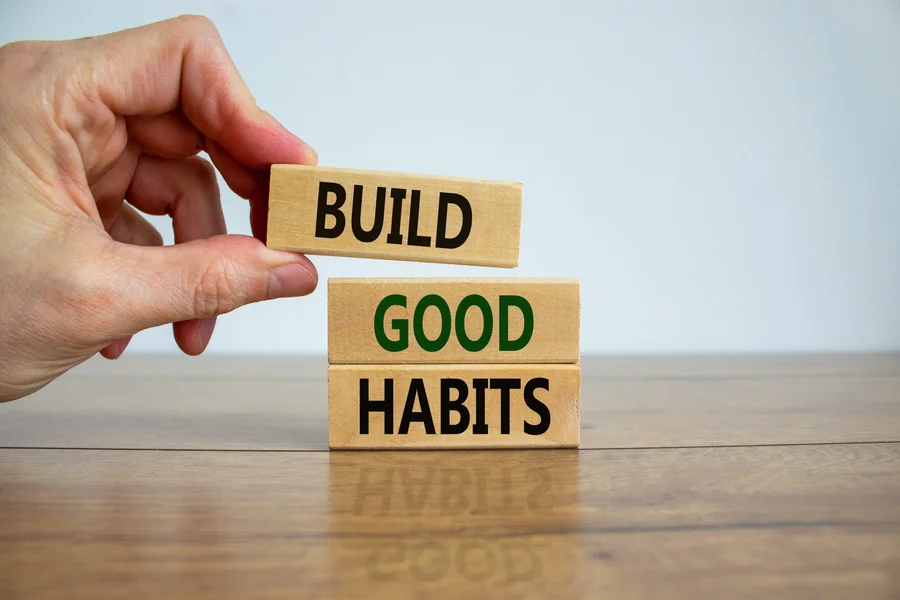
Positive daily habits are small habits that are repeated over and over throughout the day and that ultimately influence the way one thinks, feels, and acts on a daily basis. These can be as simple as getting up at the same time, having water first thing in the morning, making a list of tasks, or going for a short walk. Habits work because they build up over time, not one-off efforts. Little things make a difference and that difference can make a difference in health, productivity and outlook over the long haul. It’s not about how hard you work, it’s about how consistently you do it!
Why Daily Habits Matter More Than Willpower
People think that the key to success is either motivation or willpower. Actually habits do the bulk of the work. Willpower fluctuates. There are days you feel like doing, and other days you don’t. Habits take away that uncertainty, since once cultivated, they operate on auto-pilot.
Once a behavior turns into a habit, your brain doesn’t even consider it a choice. This is why it’s not a hard sell to brush your teeth every morning. This is also the case with exercise, reading or even a healthy diet. You know that you can do it, whether you are in a good mood or full of energy.
That’s also the reason why people tend to fail when they decide to change their lives purely on the basis of determination, first. Motivation helps you get started, but habits get you through.
Start Small to Build Long-Term Consistency
Some of the most common pitfalls are doing too much at once. For instance, resolve to get up at 5am, to exercise for an hour a day, meditate, and read every day from tomorrow. This typically fails in a week.
Rather, begin with habits that are minimal in size and appear almost too simple:
- After waking up, drink one glass of water
- Record one thing to do for the day
- Stretch x 2 minutes
- Read one page of a book
All these micro-habits lower resistance. Automaticity can be developed naturally once they are acquired. The idea is similar to one in behavioral science: habit stacking, which involves piggybacking on an established habit to increase its effectiveness.
Create Triggers That Make Habits Automatic
Habits need a cue, or trigger, to get started. If you are not, then nothing good will remain. A trigger can be a time of day, a location or an established routine.
For example:
- Once you have brushed your teeth, try out 10 pushups!
- Drink a glass of water before using the telephone.
- Immediately following breakfast, make a note of what your No. 1 priority for the day will be.
The trigger doesn’t have to be complicated. It simply requires being uniform. As time goes on, the association between the trigger and the action is made, and the act of the behavior becomes automatic, instead of something you have to remember to do.
Track Progress Without Becoming Obsessive
While tracking is important for you to identify patterns and hold yourself accountable to your goals, it should not become a pressure. A checklist or habit-tracking app, or a good old notebook will do. The aim is to identify patterns, rather than beat yourself up for the occasional day off.
Don’t consider a missed habit an intentional or inevitable failure. Consistency isn’t perfection, it’s the overall pattern. Often, a single day’s absence does not really count. Omitting a few days in a row, that’s what keeps momentum from building.
The key attitude to have here is don’t break the chain – try to not miss two days in a row, rather than trying to set an unrealistic goal that might create more stress than progress.
Adjust Habits as Your Life Changes
The idea of habit is not a rigid one. Things that work at one stage of life won’t work at another. What seems like a good habit on a quiet weekday may be void after a hectic travel routine or new job.
When the circumstances change, don’t give up the habit entirely, simply make the format change. If you have to switch up your workout routine, cut it back in the morning. If you find that reading at night is no longer helpful, try reading at lunchtime.
Habits that are flexible stick around. Rigid systems fail when they are subjected to pressure, but flexible systems are able to withstand the long-term stresses.
Common Mistakes That Derail Habit Building
Well-intentioned people find that habits are hard to overcome due to a few common errors:
- Changing too many behaviours at once—this overtaxes willpower and concentration.
- Focusing on motivation rather than systems (motivation wanes).
- Not taking small wins, which diminishes the motivation to maintain momentum.
- Getting too strict after a missed day, which can result in quitting altogether.
It’s easier to make a correction if you’re aware of these patterns in the early stages, so that you don’t become more entrenched in the habit.
Final Thought
Creating positive habits is not a quick fix. It’s about doing little things consistently, which add up to big things. Begin with something that’s achievable, link it to your current program and monitor progress but don’t be hard on yourself if it falls a little bit short.
These little changes over time can lead to improved health, focus and purpose in life. It’s straightforward, but it will take time. Be consistent; make changes as necessary; create gradual results!