

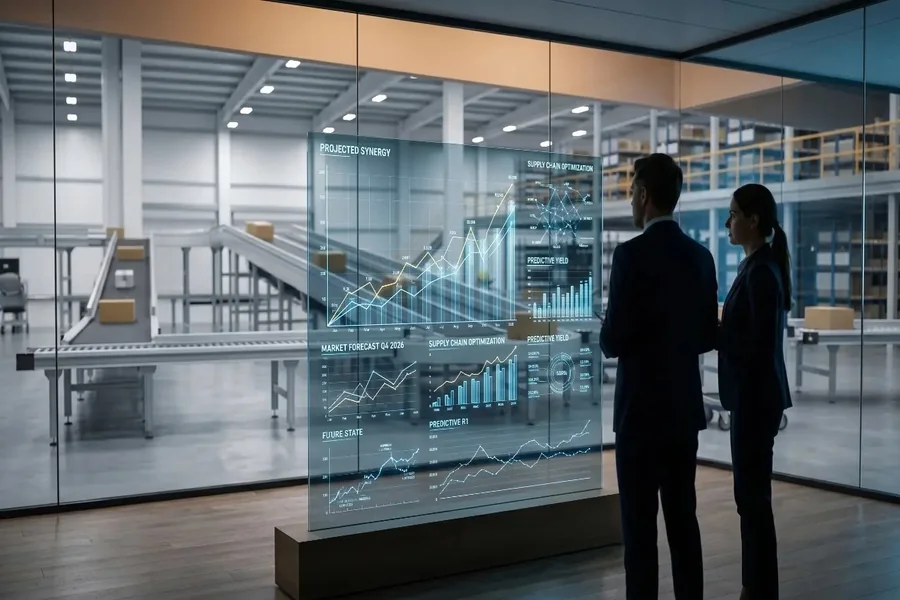
Forecasting has become one of the most important functions in modern society. Governments, businesses, investors, sports organizations, and researchers all rely on forecasts to make decisions about the future. While nobody can predict events with complete certainty, data analysts use increasingly sophisticated tools and techniques to identify patterns, estimate probabilities, and understand what may happen next.
The popularity of forecasting has grown significantly in recent years, partly thanks to the rise of online platforms and the expanding https://predictions.draftkings.com/, where participants use real money to express views on future outcomes. These markets have helped introduce the public to the idea that future events can be analyzed using data rather than simple intuition. Platforms such as Kalshi and DraftKings have contributed to this trend by allowing users to trade contracts based on economic, sporting, and cultural events.
The Foundation of Forecasting
At its core, forecasting is the process of using historical information to estimate future outcomes.
Data analysts begin by collecting large amounts of relevant information. Depending on the subject being studied, this may include economic indicators, weather records, consumer behavior data, financial reports, surveys, social media activity, or historical event outcomes.
The goal is to identify meaningful patterns. If a particular trend has occurred repeatedly under similar circumstances, analysts can use that information to estimate the likelihood of future events occurring in a similar way.
However, forecasting is not simply about looking at the past. Analysts must also consider changing conditions that may alter the result.
The Role of Statistics
Statistics remain one of the most important tools in forecasting.
Analysts use statistical models to measure relationships between variables and determine whether apparent patterns are meaningful or simply random occurrences. For example, economists may study employment figures, inflation rates, and consumer spending data to anticipate economic growth.
By measuring correlations and trends, analysts can produce probability-based forecasts rather than relying on guesswork.
Modern forecasting often focuses on likelihoods rather than certainties. Instead of saying an event will definitely happen, analysts are more likely to estimate a percentage probability that it will occur.
This approach acknowledges the uncertainty that exists in all future events.
Predictive Modeling
One of the most widely used forecasting methods is predictive modeling.
Predictive models use historical data to estimate future outcomes. These models can range from relatively simple equations to highly complex systems involving thousands of variables.
Businesses frequently use predictive models to forecast:
- Customer demand
- Product sales
- Inventory requirements
- Marketing performance
- Consumer behavior
Financial institutions rely on similar techniques to assess risks and identify investment opportunities.
The quality of these forecasts often depends on the quality and quantity of available data.
The Impact of Artificial Intelligence
Artificial intelligence has transformed forecasting capabilities in recent years.
Machine learning algorithms can analyze enormous datasets much faster than humans. These systems identify hidden relationships within data and adapt as new information becomes available.
Many modern forecasting systems use artificial intelligence to process:
- Financial market activity
- Consumer trends
- Weather patterns
- Logistics data
- Supply chain information
Rather than replacing human analysts, artificial intelligence typically serves as a powerful tool that helps experts make better-informed decisions.
The combination of human judgment and machine learning has significantly improved forecasting accuracy across many industries.
How Prediction Markets Contribute
Prediction markets have become an increasingly popular forecasting tool.
A prediction market allows participants to buy and sell contracts based on future outcomes. Contract prices effectively represent the collective probability assigned to an event by market participants.
For example, if a contract trades at $0.70, the market may be implying that there is roughly a 70% chance of that outcome occurring. Because participants have financial incentives to be accurate, many researchers believe prediction markets can aggregate information efficiently.
Industry growth has been substantial. Reports indicate that monthly trading volumes across leading platforms expanded dramatically during 2025 and 2026, reflecting increasing interest from investors, analysts, and the broader public.
Many organizations now monitor prediction markets alongside traditional forecasting tools.
Forecasting Economic Events
Economic forecasting is one of the most challenging and important applications of data analysis.
Analysts evaluate a wide range of indicators, including:
- Employment data
- Inflation reports
- Consumer confidence
- Manufacturing activity
- Interest rates
- Business investment
No single indicator determines future economic performance. Instead, analysts combine multiple sources of information to develop forecasts regarding growth, recession risks, spending patterns, and other important outcomes.
Economic forecasts help governments, central banks, businesses, and investors make strategic decisions.
Forecasting Weather and Natural Events
Weather forecasting represents one of the most visible examples of large-scale data analysis.
Meteorologists collect information from satellites, radar systems, weather stations, aircraft, and ocean sensors. This data is fed into sophisticated computer models that simulate atmospheric behavior.
Modern forecasting systems can process millions of calculations every second, allowing forecasters to estimate temperature changes, precipitation, storm development, and other weather-related events.
Although weather forecasts are not perfect, advances in computing power have significantly improved their accuracy over recent decades.
Business Forecasting
Companies increasingly rely on forecasting to maintain competitiveness.
Retailers forecast consumer demand. Airlines forecast passenger volumes. Manufacturers forecast production requirements. Technology firms forecast usage patterns and service demand.
Accurate forecasting helps organizations allocate resources efficiently while reducing operational costs.
Businesses that consistently make accurate forecasts often gain significant advantages over competitors because they can respond more effectively to changing market conditions.
Why Forecasts Sometimes Fail
Despite advances in data analysis, forecasting remains imperfect.
Unexpected events can quickly alter outcomes. Natural disasters, technological breakthroughs, economic shocks, geopolitical developments, and sudden changes in consumer behavior can all disrupt even the most sophisticated models.
Forecasts are also limited by the quality of available information. Incomplete, biased, or outdated data can reduce accuracy.
For this reason, experienced analysts typically view forecasts as guides rather than guarantees.
The Future is constantly changing
The science of forecasting continues to evolve rapidly. Improvements in artificial intelligence, computing power, data availability, and predictive modeling are helping analysts make increasingly informed predictions about complex real-world events.
While uncertainty will always exist, modern forecasting techniques provide valuable insights that help governments, businesses, researchers, and individuals make better decisions. Whether through statistical models, machine learning systems, or emerging prediction markets, the ability to analyze future possibilities has become one of the most influential capabilities in the modern data-driven world.