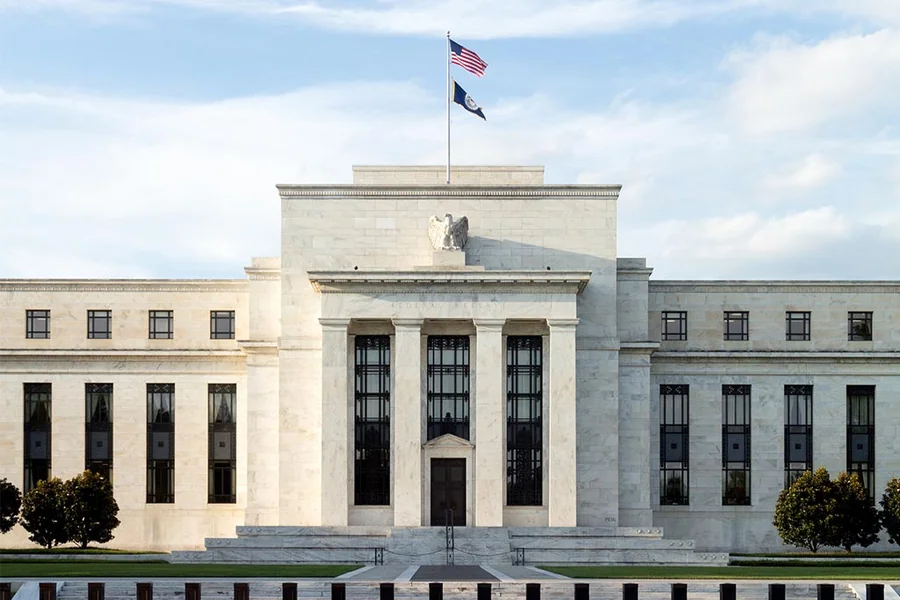
The Federal Reserve kept its benchmark rate on hold on Wednesday, October 28, yet two of its policymakers voted to raise it. The Federal Open Market Committee left the federal funds target range at 3.75% to 4.00% in a 10-2 vote in Washington, and futures-implied odds of a December increase climbed after the announcement. That leaves the last Federal Reserve decisions of 2026 centered on one question: is the hiking cycle finished, or does it have one more step?
For readers following the Fed interest rate decision for December, Fanatics Markets, a prediction markets platform within the broader Fanatics ecosystem, lists event-based contracts tied to the meeting’s outcome. This update walks through the vote, changes in market expectations, and data releases scheduled before December 9.
Key Takeaways
- The FOMC held the target range at 3.75% to 4.00% on October 28, its first pause since the September 16 quarter-point increase.
- Governor Lisa Cook and Cleveland Fed President Beth Hammack dissented, each preferring a 25-basis-point hike.
- CME FedWatch odds of a December hike rose from 78.3% before the decision to about 85% afterward, according to Norada Real Estate.
- Chair Kevin Warsh announced that the Fed will hold seven rate-setting meetings in 2027 and six in 2028.
- The next rate decision is December 9, with October jobs, inflation, and spending data due first.
The Vote: A Pause With Two Hawkish Dissents
The hold itself was widely anticipated. Investing Live reported that futures assigned only about a 7% chance to an October hike by the time the statement was released.
The split drew more attention. Cook and Hammack both preferred a quarter-point increase, and citing American Banker, noted it was Cook’s first dissent since she joined the Board in 2022.
Hammack’s vote fit a pattern. InvestingLive reported that she also dissented in favor of tighter policy in April and July. Two other July dissenters, Neel Kashkari and Lorie Logan, voted with the majority this time.
The Statement: Small Wording Changes, Clear Direction
The statement remained short and offered no explicit forward guidance, a format the Fed has used since Warsh became chair, Wolf Street reported. It repeated that inflation remains elevated and closed with the line “The Committee will deliver price stability.”
Two changes stood out. The Committee described economic activity as expanding at a strong pace, up from solid in September. It also added language saying more information would help it set the policy stance needed to return inflation to 2%.
The Backdrop: Inflation Moving the Wrong Way
The September consumer price index, released October 14, showed headline inflation at 3.7% year over year, above the 3.6% consensus, according to OrbitRemit. Core inflation rose to 2.6% from 2.4% in August.
Energy was the largest driver. Keeping Up With Inflation reported that gasoline accounted for more than half of the monthly increase, while shelter and core services also firmed. On decision day, WTI crude traded near $102.82 a barrel, per InvestingLive.
The Chair: What Warsh Emphasized
At his press conference, Warsh pointed to a solid labor market and persistent price pressure. “On the employment side of the Fed’s dual mandate, conditions are quite positive,” he said, as reported by The National News Desk.
He added that inflation has been above the Fed’s objective for nearly six years. He also said financial and credit conditions have tightened for some businesses and households since the September hike.
Warsh did not signal what the Committee will do in December. investingLive’s recap noted that he offered little pushback against market pricing for a December increase.
The Calendar: Fewer Rate Votes Ahead
Warsh also announced a structural change. The Fed will keep eight meetings a year, but only seven will include a rate decision in 2027 and six in 2028, with the remaining sessions devoted to policy strategy, Wealth Professional reported. It is the first change to the eight-meeting schedule since 1981.
The Fed has not yet said which meetings will drop their rate vote. Short-dated yields reacted: Stocktwits reported that the two-year Treasury yield fell by as much as 4 basis points to 4.7%, as Warsh noted.
The Repricing: How December Expectations Moved
Futures markets moved further toward a December hike after the meeting. According to Norada Real Estate, the CME FedWatch probability of a quarter-point increase on December 9 rose from 78.3% on Tuesday to 85.0% after the decision, and read 85.6% on Thursday morning.
Sources captured the pre-meeting level at different times. A separate Norada article put December hike odds near 73% as the meeting began, up from roughly 42% a month earlier, which shows how quickly the outlook shifted after the September inflation report.
Forecasters had largely reached the same view. A Reuters factbox from October 15, summarized by StockHub, found that 12 of 13 major banks expected an October hold, followed by a December increase to 4.00%-4.25%.
The Reading Guide: From Price to Probability
Current prices for each December outcome are shown on the market page and change as new information arrives. The mechanics, however, are consistent across event-based markets.
Each contract settles at $1 if its outcome occurs and $0 if it does not. As an illustration only, a contract trading at 60 cents implies the market sees roughly a 60% chance of that outcome. It is a measure of trader sentiment, not a forecast from the Fed.
The prices of all outcomes in a market can add up to slightly over 100% because each quoted price includes a small spread between buyers and sellers.
Futures-based tools such as FedWatch and event contracts are built differently. FedWatch derives probabilities from fed funds futures, while event contracts settle on a defined question and a published resolution source, so figures from the two can differ for the same meeting.
The Platform: Where the December Market Trades
Fanatics Markets, a prediction-markets platform within the broader Fanatics ecosystem, lists Fed Decision markets under its Economy category. That category also covers inflation, unemployment, jobs data, and ECB interest rates, so readers can follow several macro events in one place.
The Fed Decision board breaks each meeting into outcomes by direction and size, such as unchanged, a 25-basis-point hike or less, or a cut. Readers should review the contract rules and resolution source on the market page before trading, as eligibility and state restrictions apply.
The Calendar Ahead: Five Dates Before December 9
The Committee will see a full round of October data before it decides. In order:
- November 6: October employment report, per Finance Calendar
- November 10: October consumer price index
- November 25: October personal consumption expenditures (PCE) price index, the Fed’s preferred inflation gauge
- December 4: November employment report, per Eco3min
- December 9: FOMC decision, with updated economic projections
One gap is worth noting. Axis Intelligence points out that November CPI arrives on December 10, one day after the decision, so October’s reading is the last inflation print the Committee will see.
Conclusion: What Could Move the Price Next
The October hold did little to settle the December debate. Several developments could shift how traders price the meeting:
- Hotter or cooler October inflation readings, particularly in core prices
- Energy prices, which drove most of September’s headline increase
- Labor data, which Warsh described as a source of strength
- Public remarks from Cook, Hammack or other Committee members
- Moves in Treasury yields as markets digest the new meeting schedule
Any of these could push expectations toward a different outcome, and none of them settles it in advance. Fanatics Markets, a prediction-markets platform within the broader Fanatics ecosystem, updates its December contract as information arrives.
FAQ
What did the Fed decide on October 28, 2026?
The FOMC held the federal funds target range at 3.75% to 4.00%. The vote was 10-2, with Lisa Cook and Beth Hammack preferring a 25-basis-point increase.
When is the next Fed rate decision?
The next decision is scheduled for December 9, 2026, and will include updated economic projections. It is the final rate-setting meeting of the year.
Why did December hike odds rise after a hold?
The two hawkish dissents and an upgraded growth outlook suggested that support for tightening remains. Warsh also offered little pushback against market pricing, according to investingLive.
Can prediction market prices be wrong?
Yes. Prices reflect what participants believe at a given moment, and the actual outcome can differ from what the market implied.
Trading involves significant risk and is not appropriate for everyone. Prediction market prices reflect trader sentiment and do not guarantee outcomes. Contracts are offered through Crypto.com | Derivatives North America.