
Yes, the right mini split can heat a room through freezing weather. The key is choosing a system built for the lowest temperatures in your area, not simply buying by BTU size. Homeowners sizing a bedroom, home office, small living room, or insulated garage may consider a DELLA mini split 12000 BTU for spaces around 400 to 550 square feet. A mini split is especially useful when the room has no ductwork, stays colder than the rest of the house, or needs its own temperature setting.
How a Mini Split Finds Heat in Cold Outdoor Air
A mini split does not create heat by burning fuel. It uses a refrigerant cycle to collect heat from outdoor air and move it indoors. Cold air still contains thermal energy, so the system can continue heating after the temperature drops below freezing.
An inverter-driven compressor adjusts to changing conditions. On a mild afternoon, it can run at a lower speed. During a cold night, it can increase output without repeatedly switching fully on and off. This steady operation often feels more comfortable than the sharp temperature swings created by a basic space heater. Because mini splits can adjust their output based on demand, they may also help homeowners manage energy consumption more effectively when electricity rates in texas vary throughout the day. Choosing efficient settings and maintaining the system properly can further support consistent heating while keeping operating costs under control.
Where Winter Mini Splits Make the Most Sense
Single-room systems work well for homeowners who do not need to replace the heating system for an entire house. Common locations include converted garages, finished basements, attic bedrooms, additions, backyard offices, workshops, and older rooms that were never connected to central ductwork.
They can also help households that use electric baseboards or portable heaters in one frequently occupied space. The homeowner can keep the bedroom warm overnight, heat the office during working hours, or make a garage workshop comfortable only when it is in use. Zoned heating is useful for remote workers, hobbyists, multigenerational families, and anyone dealing with one persistent cold spot.
What Changes When the Temperature Drops Further
Every heat pump has a published outdoor operating range, but the operating range is not the same as the full heating capacity. As outdoor temperatures fall, many systems have less heat available to move indoors. Homeowners should compare low-temperature heating data, HSPF2, and the manufacturer’s cold-climate rating instead of relying only on the 12,000 BTU label.
DELLA’s 12,000 BTU lineup includes standard, Ultra Heat, and Ultra Hyper Heat options. Some models are rated for operation down to -13°F, while select Ultra Hyper Heat models list a range down to -22°F. A milder-climate homeowner may not need the lowest rating. Someone in a northern state, a mountain area, or a property exposed to strong winter winds should give low-ambient performance more weight.
Winter Features That Improve Everyday Comfort
Automatic defrost is one feature homeowners may notice during damp, freezing weather. Frost can form on the outdoor coil, so the system briefly changes operation to melt it. Indoor airflow may pause or feel cooler for a few minutes. That is normally part of winter operation, not an immediate sign that the unit has failed.
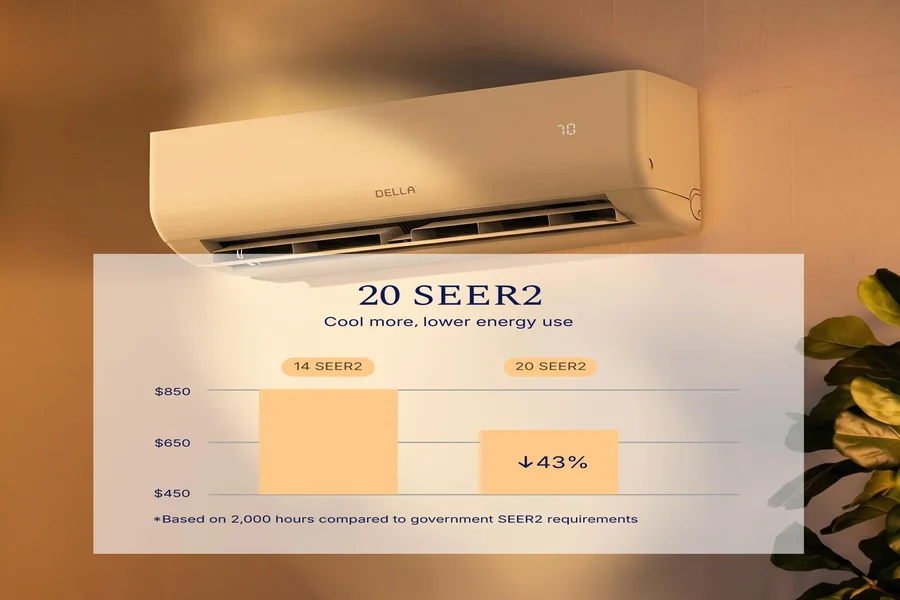
Other useful features depend on how the room is used. Wi-Fi scheduling can warm a home office before the workday begins. App control helps a homeowner check a guest room or workshop from elsewhere. Quiet indoor operation matters in bedrooms and nurseries. Higher-efficiency models can reduce electricity use across a long heating season, though actual use still depends on insulation, temperature settings, local weather, and room size.
How to Keep a Mini Split Working Through Winter
Start with correct sizing. A room with poor insulation, high ceilings, large windows, or frequent door openings may need more heating capacity than square footage alone suggests. A professional heating-load calculation is more reliable than a rule based only on floor area.
The outdoor unit needs clear airflow. Mount it above the expected snow line, keep leaves and drifting snow away from the coil, and do not block it with a tightly wrapped cover. Indoors, clean the filter when it becomes visibly dirty and use Heat mode rather than Auto during long, cold periods. Heat pumps usually perform best with a steady setpoint, so large daily setbacks may make the system work harder when the room needs to warm up again.