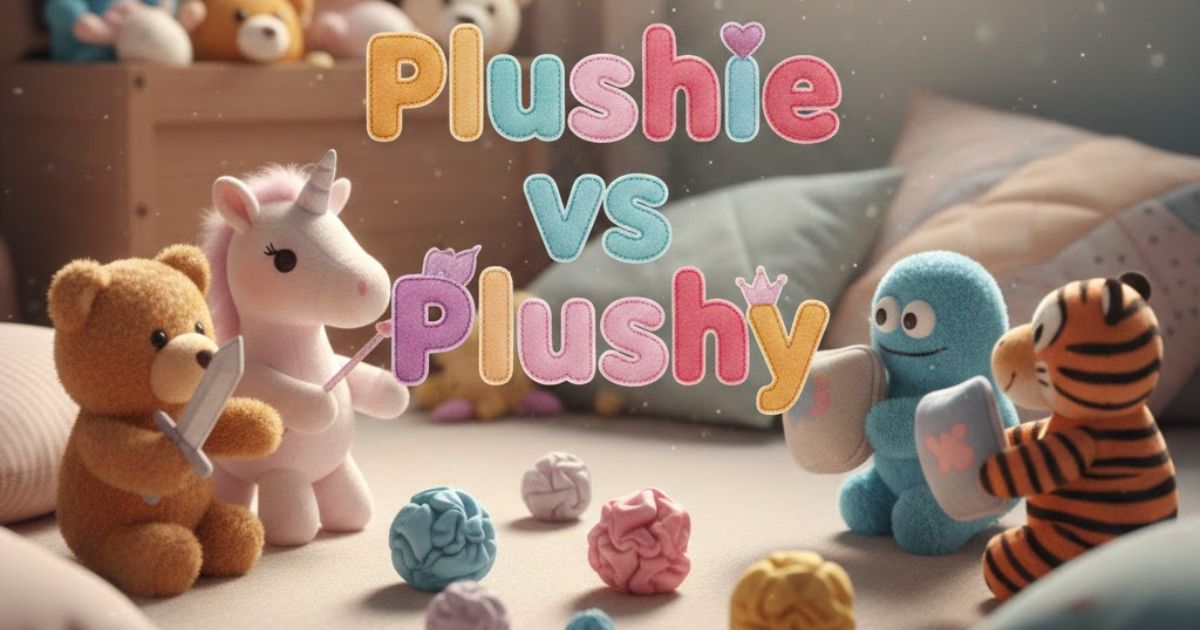
Many people feel confused about plushie vs plushy: when to opt for one term over another. Both words sound similar, and people often use them the same way. However, they do not always mean exactly the same thing in everyday English.
A plushie usually means a soft stuffed toy, like a teddy bear or cartoon character. Plushy, on the other hand, often describes something soft and comfortable. Understanding this small difference can help you use the right word clearly.
In this article, we will explain the meaning of each word in very simple terms. We will also show examples and situations where you should choose one over the other, so your writing sounds correct and natural.
Define Plushie
A plushie is a soft stuffed animal made from plush fabric and filled with stuffing. People often call it a plush toy because it feels cute and cuddly.
In simple terms, a plushie works as a comforting soft toy with a friendly design. However, collectors and kids both love these cuddly toys for decoration and comfort.
Define Plushy
Plushy is an adjective that describes something very soft, thick, and comfortable. People use it for items made from plush fabric or materials with a soft and fluffy texture. For example, a plush blanket or plush carpet feels warm and cozy.
In addition, plushy can describe furniture or clothing that feels rich and padded. A plushy couch, plushy pillows, or even a plush robe gives a sense of comfort and luxury. So, the word focuses on texture, not a stuffed animal.
How To Properly Use The Words In A Sentence
To use the words correctly, choose plushie when you mean a stuffed animal or plush toy, and use plushy when describing a soft and fluffy texture. For example, hug a plushie, but sit on a plushy couch.
How To Use “Plushie” In A Sentence
Use plushie as a noun when you talk about a stuffed animal or plush toy. It names the object directly. For example, a child may carry a plushie everywhere for comfort and joy.
- She sleeps with her favorite plushie teddy bear every night.
- He won a cute plush toy plushie at the carnival.
- The shop sells handmade cuddly toys and soft stuffed animals.
So, always use plushie to name a real toy, not to describe texture. It clearly refers to a soft toy made from plush fabric, and therefore it works best when you mean the actual stuffed item.
How To Use “Plushy” In A Sentence
Use plushy as an adjective when you describe something with a soft and fluffy texture. It talks about how something feels, not what it is. For example, a plush carpet or plush blanket feels warm, thick, and comfortable.
- The sofa feels plushy and very relaxing.
- She bought plushy pillows for her bedroom.
- The hotel room had a plushy bed with soft sheets.
Remember, plushy always describes texture or comfort. It works well when you explain the feel of plush fabric, furniture, or clothing. Therefore, you should not use it as a name for a stuffed animal or plush toy.
In daily conversation, people use plushy to express comfort and luxury. A plushy couch, plushy robe, or thick blanket creates a cozy feeling. So, the word focuses on softness and padding, not on a toy object like a plushie.
More Examples Of Plushie & Plushy Used In Sentences
Here are more examples to show the difference clearly. A child hugs a plushie stuffed animal, while a family relaxes on a plushy couch with a soft blanket made of plush fabric.
Examples Of Using Plushie In A Sentence
- My sister carries her plushie stuffed animal everywhere she goes.
- He won a cute plush toy plushie at the fair.
- She collects anime plushies from her favorite shows.
- The baby hugged a soft cuddly toy plushie all night.
- I bought a handmade soft toy plushie online.
- The shelf displays colorful stuffed animals and plushies.
- She gifted me a panda plushie for my birthday.
- The child named his teddy bear plushie Bruno.
- The store sells giant plush fabric plushies.
- He sleeps better with his favorite plushie beside him.
Examples Of Using Plushy In A Sentence
- The sofa feels plushy and very comfortable.
- She loves walking on the plush carpet barefoot.
- He wrapped himself in a plush blanket after dinner.
- The hotel offered a plushy bed with soft sheets.
- I bought plushy pillows for extra comfort.
- Her winter robe feels warm and plushy.
- The cat slept on a plushy cushion near the window.
- They installed a plush fabric chair in the office.
- The new jacket has a soft and fluffy texture inside.
- The living room looks cozy with its plushy couch and thick rug.
Common Mistakes To Avoid
A common mistake is using plushie and plushy interchangeably. Remember, plushie names a stuffed animal or plush toy, while plushy describes a soft and fluffy texture. Using them wrongly can confuse readers and reduce clarity.
Using “Plushie” And “Plushy” Interchangeably
Using plushie and plushy interchangeably is a common mistake that can confuse readers. A plushie is a stuffed animal or plush toy, while plushy describes the soft and fluffy texture of an object. Using them correctly improves clarity in writing.
For example, saying “I bought a plushy teddy bear” can mislead readers. They may wonder whether it refers to a soft toy or a plushy texture. In contrast, saying “I bought a plushie teddy bear” clearly identifies it as a cuddly stuffed animal made from plush fabric.
Similarly, using plushie for a plush couch or plushy blanket is incorrect. Always reserve plushie for stuffed toys. Instead, use plushy when describing soft furniture, plush fabric, or cozy cushions. This keeps your writing precise and easy to understand.
Finally, clarity matters in both casual and professional writing. Writers should understand the difference between plushie stuffed animals and plushy items. Correct usage ensures your audience understands whether you refer to a toy, a fabric, or something soft and comfortable, avoiding unnecessary confusion.
Tips For Avoiding These Mistakes
To avoid mistakes, always know the difference between plushie and plushy. Use plushie for stuffed animals or plush toys, and plushy for items with a soft and fluffy texture.
- Use plushie only when naming a stuffed toy.
- Use plushy to describe soft furniture, blankets, or plush fabric.
- Avoid mixing the terms to keep your writing clear and accurate.
By following these tips, you can write clearly and naturally. Correct usage of plushie and plushy ensures your audience understands whether you mean a cuddly toy or a soft, comfortable item.
Context Matters
- Toy Industry: In stores and online, the term plushie is widely used to describe stuffed animals and plush toys. Collectors, manufacturers, and sellers prefer plushie because it clearly identifies the soft toy for children and fans.
- Casual Conversation: People often use either plushie or plushy depending on preference. A child may call their favorite teddy bear a plushie, while someone talking about a cozy plushy blanket uses the word to describe soft and fluffy textures.
- Formal Writing: In academic papers or professional documents, it’s better to use precise terms. Instead of saying “plushie,” writers may say stuffed animal, and instead of “plushy,” they may describe a soft, luxurious fabric or cushioned material.
Understanding these contexts helps you choose the right word. By knowing when to use plushie stuffed animals or describe something as plushy, your writing stays clear, professional, and easy to understand for all audiences.
Exceptions To The Rules
There are some exceptions to the rules. Sometimes plushie or plushy appears in brand names, regional speech, or personal preference. Still, understanding stuffed toys and soft textures ensures clear and accurate writing.
1. Regional Differences
In some regions, plushie and plushy have different meanings. For example, British English often uses plushie for stuffed toys, while plushy describes soft and luxurious textures, making local context important for clarity.
2. Brand Names
Certain companies use plushie or plushy as part of their brand names. For example, a toy company may sell Plushies as a proper noun, even if it doesn’t follow standard stuffed animal or soft toy rules.
3. Personal Preference
Some people simply prefer one word over the other. A collector may always say plushie, while a casual speaker chooses plushy, even for stuffed animals. Personal choice often influences how these words are used.
4. Contextual Usage
The meaning of plushie or plushy changes with context. In a store, plushie clearly names a stuffed animal, but at home, plushy can describe a soft blanket or comfortable couch.
Similarly, online forums or fan communities may use plushie for collectibles. Meanwhile, lifestyle blogs might describe furniture or clothing as plushy, focusing on soft textures and comfort rather than toys.
5. Cultural Differences
In Japan, plushies are tied to kawaii culture and collectible trends. People treat them as cute toys, often highly sought after, while plushy still refers to soft and cozy items, showing cultural nuance.
Cultural differences also affect popularity and terminology. In some countries, plushie may be uncommon, and plushy dominates for describing furniture, blankets, or decor, highlighting how society shapes word usage.
Practice Exercises
To improve your understanding, try practice exercises using plushie and plushy. Fill in the blanks and rewrite sentences to describe stuffed animals, plush toys, or soft and fluffy textures correctly, ensuring clear and natural writing.
Exercise 1: Fill In The Blank
Fill in the blanks with the correct word: plushie or plushy.
- My little sister loves to cuddle with her _______ teddy bear.
- After the carnival, I won a _______ unicorn at the ring toss.
- My mom collects vintage _______ toys from the 80s.
- At the toy store, the shelves were lined with _______ animals of all shapes and sizes.
- During the movie, I snuggled up with my _______ penguin.
Answer Key:
- plushie
- plushy
- plushie
- plushie
- plushy
Exercise 2: Sentence Rewrites
Rewrite the following sentences using the correct word: plushie or plushy.
- The child clutched his stuffed animal tightly.
- She received a soft toy as a gift from her grandmother.
- The new store specializes in stuffed animals.
- He won a prize at the fair, a soft toy.
- The couch cushions were very soft and comfortable.
Answer Key:
- The child clutched his plushie tightly.
- She received a plushie as a gift from her grandmother.
- The new store specializes in plushies.
- He won a plushie at the fair.
- The couch cushions were very plushy and comfortable.
Conclusion
In conclusion, understanding the difference between plushie and plushy helps you communicate clearly. Plushie refers to a stuffed animal or plush toy, while plushy describes something with a soft and fluffy texture, like blankets, pillows, or furniture. Using these words correctly avoids confusion, especially in writing, conversation, and professional contexts.
Context, cultural differences, and personal preference also influence usage. By practicing with examples and exercises, you can confidently choose the right term. Ultimately, whether you cuddle a plushie or relax on a plushy couch, knowing the difference improves clarity, precision, and effective communication.
FAQs
What is the difference between plushie and plushy?
Plushie is a stuffed animal or plush toy, while plushy describes a soft and fluffy texture like blankets, pillows, or furniture.
Can I use plushie and plushy interchangeably?
No, using them interchangeably can confuse readers. Plushie names a toy, while plushy describes soft textures or comfortable items.
When should I use plushie in a sentence?
Use plushie to refer to stuffed animals, plush toys, or cuddly collectibles. It works best when naming a tangible soft toy.
How do I use plushy correctly?
Use plushy as an adjective to describe soft, thick, or comfortable items, such as a plushy couch, plush blanket, or plush pillows.
Are plushie and plushy used differently in cultures?
Yes, in Japan, plushies are tied to kawaii culture and collectibles, while plushy focuses on comfort and soft textures in furniture or clothing.
Read More Articles: Village vs Subdivision: Unraveling Commonly Confused Terms

Hi, I’m Emily Grace, a blogger with over 4 years of experience in sharing thoughts about blessings, prayers, and mindful living. I love writing words that inspire peace, faith, and positivity in everyday life.