

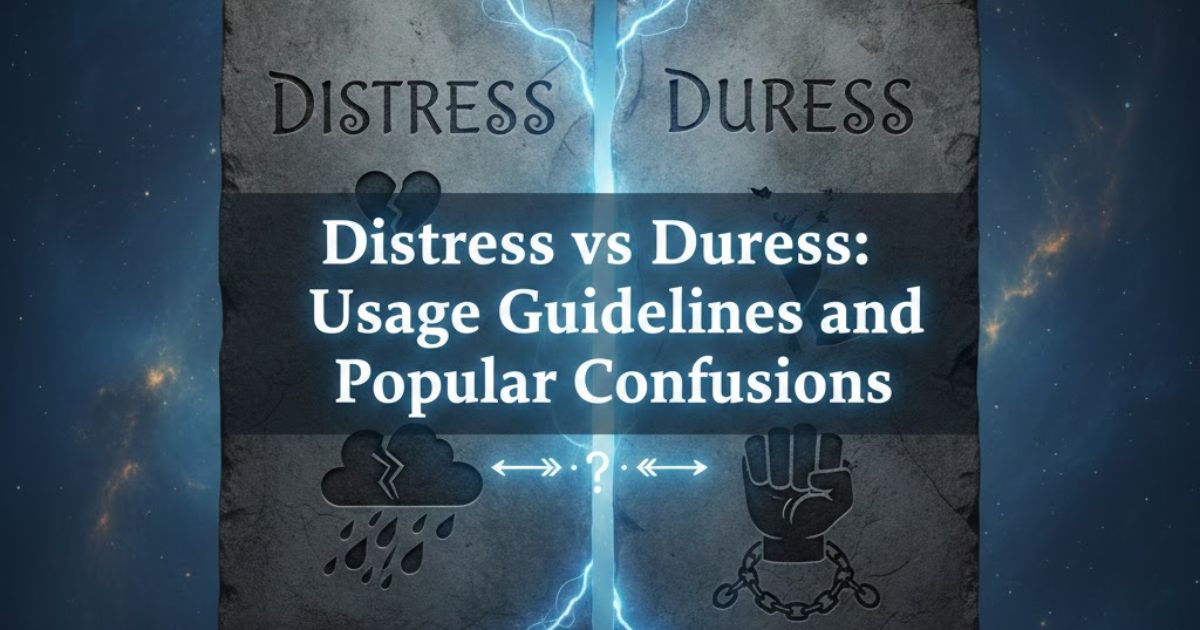
Many people confuse distress vs duress because they sound alike. However, these words have very different meanings. Distress is about emotional or physical suffering, while duress involves being forced to do something against your will.
Understanding duress vs distress helps avoid mistakes in writing and speaking. Using the wrong word can change the meaning of a sentence. Clear knowledge of both words ensures you communicate correctly and express emotions or legal situations accurately.
This guide explains the difference between distress vs duress and shows how to use each word correctly. You will find examples, common mistakes, and tips to help you understand these words in daily life and legal contexts.
Define Distress
Distress is a state of emotional distress or mental suffering caused by difficult situations. People may feel sadness, anxiety, or despair due to financial problems, health issues, or personal challenges, affecting their daily life and well-being.
In addition, distress can refer to physical discomfort or harm. For example, a patient may experience psychological distress, while a person in an accident may show signs of physical distress, signaling the need for support or immediate help.
Define Duress
Duress is a situation where someone is forced to act against their will, often through threats, violence, or coercion. It can affect decisions in legal, personal, or professional contexts, creating serious consequences.
Moreover, duress can be psychological or physical. For example, a person may sign a contract or give a statement under duress, feeling pressured or intimidated, highlighting the importance of coercion in determining their true consent.
How To Properly Use The Words In A Sentence
To properly use distress and duress, always check the context. Distress shows emotional or physical suffering, while duress involves coercion or threats, ensuring your sentences communicate feelings or legal situations clearly and accurately.
How To Use Distress In A Sentence
You can use distress to show emotional or physical suffering. It helps explain feelings, situations, or problems clearly. For example, financial loss, health issues, or accidents often cause mental anguish or emotional distress.
- She was in distress after hearing the bad news.
- The company faced financial distress during the economic crisis.
- The hiker sent a distress signal when lost in the forest.
Using distress correctly conveys emotional pain, physical discomfort, or mental suffering, making your writing clear, relatable, and accurate for both personal and professional contexts.
How To Use Duress In A Sentence
Duress is used to describe situations where someone is forced to act against their will. It often appears in legal, professional, or personal contexts involving coercion, threats, or intimidation.
- He signed the agreement under duress.
- The witness testified under duress during the trial.
- The suspect confessed to the crime under duress.
Using duress properly shows coercion, threats, or forced action, helping readers clearly understand pressure, intimidation, or legal consequences in your sentences.
More Examples Of Distress & Duress Used In Sentences
You can clearly see the difference between distress vs duress through examples. Distress shows emotional or physical suffering, while duress involves coercion or threats, helping readers understand legal situations or personal struggles accurately.
Examples Of Using Distress In A Sentence
- She was in distress after losing her job.
- The child cried in emotional distress when separated from her parents.
- Financial difficulties caused the family great mental anguish and distress.
- The patient showed physical distress after the surgery.
- Extreme heat puts the animals in distress, needing water and shade.
- He felt psychological distress following the breakup.
- The company experienced financial distress due to a sudden market crash.
- The hiker sent a distress signal when lost in the mountains.
- She was in distress after receiving the sad news about her friend.
- The victim showed signs of emotional distress after the accident.
Examples Of Using Duress In A Sentence
- He signed the contract under duress, fearing for his safety.
- The suspect confessed to the crime under duress.
- The witness gave false testimony because of duress from authorities.
- She acted under duress when threatened at work.
- The employee felt pressured to resign under duress.
- Hostages were kept under duress until the ransom was paid.
- The defendant claimed he committed the act under duress.
- The agreement was signed under duress, making it legally questionable.
- He complied with the demands under duress to avoid harm.
- The soldier argued he followed orders under duress during conflict.
Common Mistakes To Avoid
Many people confuse distress vs duress, using distress when they mean duress or vice versa. Always check the context to show emotional suffering or coercion, ensuring your sentences communicate feelings or legal situations clearly.
Mistake #1: Using “Distress” When You Mean “Duress”
A common mistake is using distress when the situation involves duress. For example, saying “I was under distress to sign the contract” is incorrect because it does not convey coercion or forced action properly.
Instead, you should use duress in situations involving threats, intimidation, or legal pressure. This ensures your sentence clearly shows that someone was forced to act, avoiding confusion with emotional or physical suffering.
Always check the context before writing. Distress reflects emotional pain, while duress shows coercion or threats. Using the correct word improves clarity and communicates legal, personal, or professional situations accurately.
Mistake #2: Using “Duress” When You Mean “Distress”
Another common mistake is using duress when the situation involves distress. For example, saying “I was under duress after losing my job” is incorrect. Instead, use distress to show emotional or mental suffering clearly.
Always consider the context before choosing words. Distress reflects emotional pain, mental anguish, or physical discomfort, while duress shows coercion or forced action. Correct usage improves clarity and communicates feelings or legal situations accurately.
Tips For Avoiding These Mistakes
To avoid confusing distress vs duress, always check context, understand meanings, and use the correct word to show emotional suffering, coercion, or legal pressure clearly.
- Understand the difference between distress (emotional pain) and duress (forced action).
- Always review the context to show coercion, threats, or emotional suffering accurately.
- Consult a dictionary or examples to ensure proper use of distress vs duress.
Context Matters
Choosing the right word depends on context. Distress shows emotional or physical suffering, while duress involves coercion or threats. Using the correct term clarifies legal situations, personal struggles, and emotional experiences effectively.
Distress
Distress shows a state of emotional or mental suffering caused by challenges like financial problems, health issues, or personal loss. It helps explain emotional pain clearly to others.
Additionally, distress can refer to physical discomfort or urgent situations. For instance, a person in an accident or a patient experiencing psychological distress may need immediate help.
Examples of “distress” in various situations:
- Distress reflects emotional or mental anguish in personal or professional life.
- It can indicate physical suffering or emergency situations.
- Using distress properly improves clarity in writing and communication.
Duress
Duress describes situations where someone is forced to act against their will. It often involves threats, coercion, or intimidation, especially in legal, personal, or professional contexts, affecting decisions clearly.
Moreover, duress can be psychological or physical. People may sign agreements, give statements, or comply with demands under duress, highlighting coercion, forced action, or pressure in real-life or legal situations.
Examples of “duress” in different scenarios:
- Duress shows coercion or threats in legal, personal, or professional contexts.
- It can be psychological or physical, affecting decisions and actions.
- Proper use clarifies forced action and intimidation situations in writing.
Understanding duress ensures clarity when describing forced actions, threats, or coercion. Correct usage distinguishes it from distress, making your writing precise in legal, personal, or professional contexts.
Exceptions To The Rules
While rules for distress vs duress are clear, some exceptions exist. For example, medical distress or psychological duress may appear in unusual emotional, legal, or professional situations.
Similarly, contractual duress or military duress shows unique cases. Understanding these exceptions helps use words correctly and distinguish between emotional suffering and coercion or threats.
Distress
- Medical Distress:Medical distress occurs when a person experiences physical discomfort or psychological suffering due to illness, injury, or medical procedures. Doctors may note respiratory distress, emotional distress, or pain, helping identify urgent treatment needs.
- Legal Distress:Legal distress refers to emotional or financial suffering caused by legal actions, disputes, or damages. For example, a plaintiff may claim emotional distress in court, highlighting the impact of others’ actions on mental well-being.
Duress
Duress occurs when someone is forced to act against their will, often through threats, coercion, or intimidation. Understanding duress helps distinguish it from distress and clearly explains legal, personal, or professional pressure situations.
- Military Duress: Military duress happens when soldiers are compelled to act against their will due to orders, threats, or war pressures. It may involve coercion, dangerous situations, or actions that affect legal responsibility.
- Contractual Duress: Contractual duress occurs when someone signs agreements or obligations under threats or coercion. This highlights forced consent, legal pressure, and the importance of understanding duress in contracts or business dealings.
Recognizing duress ensures clear communication in legal, personal, or professional contexts. Correct use shows coercion, forced action, or intimidation, avoiding confusion with emotional or physical distress.
By understanding military duress and contractual duress, readers can identify situations of forced compliance or threatened action, making writing precise and distinguishing duress from distress effectively.
Practice Exercises
Practice exercises help you master distress vs duress. By completing fill-in-the-blank, sentence writing, and multiple-choice activities, you strengthen understanding of emotional suffering, coercion, and forced actions, improving correct usage in legal, personal, or professional contexts.
Exercise 1: Fill In The Blank
Fill in the blanks with the correct word: distress or duress.
- After losing her job, she was in great __________ due to financial worries.
- The witness gave testimony under __________ because the suspect threatened him.
- The hiker sent a __________ signal when he got lost in the forest.
- He signed the contract under __________, fearing physical harm.
- The patient showed signs of __________ after a painful medical procedure.
Answer Key:
- distress
- duress
- distress
- duress
- distress
Exercise 2: Sentence Writing
Write a sentence using each of the following words correctly:
| Word | Example Sentence |
| distress | She felt emotional distress after hearing the sad news about her friend. |
| duress | He signed the agreement under duress, fearing threats from his employer. |
| distress | The family experienced financial distress after the business failed. |
| duress | The suspect confessed to the crime under duress from the authorities. |
| distress | The patient showed physical distress during the emergency surgery. |
Exercise 3: Multiple Choice
Choose the correct word (distress or duress) for each sentence.
- ________ is a state of extreme emotional or physical suffering.
- A) Duress
- B) Distress
- Being threatened to sign a contract is an example of ________.
- A) Distress
- B) Duress
- After the accident, the patient showed signs of ________ and needed help.
- A) Duress
- B) Distress
- The suspect admitted the crime ________, because the police pressured him.
- A) Distress
- B) Duress
- A company in financial ________ may have to lay off employees.
- A) Duress
- B) Distress
Answer Key:
- Distress
- Duress
- Distress
- Duress
- Distress
Conclusion
Understanding the difference between distress vs duress is essential for clear communication. Distress reflects emotional, mental, or physical suffering, while duress involves coercion, threats, or forced action, often in legal or professional contexts. Using the wrong word can confuse readers or misrepresent situations.
By practicing fill-in-the-blank exercises, sentence writing, and multiple-choice questions, you can improve your understanding and use these words correctly. Remember, context matters: use distress for feelings and suffering, and duress for coercion or intimidation. Proper usage ensures clarity, accuracy, and better communication in writing or speaking.
FAQs
What is the difference between distress and duress?
Distress shows emotional, mental, or physical suffering, while duress involves coercion, threats, or forced action, often in legal, professional, or personal situations.
When should I use distress in a sentence?
Use distress to show emotional pain, mental anguish, or physical discomfort, such as during accidents, financial problems, or stressful personal experiences.
When should I use duress in a sentence?
Use duress when someone is forced to act under threats, intimidation, or coercion, often in legal cases, contracts, or pressured decisions.
Can distress appear in legal contexts?
Yes, distress can refer to emotional suffering or damages caused by another’s actions, helping courts assess psychological or financial impact.
How can I avoid confusing distress and duress?
Always check context, remember distress shows suffering, duress shows coercion, and practice with examples to use distress vs duress correctly in writing.
Read More Articles: Uncollectible vs Uncollectable: Decoding Common Word Mix-Ups