

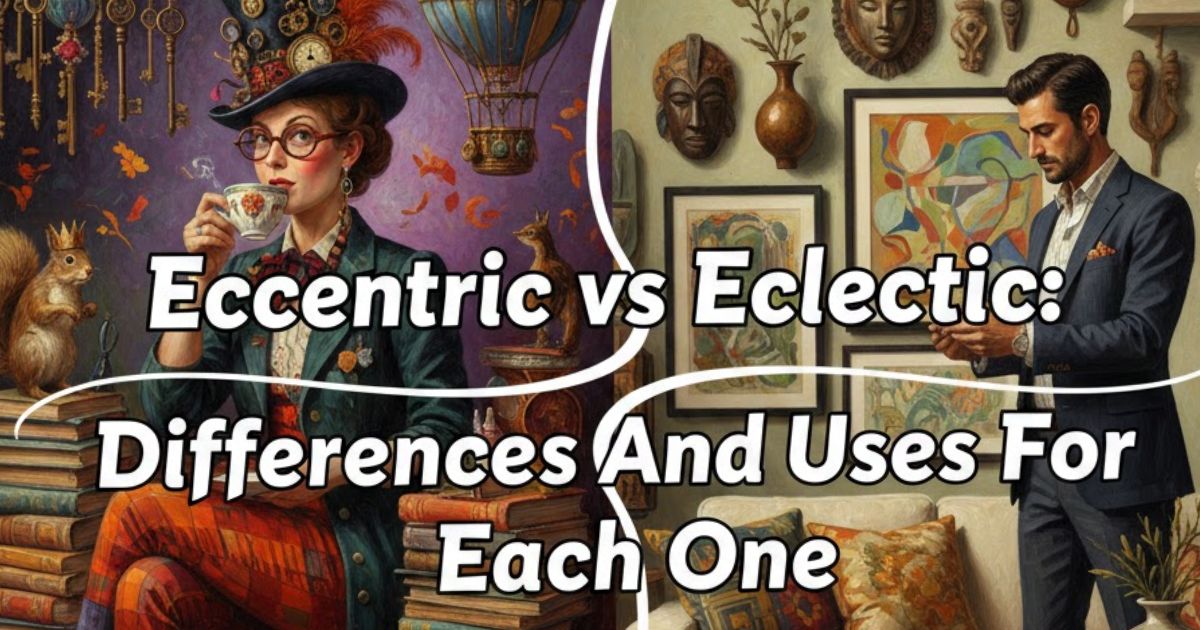
People often get confused between eccentric vs eclectic because both describe things that are different from the norm. Eccentric means unusual or quirky, while eclectic means a mix of different styles, ideas, or interests in one place.
Understanding the difference between eclectic vs eccentric helps you describe people, style, or behavior correctly. Eccentric focuses on unique or odd habits, while eclectic highlights diversity and variety. Using them properly makes your writing and speech clear and accurate.
In everyday life, we see both eccentric and eclectic traits in fashion, interior design, art, and behavior. Knowing when to use eccentric vs eclectic lets you express ideas clearly, avoid mistakes, and describe personalities, tastes, or collections precisely.
Define Eccentric
Eccentric describes someone or something unconventional or quirky. People with eccentric habits often stand out because of their peculiar behavior, unique choices, or unusual style, making them different from the majority.
Moreover, eccentricity can appear in dress, speech, or lifestyle. Often idiosyncratic, an eccentric person attracts attention, sparks curiosity, and shows creativity, while still being socially interesting and memorable.
Define Eclectic
Eclectic describes a person or thing that combines diverse elements from different sources. People with eclectic tastes enjoy variety, drawing inspiration from many styles, cultures, or ideas to create something unique and interesting.
Eclectic describes a person or thing that combines diverse elements from different sources. People with eclectic tastes enjoy variety, drawing inspiration from many styles, cultures, or ideas to create something unique and interesting.
Here is a table that highlights the main contrasts between eccentric and eclectic:
| Eccentric | Eclectic |
| Unusual | Varied |
| Odd or peculiar | Made of different elements |
| Breaks from standard norms | Inspired by multiple sources |
| Distinct habits, mannerisms, or quirks | Wide-ranging interests, styles, or knowledge |
How To Properly Use The Words In A Sentence
To properly use eccentric and eclectic sentences, first understand their meanings. Eccentric describes quirky behavior or unusual habits, while eclectic highlights diverse tastes or varied styles, helping your writing stay clear, accurate, and engaging.
How To Use “Eccentric” In A Sentence
The word eccentric describes someone with quirky habits or unconventional behavior. Use it to highlight peculiar traits in people, style, or actions while keeping your sentences clear and expressive.
- The eccentric artist painted murals only at midnight, surprising everyone in the neighborhood.
- My neighbor’s eccentric habits, like wearing mismatched socks, make him unforgettable.
- She has an eccentric sense of humor that always makes friends laugh.
Using eccentric properly emphasizes unique behavior or style. It helps describe unusual traits clearly without confusing your readers.
How To Use “Eclectic” In A Sentence
The word eclectic describes someone or something with diverse tastes or a variety of influences. Use it to show wide-ranging interests in style, art, music, or collections.
- Her eclectic wardrobe mixes vintage and modern clothing from many cultures.
- The café’s eclectic menu offers dishes inspired by cuisines from around the world.
- His eclectic music collection includes jazz, rock, classical, and indie albums.
Using eclectic highlights diversity and variety in taste or style, helping readers understand unique and well-curated choices clearly.
More Examples Of Eccentric & Eclectic Used In Sentences
To better understand eccentric vs eclectic, reviewing examples helps. Eccentric highlights quirky habits or unusual behavior, while eclectic shows diverse tastes or varied interests, making it easier to use these words clearly in everyday writing.
Examples Of Using Eccentric In A Sentence
- The eccentric artist wore colorful robes and painted in the middle of the night.
- My eccentric neighbor collects old typewriters and stacks them in his garden.
- She has an eccentric sense of humor that makes everyone laugh unexpectedly.
- His eccentric wardrobe includes hats and shoes that never match.
- The eccentric scientist built machines that seemed impossible but worked perfectly.
- His eccentric habits, like talking to plants, surprised all his friends.
- The billionaire’s eccentric lifestyle included owning a private zoo at home.
- The novel’s eccentric characters added charm and uniqueness to the story.
- Her eccentric personality made her stand out in every social gathering.
- The old man’s eccentric collection of clocks fascinated the entire neighborhood.
Using eccentric in sentences emphasizes quirky behavior, unusual habits, or peculiar personality traits. It helps describe people, style, or actions clearly, showing readers how uniqueness or oddness stands out in daily life.
Examples Of Using Eclectic In A Sentence
- Her eclectic wardrobe blends modern fashion with vintage pieces beautifully.
- The eclectic menu offers dishes from Italy, Japan, and Mexico.
- His eclectic taste in music ranges from classical symphonies to punk rock.
- The interior designer created an eclectic living room mixing old and new furniture.
- The band’s eclectic style draws from jazz, rock, and electronic music.
- The museum has an eclectic collection of paintings, sculptures, and artifacts.
- His eclectic book collection includes novels, biographies, and poetry from around the world.
- The festival featured eclectic performances, combining dance, music, and theater.
- She decorated her home in an eclectic style, blending cultural influences thoughtfully.
- The café’s eclectic atmosphere attracts people with diverse interests and tastes.
Using eclectic highlights diverse interests, a variety of styles, or wide-ranging tastes. It helps describe people, places, or objects intentionally curated, showing richness, creativity, and a mix of influences clearly to readers.
Common Mistakes To Avoid
Many people confuse eccentric vs eclectic and use them incorrectly. Avoid treating eccentric as crazy or eclectic as random. Understanding quirky habits, diverse tastes, and context ensures your writing remains clear, accurate, and easy to understand.
1. Using Eccentric And Eclectic Interchangeably
Many people mistakenly use eccentric vs eclectic interchangeably, but their meanings differ. Eccentric highlights quirky habits or unusual behavior, while eclectic emphasizes diverse tastes and varied influences, so using them correctly improves clarity in speech and writing.
For example, describing a person’s fashion sense, saying someone is eccentric shows unusual or odd choices. In contrast, calling them eclectic demonstrates a mix of styles, cultures, or ideas. Understanding eccentric vs eclectic prevents confusion and conveys precise meaning.
Moreover, paying attention to context is key. Eccentric behavior might seem strange, but eclectic taste shows creativity. Avoid swapping them, and focus on quirky traits, diverse interests, and curated collections to communicate clearly and accurately.
2. Using Eccentric As A Synonym For Crazy
Many people wrongly use eccentric as a synonym for crazy, but they are different. Eccentric behavior shows quirky habits or unconventional choices, while mental illness is serious. Using eccentric properly respects people and conveys clarity in writing and speech.
For instance, an eccentric artist might paint unusual subjects or wear odd clothes. This reflects peculiar personality traits and unique behavior, not madness. Understanding this difference ensures correct usage of eccentric vs eclectic and avoids confusion or offense.
3. Using Eclectic To Describe Something Random
Some people mistakenly use eclectic to describe something random. However, eclectic collections or styles are carefully chosen and reflect diverse tastes, varied influences, and intentional curation. Using it correctly shows thoughtfulness and clarity in writing and communication.
For example, an eclectic interior design mixes modern, vintage, and cultural elements deliberately. It is not haphazard or random, but a reflection of wide-ranging interests, creativity, and unique style. Understanding this difference ensures accurate use of eclectic vs eccentric.
Tips For Avoiding These Mistakes
To avoid confusing eccentric vs eclectic, focus on definitions, context, and usage. Clear understanding ensures accurate, natural, and meaningful communication.
- Use eccentric for quirky habits or unusual behavior.
- Use eclectic for diverse tastes or varied influences.
- Avoid calling eccentric “crazy” or irrational.
- Remember eclectic collections are intentional, not random.
Context Matters
Understanding context is key when using eccentric vs eclectic. Eccentric behavior shows quirky habits, while eclectic style reflects diverse tastes. Choosing the right word ensures clear, accurate, and meaningful communication in writing, speech, or description.
Examples Of Different Contexts
In different contexts, eccentric vs eclectic matters. Eccentric style shows quirky behavior, while eclectic taste reflects diverse influences. Understanding this difference helps describe people, fashion, interiors, and personality clearly.
Interior Design
In interior design, choosing between eccentric vs eclectic is important. An eccentric room features quirky decorations or unusual layouts, while an eclectic space combines diverse styles, colors, and influences thoughtfully to create a harmonious and interesting environment.
For example, an eclectic living room might mix vintage furniture, modern art, and cultural pieces. In contrast, an eccentric interior focuses on unique, unconventional elements that stand out. Understanding eccentric vs eclectic ensures clear and creative home design choices.
Personal Style
In personal style, understanding eccentric vs eclectic is essential. Eccentric fashion shows quirky habits or bold, unconventional choices, while eclectic style mixes diverse clothing, accessories, and influences to reflect creativity and wide-ranging tastes.
For instance, someone with an eclectic wardrobe combines vintage, modern, and cultural pieces thoughtfully. Conversely, an eccentric outfit emphasizes unique, standout items. Knowing eccentric vs eclectic helps express personality clearly while showcasing individuality and distinct fashion sense.
Behavior
When describing behavior, understanding eccentric vs eclectic is important. Eccentric actions show quirky habits or unusual routines, while eclectic behavior reflects diverse interests and adaptability. Choosing the right word ensures clear, accurate communication in speech and writing.
For example, an eccentric person might talk to plants or dress in unconventional ways. In contrast, an eclectic individual engages in many hobbies, from music to art. Understanding eccentric vs eclectic helps readers grasp unique traits versus broad varied interests.
Moreover, recognizing eccentric vs eclectic behavior allows for proper context. Eccentricity highlights uniqueness, while eclectic behavior emphasizes diversity. Using these words correctly enhances clarity, respects individuality, and accurately describes quirky habits or wide-ranging activities.
Exceptions To The Rules
Sometimes, eccentric vs eclectic rules have exceptions. Personal preference, cultural differences, and historical context can make eccentric behavior or eclectic style acceptable in unexpected ways. Understanding these exceptions ensures accurate, flexible, and respectful use in writing, speech, and description.
1. Personal Preference
Sometimes, eccentric vs eclectic depends on personal preference. A person may describe their quirky habits as eccentric or their diverse tastes as eclectic, even if it doesn’t follow traditional rules.
For example, someone might call a bold outfit eccentric or a mixed-style wardrobe eclectic. Respecting personal preference allows flexibility and accurate description of unique behavior and varied interests.
2. Contextual Usage
The meaning of eccentric vs eclectic often changes with context. Eccentric behavior suits quirky personalities, while eclectic style fits diverse collections, fashion, or creative spaces, making understanding context essential for accuracy.
For instance, in fashion, an eccentric outfit highlights a unique personality, whereas an eclectic wardrobe shows varied tastes. Paying attention to contextual usage ensures clear communication and correct application of both terms.
3. Cultural Differences
Cultural differences affect eccentric vs eclectic usage. In some societies, eccentric behavior is celebrated, while in others, eclectic style is the norm. Understanding culture helps describe quirky habits and diverse tastes correctly.
For example, an eccentric artist might be admired in one culture, while an eclectic wardrobe is trendy elsewhere. Recognizing cultural differences ensures accurate, respectful use of both words in writing and conversation.
4. Historical Usage
Over time, the meanings of eccentric vs eclectic have changed. In history, eccentric behavior often described quirky habits of famous artists or scientists, while eclectic style highlighted collections or tastes influenced by multiple cultures, showing creativity and wide-ranging interests.
For example, a painting considered eccentric in the 1800s may seem normal today. Similarly, an eclectic collection of furniture or music evolves over time. Understanding historical usage helps accurately describe unique behavior, diverse tastes, and the evolution of styles in context.
Practice Exercises
To enhance your grasp and proper use of eccentric vs eclectic, try the following practice activities designed to strengthen understanding and apply these words correctly in everyday writing and speech.
Exercise 1: Fill In The Blank
Choose the correct word (eccentric or eclectic) to complete each sentence:
- Her __________ wardrobe mixes vintage, modern, and cultural pieces from around the world.
- The __________ scientist built unusual machines that amazed everyone in his lab.
- The café’s __________ menu features dishes inspired by Italy, Japan, and Mexico.
- Despite his __________ habits, the musician is widely admired for creativity.
- His home reflects an __________ style, blending art, furniture, and music from various cultures.
Answer Key:
- eclectic
- eccentric
- eclectic
- eccentric
- eclectic
Exercise 2: Sentence Writing
Write a sentence using each word (eccentric and eclectic) correctly:
| Word | Sentence |
| eccentric | The eccentric artist wears bright colors and paints unusual subjects that amaze everyone. |
| eclectic | Her eclectic wardrobe mixes vintage, modern, and cultural pieces, showing her diverse tastes. |
Conclusion
In conclusion, understanding eccentric vs eclectic helps you describe people, style, and behavior accurately. Eccentric emphasizes quirky habits or unconventional behavior, while eclectic highlights diverse tastes, varied influences, and intentional creativity. Using these words correctly avoids confusion and enhances communication, whether in writing or speech.
Context, culture, and personal preference play important roles, as do historical and stylistic differences. By practicing with examples and exercises, you can confidently distinguish eccentric vs eclectic in everyday situations. Ultimately, knowing their meanings enriches your vocabulary and allows clear, expressive, and precise description of uniqueness and variety.
Key Takeaways
- Eccentric highlights quirky habits, unusual behavior, and unconventional traits, while eclectic emphasizes diverse tastes and varied influences.
- Context, culture, and personal preference impact the correct use of eccentric vs eclectic.
- Practicing examples ensures clear, accurate, and meaningful communication when describing people, style, or collections.
Understanding eccentric vs eclectic improves writing and speech. Eccentric behavior shows individuality and quirky traits, whereas eclectic style reflects creativity and diverse influences, making descriptions more precise and expressive.
Moreover, paying attention to context, culture, and personal preference helps distinguish eccentric vs eclectic. Using these words correctly enhances clarity, conveys uniqueness, and highlights quirky habits or wide-ranging tastes effectively.
FAQs
What is the difference between eccentric and eclectic?
Eccentric highlights quirky habits or unusual behavior, while eclectic emphasizes diverse tastes, varied influences, or curated collections. Understanding this difference ensures clear communication.
Can eccentric and eclectic be used interchangeably?
No. Eccentric vs eclectic have distinct meanings. Confusing them may misrepresent quirky behavior or diverse styles, so context and intent matter when using these words.
Is eccentric the same as crazy?
No. Eccentric shows unconventional or quirky traits, not mental illness. Using it correctly respects people and accurately conveys unusual habits or behavior.
Does eclectic mean random?
Not exactly. Eclectic style reflects careful selection, combining diverse influences or tastes intentionally, rather than being random or haphazard.
How can I use eccentric and eclectic correctly?
Use eccentric for unusual or quirky behavior, and eclectic for diverse tastes, varied influences, or curated collections, ensuring context guides your choice.
Read More Articles: Currier vs Courier: When To Use Each One In Writing?