Key Takeaways
- Bleeding, swelling, discomfort, movement, or a change in your bite near an implant should be evaluated by a dental professional.
- Early inflammation may not cause severe pain, which makes regular maintenance visits important.
- Peri-implant mucositis affects the soft tissue around an implant, while peri-implantitis also involves loss of supporting bone.
- Smoking, previous gum disease, diabetes, plaque buildup, and grinding may increase the risk of implant complications.
- A changed feeling does not automatically mean an implant must be removed.
Dental implants are designed to feel stable and comfortable after healing, so a new sensation around an implant deserves attention. For patients in Richland and nearby Tri-Cities communities, Implant & Periodontal Associates Northwest is a periodontal and implant-focused practice whose page on LAPIP laser treatment for failing implants describes a laser-based approach that may be considered for selected implants affected by peri-implantitis after a professional assessment.
Whether you notice bleeding while brushing, tenderness during a busy workweek, or a crown that suddenly feels different when eating, do not assume the implant has failed. Changes may involve the gums, bone, bite, crown, connector, or implant itself. An in-person evaluation can help identify what has changed and what should happen next.
Why a Change Around an Implant Matters
After the healing period, an implant should not feel loose or cause consistent pain. Still, a new symptom can have several explanations. A crown may loosen, a bite may change, gums may become inflamed, or the bone around the implant may need evaluation. For example, an implant can feel fine for years and later begin bleeding during brushing. That bleeding is not something to ignore, even if there is no pain.
For Richland residents balancing family obligations, work, and time outdoors along the Columbia River, it can be tempting to wait and see whether a symptom fades. However, recurring changes are worth documenting. Note when the change began, what seems to trigger it, and whether it is getting better, worse, or repeatedly returning.
Warning Signs to Watch For
You cannot diagnose an implant problem at home, but these signs support making an appointment:
- Bleeding while brushing or cleaning around the implant.
- Red, puffy, tender, or warm gum tissue.
- A persistent bad taste, drainage, or pus near the implant.
- New pain or pressure while chewing.
- A crown that feels loose, high, or different when biting.
- Gum recession or more visible implant material.
- Movement in the crown, restoration, or implant.
- Symptoms that improve temporarily but return.
Rapid facial swelling, fever with dental swelling, severe spreading pain, trouble swallowing, or trouble breathing may require urgent medical attention.
Mucositis and Peri-Implantitis: What Is the Difference?
Peri-Implant Mucositis
Peri-implant mucositis is inflammation primarily limited to the soft tissue around an implant. Bleeding, redness, and tenderness can occur, but confirmed bone loss is not part of this diagnosis. The American Academy of Periodontology explains peri-implant diseases as conditions that require professional monitoring because early inflammation may be manageable before it progresses.
Peri-Implantitis
Peri-implantitis involves inflammation around the implant along with deterioration of the supporting bone. It may progress without dramatic discomfort, so waiting for severe pain is not a dependable strategy. A clinician needs to examine the tissue and review imaging before determining whether peri-implantitis is present.
Common Causes and Risk Factors
Only an examination can identify the actual source of an implant problem. Common contributors can include plaque or tartar buildup, untreated inflammation, previous or current gum disease, excess force from clenching or grinding, a loose restoration component, changes in bone support, tobacco use, and difficulty cleaning around the restoration.
Overall health matters, too. Smoking can interfere with healing, and poorly controlled diabetes may complicate infection control and healing. A history of periodontitis may require more careful maintenance. Research discussed by Rutgers University on peri-implantitis also highlights that inflammation around implants is complex, reinforcing why self-treatment or leftover antibiotics are not reliable substitutes for a dental examination.
What a Dental Evaluation May Include
- Health review: Discussion of symptoms, medications, tobacco use, medical conditions, and gum-disease history.
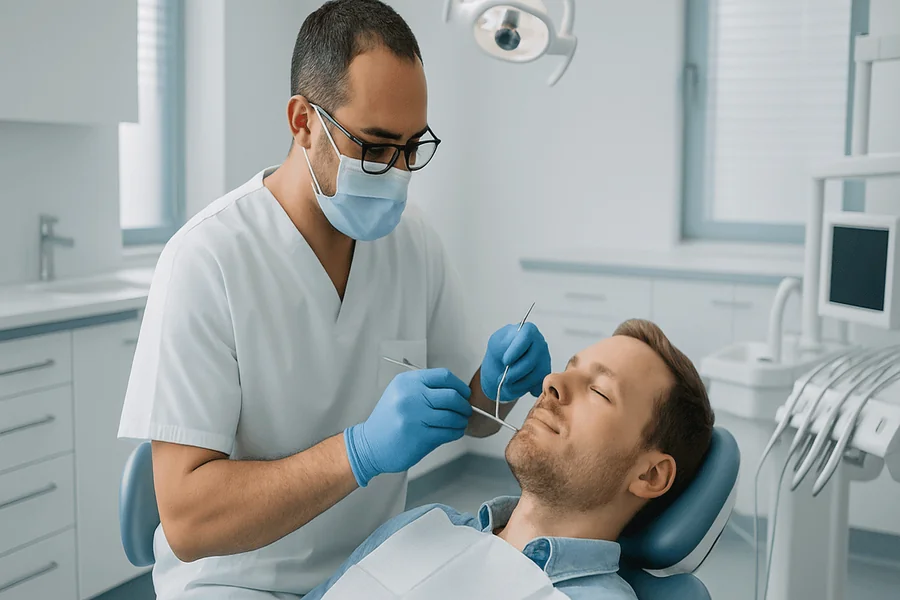
- Visual examination: Review of the gums, implant crown, surrounding teeth, and bite.
- Gentle tissue measurements: Assessment of inflammation and tissue changes around the implant.
- Stability check: Evaluation for movement in the restoration or implant components.
- Dental imaging: X-rays or other images may be used to evaluate the supporting bone.
Treatment Depends on the Cause
Care may range from maintenance cleaning and home-care coaching to adjustment or repair of a restoration, bite management for grinding, treatment of inflamed tissue, or more advanced treatment when bone loss is involved. The appropriate path depends on implant stability, bone support, tissue condition, bite forces, and overall health. No single procedure is right for every implant concern.
Daily Habits That Support Implant Health
- Brush twice daily with a soft-bristled toothbrush.
- Clean around and beneath the restoration as instructed by your dental team.
- Use floss, interdental brushes, or a water flosser when recommended for your restoration.
- Avoid smoking and other tobacco products.
- Wear a night guard if your clinician recommends one for clenching or grinding.
- Keep scheduled dental and periodontal maintenance appointments.
When to Call a Dental Professional
Schedule a Prompt Appointment For:
- Bleeding that happens more than once.
- Swelling or tenderness lasting more than a few days.
- Pus, drainage, or a persistent bad taste.
- Pain when chewing or a changed bite.
- A loose crown, restoration, or implant.
A Practical Path Forward
A change around a dental implant is a reason to act, not a reason to panic. Early assessment can distinguish a minor restoration issue from inflammation, infection, bone loss, or excessive bite pressure. Record the symptoms you notice, avoid delaying care if they recur, and contact a qualified dental professional for a personal evaluation.