Key Takeaways
- Stable humidity, moderate temperature, and sensible placement help protect the condition of cigars over time.
- Small, measured adjustments are safer than reacting quickly to every minor change in readings.
- Weekly checks and monthly inspections can reveal leaks, depleted humidification materials, and uneven airflow before they become larger problems.
- Heating, air conditioning, sunlight, and seasonal weather can all affect a humidor’s environment.
- Digital monitoring is useful, but it works best alongside regular visual inspections and sound storage habits.
Table Of Contents
- Why Stability Matters
- Set Practical Storage Goals
- Build A Simple Care Routine
- Prepare For Seasonal Changes
- Check And Calibrate The Hygrometer
- Spot Common Problems Early
- Use Monitoring Tools Wisely
- Frequently Asked Questions
- Conclusion
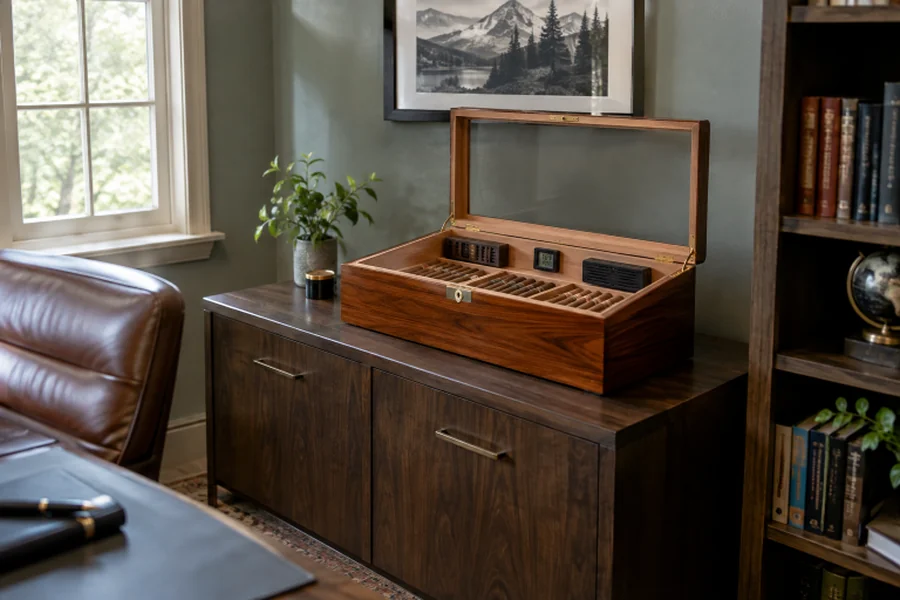
A well-kept humidor is less about chasing a perfect display reading and more about maintaining an environment that changes slowly. Whether you keep a few favorites or a larger aging collection, a smart cigar humidifier can make it easier to watch conditions and identify trends before they affect the cigars.
At its core, a humidor is a controlled storage space designed to limit abrupt changes in moisture around tobacco. Understanding the basic role of a humidor makes it easier to build a routine that protects wrappers, supports an even burn, and preserves each cigar’s character.
Why Stability Matters
Cigars exchange moisture with the surrounding air. When conditions become much drier, wrappers can become fragile, and the filler may burn too quickly. When conditions remain excessively damp, cigars may feel soft, draw poorly, or burn unevenly. Rapid swings can be especially frustrating because the cigars may need time to regain balance after each adjustment.
Temperature matters as well because it affects how quickly humidity conditions shift inside a storage space. A humidor placed near a sunny window, heating vent, fireplace, or air-conditioning outlet may experience more variation than one stored in a shaded, climate-controlled room.
The practical goal is consistency. A stable environment makes it easier to recognize a real problem, while constant change makes it difficult to tell whether the humidifier, the seal, or the room itself needs attention.
Set Practical Storage Goals
There is no single storage setting that works perfectly for every cigar and every smoker. Wrapper thickness, blend composition, storage duration, and personal preference can all influence what feels right. Start with the guidance supplied for your humidification system, then focus on holding a steady condition rather than making frequent corrections.
Consider These Factors
- Collection size:A full humidor changes more slowly than an almost empty one, since the cigars themselves help moderate the enclosed environment.
- Storage duration:Cigars intended for extended aging may benefit from a carefully monitored, steady setup.
- Humidor construction:The seal, interior materials, and overall condition of the box or cabinet affect how well it retains moisture.
- Room conditions:Drafts, direct sun, and frequent temperature changes can create avoidable instability.
- Smoking preference:Some people prefer a firmer cigar and a slower burn, while others prefer a softer feel. Make changes gradually so you can evaluate the result.
Build A Simple Care Routine
A dependable routine does not require opening the humidor every day. It simply gives you enough information to notice when something has changed. Keeping a brief log on paper or in an app can be particularly useful after adding many cigars, replacing humidification materials, or moving the humidor.
Weekly Checks
- Read the humidity and temperature display without immediately making any changes.
- Compare the current reading with recent readings to identify a pattern.
- Check the humidification source for depletion, leaks, or an empty reservoir.
- Look over visible cigars for cracked wrappers, unusual spots, or other signs of condition changes.
- Confirm that the lid or door closes fully and evenly.
Monthly Checks
- Inspect the interior for warped wood, loose seals, or signs of moisture collecting where it should not.
- Make sure cigars are not packed so tightly that air cannot circulate around them.
- Wipe away dust near sensors, vents, and external components according to the manufacturer’s instructions.
- Review the humidor’s placement and move it if changes in sunlight or household airflow have become a concern.
Prepare For Seasonal Changes
Seasonal transitions often affect indoor air before the change becomes obvious. Winter heating can dry a home, while summer heat and air conditioning can create different patterns of temperature and moisture. Check more often during the first few weeks after a major change in weather or HVAC use.
Winter Tips
- Keep the humidor away from radiators, heating registers, and exterior walls that become very cold.
- Do not add a large amount of moisture in response to one low reading. Confirm the trend first.
- Give the humidor time to settle after replacing or refilling the humidification source.
Summer Tips
- Protect the humidor from direct sunlight and avoid hot garages, attics, and vehicles.
- Watch for changes after prolonged heat, storms, or changes in air-conditioning use.
- Keep cabinet doors and humidor lids closed except when access is necessary.
Check And Calibrate The Hygrometer
A hygrometer is only helpful when it provides a reasonably reliable reading. If the displayed number appears inconsistent with the condition of the cigars or with a second instrument, check the battery, sensor location, and the manufacturer’s instructions before changing the humidor environment.
A sealed salt test is one common way to check a hygrometer’s accuracy. Guidance from the University of Florida’s humidity calibration overview explains how a salt-and-water setup can create a reference point for evaluating a device. Follow the instructions for your particular hygrometer, since some models can be adjusted while others require you to note the offset.
Basic Hygrometer Care
- Place the sensor where it can measure the general air inside the storage space.
- Keep it away from direct contact with humidification materials or damp surfaces.
- Allow readings to settle after opening the humidor or adding cigars.
- Compare with a trusted second device if the numbers appear questionable.
Spot Common Problems Early
Humidity Reads Too Low
Check whether the humidification source is depleted, the seal is compromised, or the humidor is being opened frequently. A new wooden humidor may also need time to stabilize. Correct the issue gradually, then observe the reading over several days.
Humidity Reads Too High
Look for an oversized humidification source, poor airflow, condensation, or a sensor placed too close to moisture. Avoid making multiple changes at once, as it makes it hard to identify the cause.
Mold, Damage Or Pests Appear
Separate the affected cigars from the rest of the collection, and inspect nearby cigars and the interior of the humidor. Do not assume a surface issue is harmless. A persistent problem may justify advice from a reputable tobacconist or a professional service, especially for a valuable collection.
Use Monitoring Tools Wisely
Connected sensors and digital humidifiers can provide historical charts, low-water reminders, and alerts when conditions move outside the range you selected. These features are especially useful for cabinet humidors, multiple storage spaces, or periods when you are traveling.
Technology cannot compensate for poor placement, a weak seal, or an overcrowded interior. Use alerts as a prompt to inspect the humidor, not as a reason to make instant corrections without checking the likely cause.
Frequently Asked Questions
How Often Should A Humidor Be Checked?
A quick weekly check is enough for many established home setups. Check more often after a refill, a seasonal change, a move, or an unusual reading.
Should Cigars Be Rotated?
Rotation may help if one area of the humidor consistently differs from another. Handle cigars gently and avoid rearranging them so frequently that the storage environment is unnecessarily disturbed.
Can A Humidor Be Opened Every Day?
It can be opened when needed, but frequent openings introduce room air and can make conditions less stable. Close it securely afterward and allow time for the reading to stabilize.
Conclusion
Good humidor care comes down to steady habits: choose a protected location, monitor trends, inspect the collection, and make measured changes. With patience and a simple maintenance routine, seasonal shifts and small equipment issues are easier to manage before they affect the cigars you have chosen to store.