Most dog owners I know book a groomer exactly twice a year: once when the coat gets embarrassing, and once right before the holidays. Then they wonder why every visit turns into a three hour ordeal and a $120 bill. I did the same thing for years with a shepherd mix who shed like a small weather event, and the pattern never improved until I stopped treating grooming as an emergency and started treating it as maintenance.
That shift is the whole idea behind Dog Grooming Provo style monthly hygiene plans, where the core package is a bath, ear cleaning, nail trim, teeth brushing, and a quick wellness check. Four small tasks, done on a schedule, instead of one giant task done in a panic. The difference in cost, stress, and coat condition is not subtle.
Here is the promise: by the end of this piece you will know exactly why the calendar matters more than the clippers, what a realistic monthly routine looks like for your dog’s coat type, and which parts you can do at home without making things worse. Let’s start with the math nobody runs.
The real cost of the once-in-a-while groom
Batch grooming feels cheaper because the sticker price of a single visit looks smaller than a membership. It isn’t. Long gaps let mats form, and mats are billed by the hour, not the service. A matted coat also hides skin problems, so by the time you notice something, you’re paying for both a groomer and a vet visit.
There’s a behavior cost too. A dog who sees a grooming table four times a year never gets comfortable with it. A dog who sees it every month learns the drill, stands still, and gets out faster. Familiarity is the cheapest training tool you own.
According to the American Kennel Club, regular grooming is one of the basic responsibilities of dog ownership, and its guidance treats coat care as routine maintenance rather than a cosmetic extra. That framing matters. You’re not buying a spa day. You’re buying fewer problems.
What actually needs to happen every month
Strip away the fancy add-ons and four things matter on a monthly cadence. Everything else is optional, and I’ll die on that hill.
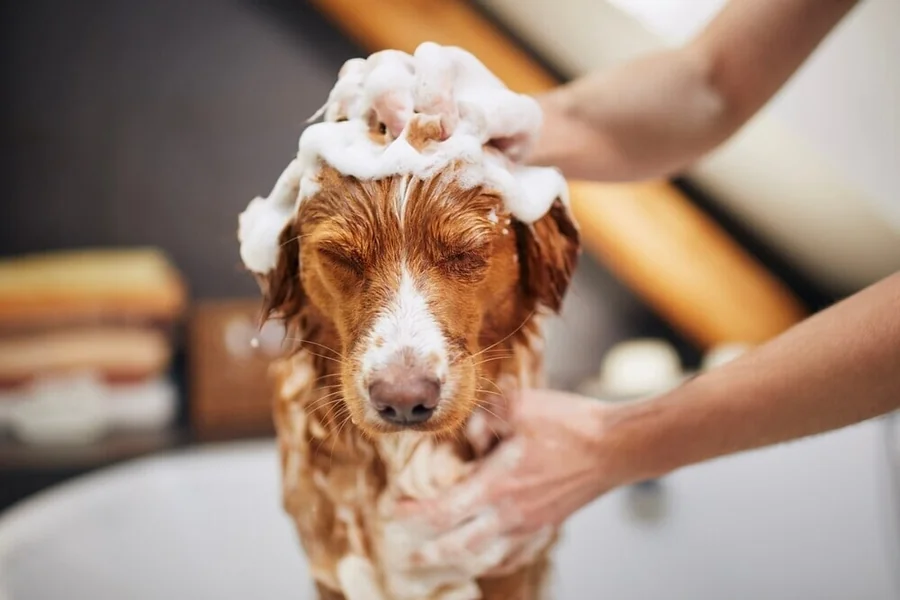
- Bath and towel dry:resets the coat, removes dander and allergens, and lets you feel for lumps, scabs, or hot spots you’d otherwise miss.
- Ear cleaning:the single most skipped task, and the one that most often turns into a vet bill.
- Nail trim:long nails change how your dog stands and walks. Ask any vet tech which problem they see most, and it’s this one.
- Teeth brushing:dental disease is one of the most common conditions vets diagnose in adult dogs, and daily or regular brushing is the standard preventive step.
Blow-drying, haircuts, paw trims, and shedding treatments are add-ons. They’re worth buying when your dog needs them, not because a package lists them. The American Veterinary Medical Association consistently points owners toward preventive routine care as the foundation of pet health, which is exactly what a monthly hygiene visit is.
Does your dog’s coat type change the schedule?
Yes, and this is where most generic advice falls apart. A short coated lab can go longer between full baths than a doodle, but the nails, ears, and teeth still run on the same clock. Coat type changes how much time the bath takes, not whether the routine happens.
| Coat type | Bath need | What bites you if you wait
|
| Short and smooth | Every 4 to 6 weeks | Dander buildup, nails growing long unnoticed |
| Double coat | Every 4 to 6 weeks plus brushing | Impacted undercoat, shedding that never seems to end |
| Curly or doodle | Every 3 to 4 weeks | Mats that tighten against the skin and can’t be brushed out |
| Long and silky | Every 3 to 4 weeks | Tangling behind the ears and under the collar |
Curly coats are the ones I’d never stretch. A mat that has tightened for two weeks isn’t a grooming problem anymore, it’s a comfort problem, and shaving it out is the only humane option left. If your dog has a doodle coat and you’re booking every ten weeks, you’re creating the exact situation you’re trying to avoid.
My three question test before you commit
I’ve walked maybe thirty owners through this decision, and the ones who stick with a routine all answered the same three questions the same way. Call it the Repeat Visit Test, and it’s the closest thing I have to a framework after watching this play out for a decade.
- Can you name the last time your dog’s ears were checked?If you can’t, you’re already behind. That’s the first thing to fix, and it’s the cheapest.
- Does your dog’s coat hide things?Run your hands against the grain tonight. If you catch a mat or a scab you didn’t know about, book something this week, not next month.
- Would you rather pay a small amount twelve times or a painful amount twice?The total is usually close. The pain isn’t.
If you answered honestly, you already know which side of this you’re on.
What you can handle between visits
You don’t need to replicate a groomer at home, and trying usually backfires. Brush your dog two or three times a week with the right tool for the coat, wipe ears when they look dirty, and keep up with whatever tooth brushing schedule your dog tolerates. Those three habits do more for coat condition than any shampoo on the shelf.
The Centers for Disease Control and Prevention notes that pets can carry germs into the home and that routine hygiene habits around animals help reduce that exposure, which is a good reason to keep your dog clean that has nothing to do with looks.
Skip the scissors. Trimming mats out at home is how dogs end up with bald patches and nicked skin, and it’s the number one reason a routine appointment turns into a repair job.
One more thing about the wellness check
The part owners underestimate is the eyes on your dog. A groomer handling your pet every month notices changes early: a new lump, a limp, an ear that smells off, weight gain you didn’t register in the mirror. You see your dog every day, which is exactly why you miss gradual changes. Someone who sees them monthly and isn’t emotionally attached catches things you won’t. That’s worth more than the bath, honestly, and I’d argue it’s the main reason the monthly model holds up so well.
Build the routine now, while your dog is healthy and the stakes are low. Pick a day, put it on your calendar like a dentist appointment, and stop waiting for the coat to tell you it’s time.
What’s the last thing you noticed on your dog that you’d been ignoring for a week?