Key Takeaways
- Responsibility may rest with a property owner, tenant, business operator, property manager, maintenance company, or another party that controls the area.
- A successful claim generally requires more than showing that a fall occurred.
- The condition, how long it existed, whether anyone knew about it, and whether warnings were provided can all matter.
- Photos, video, witness information, incident reports, and medical records can help document the event.
- Pennsylvania’s comparative negligence rules may reduce recovery when the injured person is found partly responsible.
- Deadlines can apply quickly, especially when a government entity or workplace injury is involved.
A slip and fall can happen anywhere in Pennsylvania, from a rainy store entrance in Pittsburgh to an icy walkway in the Lehigh Valley or a poorly lit stairwell in Philadelphia. Responsibility depends on why the fall occurred, who controlled the property, if a dangerous condition existed, and if the party had time to address it. Property owners are not automatically responsible for falls, but an unsafe condition may raise questions about maintenance, inspections, warnings, and repairs. People seeking a closer review of a specific situation may consider speaking with quinnlawyers after preserving the details of what happened.
Many slip-and-fall cases are premises liability. The key issue is whether the owner used reasonable care, which depends on specific facts such as a loose handrail, a broken step, a spill, an uneven sidewalk, damaged flooring, poor lighting, or ice. The injured must link the fall to a dangerous condition and show why it was neglected. For example, in stores, questions include whether employees caused the spill or knew about it, or whether they should have found it during inspections. Pennsylvania’s comparative negligence rules can also influence the case if the injured person did not act reasonably.
Who May Be Responsible?
The person named on the deed is not always the only potentially responsible party. Depending on the location and the agreements in place, responsibility may involve one or more of the following:
- Homeowners: A homeowner may be responsible for hazards in areas they control, such as a porch, driveway, walkway, or interior stairway.
- Commercial property owners: Owners of shopping centers, offices, restaurants, warehouses, and other commercial properties may retain responsibility for structural conditions or common areas.
- Tenants or business operators: A store, restaurant, or other tenant may control the sales floor, entryway, restroom, or other areas used by customers.
- Landlords and property managers: These parties may be responsible for shared hallways, parking lots, exterior stairs, elevators, and other common areas in an apartment or condominium community.
- Maintenance or snow-removal companies: A contractor may have duties under a maintenance agreement, particularly when it was hired to inspect, clean, repair, or treat a specific area.
- Government entities: A fall on public property can involve a municipality, county, school district, transit authority, or state agency, but special rules may apply.
Notice Often Becomes the Key Issue
A business or property manager cannot fix a condition they could not reasonably discover. Notice is often a key issue in Pennsylvania slip-and-fall cases. Actual notice means someone responsible knew about the problem; constructive notice means it existed long enough or was obvious enough that reasonable inspections should have revealed it.
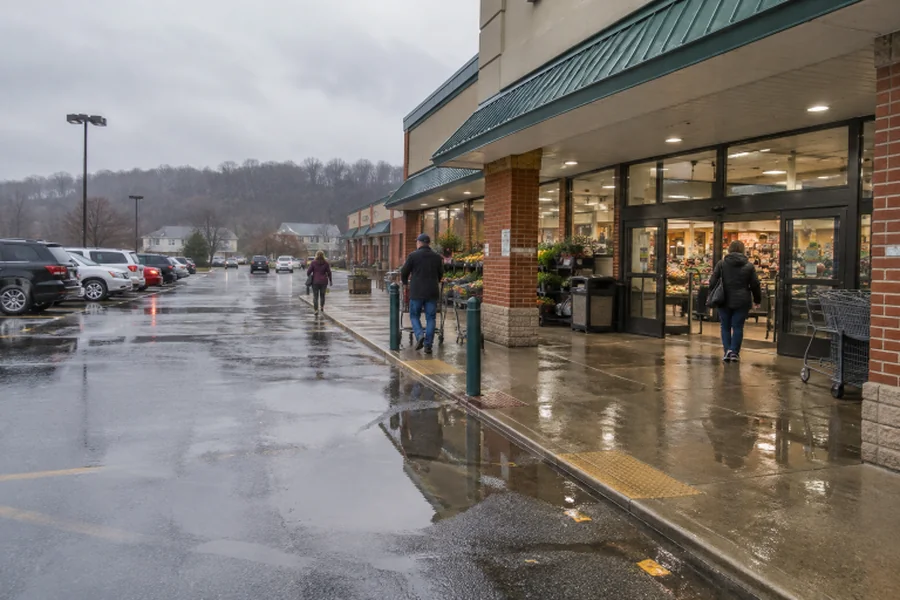
For example, consider a puddle near a store entrance during steady rain. Evidence that employees walked past it, warning cones weren’t used, or footage shows it was there for some time may be relevant. In contrast, a spill that occurred just before the fall raises different questions.
Evidence That Can Help Show What Happened
- Photographs or video showing the hazard, lighting, warning signs, footwear, and the surrounding area.
- The exact location, date, time, weather conditions, and names of employees or managers present.
- Witness names and contact information.
- An incident report, if one was created. Ask for a copy or record the report number.
- Security-camera footage, which may be erased or overwritten if not preserved promptly.
- Medical records that accurately describe the fall, symptoms, diagnosis, and treatment.
- Receipts and records related to medical expenses, travel, missed work, and needed assistance at home.
Can the Injured Person Share Responsibility?
A property owner or insurer may claim the injured person was distracted, ignored warning signs, entered a closed area, wore unsuitable footwear, or failed to notice an open condition. These do not automatically end a claim but can influence fault assessment. Under Pennsylvania law, damages may still be recovered if the claimant’s negligence is less than the defendant’s, but damages may be reduced by the claimant’s percentage of fault. For example, a 20% responsibility could reduce an award accordingly. Evidence, not assumptions, should guide this analysis.
Special Situations That May Change the Analysis
Snow and Ice Falls
Pennsylvania winters make snow-and-ice cases common. Responsibility can turn on the timing of a storm, the condition of the walkway, prior treatment efforts, drainage problems, lighting, and whether an unnatural accumulation of ice developed from a property defect. Take photographs before conditions change if it is safe to do so.
Falls at Work
A fall while performing job duties may be eligible for workers’ compensation benefits. A separate claim against another party may sometimes be possible when someone other than the employer caused the unsafe condition. Promptly reporting the injury to the employer and obtaining medical care are important first steps.
Falls on Public Property
Claims involving public sidewalks, government buildings, parks, or transit areas can have additional procedural requirements. It is especially important not to assume that the usual timeline applies.
What to Do After a Slip and Fall
- Get medical attention for urgent symptoms and follow recommended care.
- Report the fall to the owner, manager, landlord, or supervisor before leaving when possible.
- Document the condition and identify witnesses, but do not put yourself at risk to collect evidence.
- Preserve the shoes and clothing worn during the fall, particularly if their condition may be disputed.
- Write down what happened while details remain fresh, including statements made by employees or witnesses.
- Be cautious when discussing fault or signing insurance documents before understanding their purpose.
Do Not Wait to Consider Time Limits
Most Pennsylvania personal injury actions are subject to a 2-year limitation period under the state’s statute of limitations. The correct deadline can vary based on the parties involved and the facts of the incident, so it should not be treated as a substitute for individualized advice. Waiting can also make practical proof harder to obtain as video is overwritten, witnesses become difficult to locate, and physical conditions change.
Conclusion
Responsibility for a slip-and-fall accident in Pennsylvania depends on the property owner’s control, the dangerous condition, notice, maintenance practices, and the conduct of everyone involved. The most useful early steps are to prioritize health, report the incident, preserve evidence, and keep accurate records. A prompt, careful review can help clarify who may be responsible and what options may be available.