

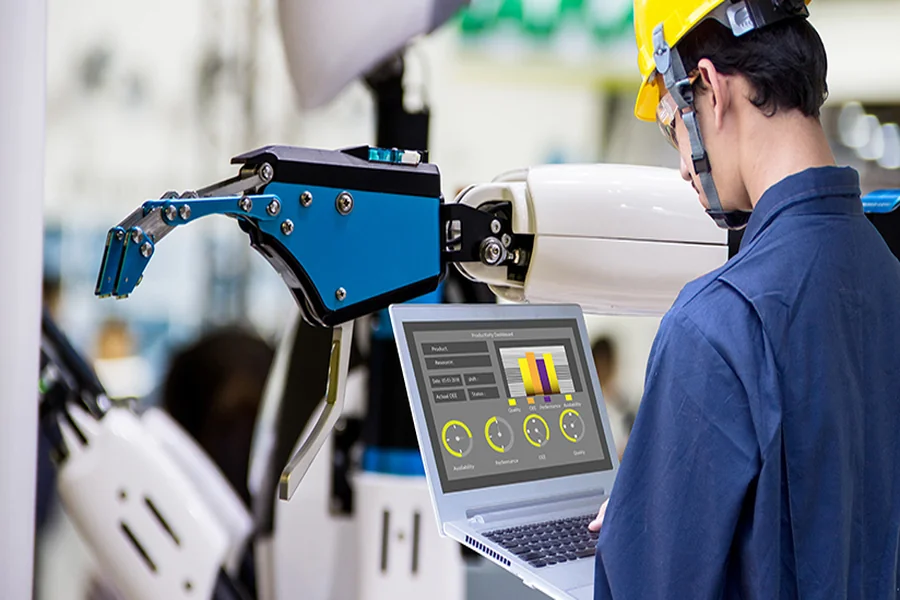
In the current scenario, automation is one of the crucial drivers of change in all the industries. Automated systems are being adopted by businesses all over the world, not just in the tech giant nation, to bolster their effectiveness, lower expenses and ramp-up its productivity. Automation is changing the way organizations work—from factories to medical or healthcare institutions to retail stores to financial institutions.
Many repetitive tasks in the past consumed a considerable amount of effort and time by humans. These jobs can now be done faster and more accurately by state-of-the-art technologies – like artificial intelligence (AI), robotics, machine learning and smart software. With this reduction in focus, businesses can devote more resources to innovation, customer satisfaction, and business expansion.
The article discusses the role of automation in today’s industries, its advantages, disadvantages, and future prospects.
What Is Automation and Why Is It Important?
Automation is the process of using technology, machines or software to perform tasks partially or fully without any or minimal human involvement. It is meant to execute repetitive, time consuming and rule-based tasks faster and more effectively than any human would be able to.
Automation is essential for modern industries because it increases the efficiency of the operations, and makes it less prone to errors. From production lines to customer service, inventory and payroll to numerous more, businesses can automate them all.
As customer needs rise, the value of automation is constantly growing. The consumers want faster delivery, better service and quality products. In today’s evolving business landscape, businesses must rise to these demands without compromising upon becoming competitive with the introduction of automation.
In addition, automation allows organizations to use their resources more effectively. Fewer hours sitting at a desk and less time working on repetitive tasks and more time creative problem solving, planning and servicing.
Benefits of Automation in Modern Industries
Automation in the industry has a lot of benefits for various industries. Its advantages are among the largest — it increases productivity. Machines and software don’t get tired and can be used on an ongoing basis, which means companies are able to manufacture more content in a shorter amount of time.
The other significant advantage is its accuracy. With automated systems, human errors are minimized which leads to better product/services. This is particularly crucial for industries like healthcare, manufacturing, and finance, where even minor errors can have major ramifications.
Another important benefit is the cost savings. While there might be an investment cost involved in automating, businesses can save money on compensations, have less waste, and get more efficient in the long term.
Automation also enhances workplace safety. Robots and automated equipment can be used to reduce the risk of injuries in the workplace by performing dangerous tasks with heavy machinery, hazardous chemicals, and extreme temperatures.
On top of that, automation enhances customer satisfaction, too. Speedier response times, accurate order processing and efficient customer service lead to improved experiences and loyal customers.
Lastly, automation offers valuable data which enhance businesses to make educated decisions. Automated systems gather and process information on-the-spot, aiding managers in pinpointing trends, optimizing operations, and reacting swiftly to market shifts.
Applications of Automation Across Different Industries
An automation system is a key part of almost every industry. Automation has long been a major application for manufacturing. No matter how many robots are required to make the product, assemble it, inspect it or package it they do so with speed and accuracy.
Automation can assist healthcare professionals in their patient care by handling patient information, scheduling appointments, analyzing lab tests, and helping with diagnosis. This enables doctors to devote more time to their patients.
Automation can have a positive impact on the retail sector as well. Automated systems for managing inventory, warehouse robots, and recommendation systems are being leveraged in online stores to enhance the shopping experience. The use of self-service checkouts and digital payment provides a faster and more convenient process for transactions.
Automation is utilized by financial institutions for fraud detection, processing transactions, providing customer support, and analysing risks. It takes just seconds for automated systems to keep track of thousands of transactions and catch suspicious movement.
Route Planning, Warehouse Management, Package tracking, Fleet Management, and Route Optimization are among the areas where transportation and logistics companies rely on automation. These technology solutions provide better performance, enhance fuel savings and reduce operating costs.
The farming industry also has begun to go increasingly automated. In days gone by, farmers would water their crops by hand to make sure they got enough water.On those days, farmers would manually water the crops to ensure that they are getting enough water to grow the crops.
In the field of education, online learning platforms, automated grading systems, and personalized learning tools for both learners and educators are harnessing the power of automation to enhance teaching and learning.
Challenges and Considerations of Automation
While automation offers numerous benefits, it is not without its fair share of challenges that need to be carefully considered.
A major concern is loss of jobs. Again, as machines start to take care of handling more repetitive jobs, some may not need that many of the same jobs any more. But automation brings about new opportunities in technology, engineering, maintenance, data security and data analysis. Those who still continue to acquire new skills will have better chances of meeting these changing job markets.
One other difficulty is the expense of implementation. Getting the equipment, creating the software and staffing up costs a lot of investment. While these expenses can be a challenge for small businesses in the beginning, the long-term savings may eventually make up for them.
Another major factor to take into account is cybersecurity. In industry, with more systems becoming connected via digital systems, it is becoming more important to protect sensitive data. Owning a better cyber security system is the prerequisite for a business to not have to deal with cyberattacks and data breaches.
It is also important that automated systems are reliable, and this is the responsibility of the businesses. To avoid downtime and ensure steady performance, regular maintenance, software updates, and system monitoring are crucial.
The ethical dilemmas related to AI and automation remain constant.The ethical issues with A.I./automation keep building. Organizations must ensure that its use of automation is done responsibly, with transparency and respect for customer privacy and exercise fairness in decision making processes.
Successful implementation of automation requires careful planning, training of staff and openness to technological change.
The Future of Automation in Modern Industries
Technologies evolve and the future of the automation is bright. Automated systems are getting smarter and changing with each step of the road with the help of artificial intelligence, machine learning, cloud computing and IoT.
Future automation is not about replacing humans but about the human-machine collaboration. Having a step-by-step collaboration with automated systems that help with repetitive tasks, while humans take on creativity, leadership, communication and decision making.
The smart factories will grow, and with connected devices being able to track what’s happening in the factory in real time and foresee any imminent problems with equipment. AI tools will enable healthcare providers to increasingly have powerful diagnostic technologies and customized recommendations for treatment.
Decreased waste will also be facilitated through automation for businesses so they can become more sustainable. Waste reduction, emission reduction and natural resource conservation are the benefit of adopting a smart energy management system, optimizing supply chains and efficient manufacturing processes.
The rise of digital transformation presents an opportunity for organisations to gear up for the future if they are prepared to adapt to the changing landscape by investing in employees and automation.
Final Thought
In today’s industries, automation has become an integral part of business to make it more efficient, productive, and provide better product and services. Industries are undergoing an automation revolution spanning from manufacturing and healthcare to finance, retail, agriculture and logistics.
The potential challenges to implementation costs, cybersecurity risks, and workforce changes must be faced, but the overall benefits of automation are significant. When a company adopts cutting-edge technologies and hires more quality talents, it will be more innovative and competitive.
In an ever-changing technological landscape, automation will continue to have a significant impact on the future of business. Those companies that are leading the way in responsible automation, and who remain nimble and agile to meet new challenges and developments, are best poised to win in the connected, digital age.