

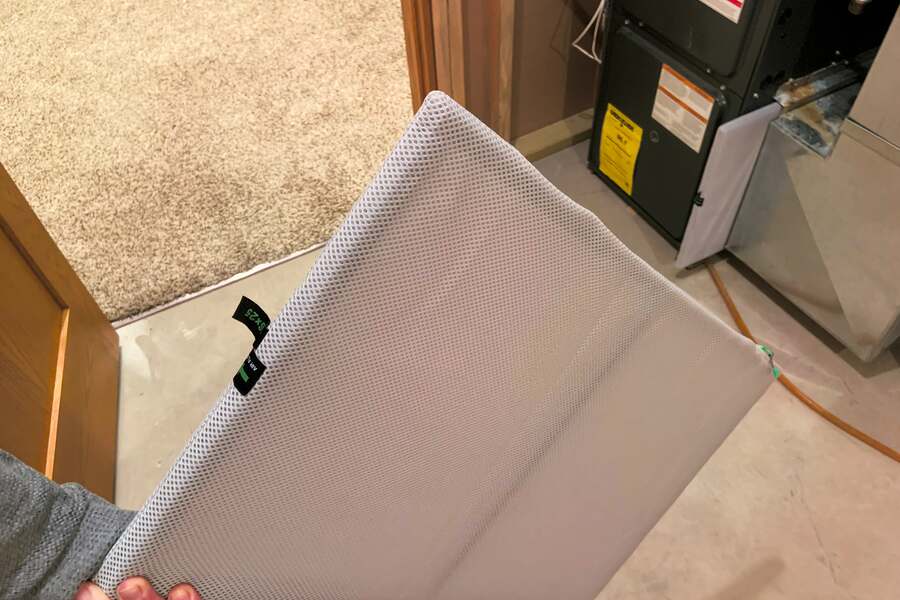
Your filter catches maybe a third of what floats toward it. The rest keeps moving, and some of it lands on the pillow you sleep on eight hours a night. That gap, the stretch between the filter slot and your bedroom, is where most homeowners stop paying attention.
Here’s the promise: by the end of this piece, you’ll know the actual route your air takes, where it picks up junk along the way, and the handful of moves that make the biggest difference. Plain language only, and no fearmongering. We’ll walk the route step by step.
The trip starts at the return grille. Air gets pulled in from your hallway or living room, slides through the filter, and enters the blower compartment. If your ducts have never been cleaned, that compartment is often where the story gets ugly. Dust builds on the blower wheel, the wheel gets heavier, and the whole system works harder to push the same air. When a home gets to that point, a crew like Air Duct Cleaning West Jordan typically pulls the debris out of the trunk lines before it ever reaches a bedroom vent.
Where does the air actually go after the filter?
Picture the supply plenum as a highway on-ramp. Air leaves the blower, gets heated or cooled, and gets shoved into the main trunk line that snakes through the attic, the basement, or the crawlspace. From there it splits into branch ducts, the skinny runs that feed individual rooms.
Those branch runs are the weak link. They’re long, they bend, and they collect dust at every joint. A run that serves a bedroom two doors down from the furnace has more chances to pick up grit than the vent right above the unit. That’s why the far bedroom often feels dustier than the room next to the equipment.
Consumer Reports notes that filter choice affects how much particulate gets through in the first place, which is worth a look before you blame the ducts for everything. Consumer Reports treats the filter as the first line of defense, and it’s a fair point: a cheap filter that’s been in place for a year isn’t defending much.
The dust that rides along
Dust isn’t the only passenger. Pet hair, lint from towels, cooking residue from the kitchen, and whatever tracked in on shoes all get airborne and pulled into the return. Some of it settles in the ductwork, and some of it gets delivered straight to your bedroom register.
Research published in a peer-reviewed journal on indoor air quality frames filtration as one of the more reliable ways to reduce what circulates indoors. PMC covers the filter advantage in plain terms, and the takeaway for you is simple: the filter does real work, but it can’t do it alone if the ducts behind it are loaded.
The bedroom arrival
Air enters through the supply register, usually near a wall or ceiling, and starts to slow down. As it slows, it drops whatever it’s carrying. That’s basic fluid dynamics. Particles that stayed suspended in the fast-moving duct settle out in the calmer air of your room, and the surfaces closest to the register take the hit first.
Look at the wall above your bedroom vent. If there’s a faint gray shadow trailing upward, that’s the signature of a supply register pushing dusty air. Same story with the top of your curtains and the shelf you never dust.
A quick reality check on duct cleaning
Not every home needs it. The EPA is upfront that duct cleaning isn’t automatically necessary and that the case for it depends on the condition of the ductwork itself. EPA lays out the situations where cleaning makes sense, like visible mold, vermin, or heavy debris. I’d rather you read that page than take a sales pitch at face value, including mine.
What you can actually do about it
Here’s the part where you stop reading and start checking things. Work through this in order, and don’t skip the boring ones.
- Check the filter size and swap it on schedule. Jot the install date right on the cardboard edge with a marker. You’ll forget otherwise.
- Seal the gaps at the register boots. A tube of mastic and twenty minutes closes leaks that pull attic air into your bedroom.
- Shine a flashlight up into a supply vent. A faint coating of dust is expected. A visible mat of debris means it’s time for a professional look.
- Leave the return grille unobstructed. Furniture, rugs, and curtains blocking the return starve the system and change how air moves through the whole house.
- Ask for photos before and after any duct work. A crew that can’t show you what came out didn’t do much.
My honest take: start with the filter and the register seals. Those two cost almost nothing and fix a surprising share of the dust complaints I hear about. Duct cleaning comes after, and only when you’ve got a reason beyond a coupon in the mail. A neglected filter also strains the blower, which is one reason a furnace fails on the first cold night of the season.
The part nobody thinks about
Every time you open a bedroom door, you change the pressure in that room. Air rushes in or out, and the dust that settled on the floor gets kicked back up. That’s why a freshly cleaned room looks dusty again in a week. The system is always running, and the journey never really stops.
So the next time you flop onto your bed and notice a gray film on the nightstand, you’ll understand the path it traveled. Filter, blower, trunk, branch, register, room. Now you know where to interrupt it.
Go check your filter right now. If the last swap date escapes you, treat that as your cue to replace it today.