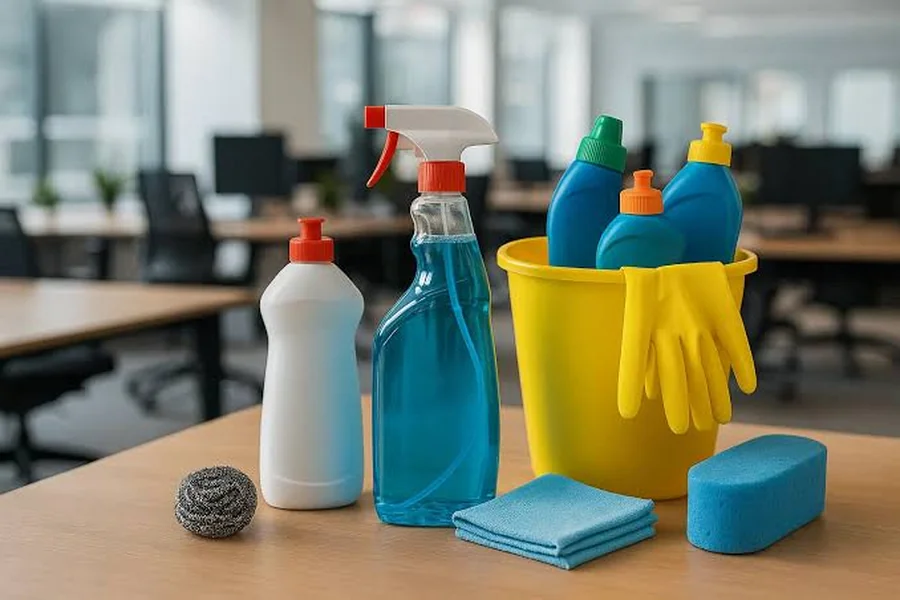
I once watched a two-person crew burn $400 in a single week because they kept buying gallon jugs of the wrong glass cleaner. Four hundred dollars is not a rounding error for a small operation. It is a full day of labor. If your supply closet is stuffed with half-used bottles you regret, the problem is not your budget. It is how you are choosing what goes on the shelf.
This guide gives you a buying system you can run in about an hour. You will learn how to match chemicals to the surfaces you actually touch, size your orders so nothing dies in the closet, and spot the products worth paying more for. By the end, you will have a short list you can hand to any supplier and a simple rule for saying no to upsells.
Start With Surfaces, Not With Brands
Most small teams buy by brand loyalty or by whatever was on sale. That is backwards. Walk your accounts first and write down what you actually clean. Be specific. Not “offices” but “nine glass entry doors, four breakroom counters, two restroom banks with porcelain tile, and carpet in three hallways.”
That list tells you almost everything. Glass doors need a streak-free formula and a dedicated microfiber. Porcelain tile wants a neutral pH cleaner that will not eat the grout. Carpet needs a pre-spray and an extraction rinse matched to the fiber, not to the label color. When you buy by surface, you stop paying for products that solve problems you do not have.
Here is the part people skip: read the dilution ratios before you compare prices. A concentrate that costs three times as much per bottle can still be cheaper per job if it dilutes at 1:64. I have seen crews save real money just by switching from ready-to-use to concentrate on their most-used floor cleaner. Do the math on one product at a time. It takes ten minutes and it usually changes your answer.
Where Cheap Supplies Actually Cost You Money
Cheap is fine for trash liners that only hold paper. Cheap is a bad bet on anything that touches a customer’s line of sight: entry glass, reception floors, restroom fixtures. When a client walks in and sees streaks on the door, they do not blame the product. They blame you, and they start wondering what else got skipped.
So split your buying into two piles. Consumables you burn fast, like liners, paper towels, and rags, can go generic. Anything that shows up in the client’s first thirty seconds deserves the better version. That does not mean the most expensive bottle on the shelf. It means the one your crew does not have to fight with.
There is also a safety layer here that a lot of small crews wave off. Mixing certain products, especially anything with bleach and anything with ammonia, can create dangerous fumes in a closed restroom. According to OSHA, employers are responsible for communicating chemical hazards to workers, which in practice means keeping Safety Data Sheets where your crew can actually find them and training people on what not to combine. Buying fewer, simpler chemicals is one of the easiest ways to make that job smaller.
Size Your Orders to Your Route, Not to the Sale
Bulk pricing is bait for small teams. A 55-gallon drum of degreaser is a bargain right up until it sits in your garage for two years and separates. Buy to your route cycle. If you clean a building weekly, estimate what one month of that account actually consumes, then buy slightly under it and reorder on a set day each month.
I would rather place twelve small orders a year than three big ones I regret. Small orders also keep cash moving, which matters when you are paying crews before clients pay you. Set a reorder day. Mine is the first Monday of the month, and it has saved me more than any coupon code ever did.
- Count what you used last month before you order anything new.
- Cap any single product at a two-month supply until you know it moves.
- Keep one backup of your most-used chemical, never five.
A Simple Walkthrough for Buying Your First Kit
New crews ask me what to buy first, and I usually tell them to ignore equipment for a week and buy chemicals in this order. It keeps you from spending your startup cash on a machine you will not need until month three.
- Neutral pH floor cleaner.One concentrate that handles hard floors and most tile. It is the workhorse of your closet.
- Glass and surface cleaner.One formula, one dedicated microfiber per crew member. Do not share cloths across restrooms and glass.
- Disinfectant or sanitizer for restrooms.One product, one clearly labeled bottle, and a sprayer you never mix with anything else.
- Restroom acid cleaner.Only if your accounts have hard water scale. Skip it if they do not.
- Carpet pre-spray and rinse.Only after you confirm you own carpet accounts. Match both to the fiber.
- Trash liners, paper, and rags.Buy generic and buy often.
Notice what is missing: a long list of specialty bottles. Every extra product adds training time, shelf space, and one more way for a crew member to use the wrong thing in the wrong room. Simple closets get cleaned correctly.
What to Look for on the Label Before You Pay
Shelf appeal tells you nothing. Flip the bottle over. Look for a dilution chart, a Safety Data Sheet reference, and a clear statement of what surfaces the product is meant for. If a label will not tell you what it cleans, it will not clean much.
You should also think about where your waste goes. Many commercial cleaners and their packaging move through regulated disposal channels once they are spent. The EPA publishes plain-language guidance on chemical safety and disposal, and it is worth a read before you stock up on something you cannot legally toss in a dumpster. Small haulers get this wrong more often than you would think, and the fine is not small.
One more label habit: date the bottle when you open it. Concentrates and disinfectants lose potency over time, and you will never remember when that jug hit the shelf. A piece of masking tape and a marker cost nothing.
Build a Relationship With One Good Supplier
You can price-shop every order and spend your evenings comparing invoices, or you can build a relationship with a supplier who knows your route and keeps your core items in stock. I pick the second option every time, because the hidden cost of a stockout is a crew standing around or a client seeing a shortcut.
A good supplier also becomes a resource. They will tell you when a product you love is being discontinued, and they will point you toward something that does the same job. For teams working commercial and restoration accounts around the Philadelphia area, Professional Cleaning Supplies Sharon Hill, is the kind of local counter that stocks both everyday janitorial items and the heavier restoration gear, so you are not juggling four vendors for one job.
Come to that conversation with your surface list and your monthly usage numbers. Suppliers respond to specifics. “I need a neutral floor concentrate that dilutes well and I go through about six gallons a month” gets you a real recommendation. “What’s on sale” gets you whatever they need to move.
Do This Before Your Next Order
Set aside one hour tonight. List your surfaces, count last month’s usage, split your buying into show and burn piles, and pick one reorder day. That is the whole system, and it works at ten accounts or a hundred.
The crews that stay profitable are not the ones with the biggest closets. They are the ones who know exactly what is on the shelf and why. What is the one product in your closet right now that you keep buying out of habit?