
Key Takeaways
- Dead, severely damaged, unstable, or declining trees may require prompt professional assessment.
- Cracks, cavities, lifting soil, exposed roots, and a sudden lean can indicate structural concerns.
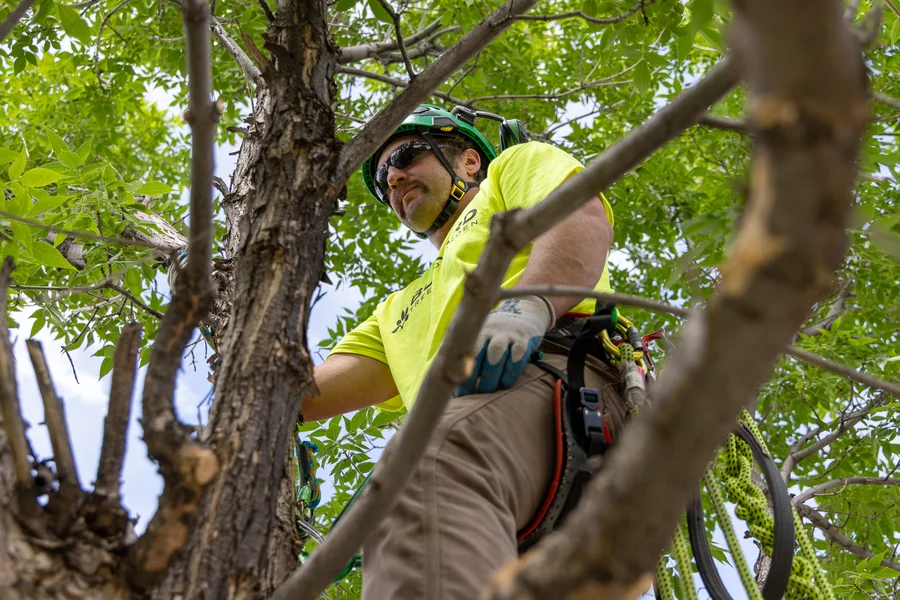
- Professional crews may use climbing, controlled rigging, sectional dismantling, or crane assistance depending on site conditions.
- Selective removal can support defensible-space planning without requiring the removal of every healthy tree.
- A clear estimate should explain the scope of work, the cleanup plan, the stump options, and the property protection measures.
A mature tree can add shade, character, and value to a property, but a tree with serious structural problems can also create a safety concern. If you have noticed a major lean, dead limbs, storm damage, visible decay, or branches pressing against a roof, a professional tree removal service in Boulder CO can help determine the safest next step.
Tree removal should not be treated as a routine cutting task. The right decision depends on the tree’s condition, its location, nearby people and structures, access for equipment, and whether pruning or stabilization could reasonably reduce the risk. Roots Up Tree Company evaluates these factors before recommending a course of action for residential, commercial, HOA, and property-management clients.
When Removal May Be Necessary
Removal may be appropriate when a tree is dead, has extensive decay, has suffered major storm damage, or is positioned where failure could strike a home, driveway, fence, road, or occupied area. Trees with severe disease or pest-related decline may also become harder to manage safely as their wood becomes brittle or unstable.
No single symptom automatically means a tree has to come down. A qualified assessment considers the species, trunk and branch structure, root condition, soil stability, recent weather exposure, and the consequences if part or all of the tree were to fail. A tree in an open field presents a different level of concern than the same tree growing over a roof or power line.
Understanding the full scope of a tree’s condition requires professional expertise. An arborist can identify issues that may not be immediately visible to an untrained eye, such as internal decay, structural weaknesses in branch attachments, or root rot that compromises stability. This assessment becomes even more critical when trees are located near high-value structures, frequently occupied areas, or sensitive landscaping. The potential consequences of tree failure, including property damage, injury, or loss of life, make it essential to address serious structural concerns promptly and thoughtfully.
Warning Signs to Watch For
Property owners should keep their distance from a questionable tree and avoid climbing, topping, or cutting it without proper training and equipment. Homeowners who want to learn how tree removal helps reduce wildfire risk can also use a professional evaluation to identify dead trees, low-hanging limbs, and dense vegetation near structures that may need attention.
Visible Signs of Structural Risk
- Large dead limbs, a dead treetop, or significant thinning in the canopy.
- Fresh cracks in the trunk or major scaffold limbs.
- Cavities, loose bark, deep seams, or fungal growth near the trunk base.
- Exposed roots, soil heaving, or a new and noticeable lean.
- Multiple trunks joined by a narrow, weak-looking attachment point.
- Branches resting on a roof, fence, vehicle, or utility line.
For example, a large cottonwood can look sound from a distance while concealing decay or weak branch attachments. Wet snow, high winds, and saturated soil can place additional stress on an already compromised tree. An on-site assessment can determine whether pruning, cabling, monitoring, or removal is the more appropriate response.
Dead limbs represent one of the most common hazards that homeowners encounter. When branches lose their living connection to the tree, they become increasingly brittle and prone to breaking, especially under the weight of snow or during high winds. In many cases, dead limbs fail suddenly and without warning, potentially causing injury to people below or damage to structures and vehicles. While some dead limbs may be high enough in the canopy to pose minimal risk, those extending over occupied areas or structures warrant immediate attention.
Cavities and decay present a different challenge. Trees can compartmentalize wounds and decay, but extensive cavities can compromise the trunk’s structural integrity, making it more susceptible to failure during storms or high winds. The wood surrounding these cavities may become soft or punky, unable to support the weight of upper branches effectively. Fungal fruiting bodies, such as shelf fungi or conks, often indicate internal decay that cannot be seen from the outside and typically signal that decay has progressed significantly.
A sudden lean or change in a tree’s angle from vertical can indicate several serious problems. Root damage, soil instability, or wind-induced stress can cause a tree to shift position. When this happens, the tree’s support system is compromised, and the weight distribution becomes uneven, creating additional stress on remaining roots and the trunk itself. A tree that has recently developed a noticeable lean should be evaluated promptly, as it may become increasingly unstable over time.
Boulder County Conditions and Wildfire Planning
Boulder County properties can have challenging access, slopes, changing weather, dry periods, and trees located close to homes or neighboring lots. These conditions affect how a crew approaches removal, where materials can be lowered, and whether specialized equipment is needed. Roots Up Tree Company serves Boulder, Lafayette, Longmont, Louisville, Erie, Niwot, Lyons, Nederland, Jamestown, and nearby communities.
Wildfire mitigation is another reason some owners consider selective tree work. Boulder County identifies vegetation management and defensible space as components of wildfire risk reduction, particularly for properties in unincorporated areas. Its defensible space requirements focus on managing conditions around structures, rather than treating complete tree clearing as a universal solution.
A thoughtful plan may involve removing dead or diseased trees, separating dense vegetation, reducing low branches that connect ground fuels to the canopy, and maintaining access around buildings and driveways. Healthy, well-spaced trees can often remain part of the landscape when they do not create an unacceptable hazard or fuel pathway.
The Colorado Front Range experiences variable precipitation and seasonal drought conditions that can stress trees and make them more susceptible to pest infestations and disease. Properties at higher elevations face additional challenges, including heavy snow loads, intense winds, and rapid weather changes that can stress even healthy trees. Lower-elevation properties may face different species composition and pest pressures, but all require thoughtful management strategies. Working with local professionals who understand regional conditions, soil types, species performance, and seasonal patterns ensures that recommendations are practical and appropriate for specific locations.
How Professional Tree Removal Is Planned
A complete removal plan begins with understanding both the tree and its surroundings. Roots Up Tree Company can review the specific concern, inspect the trunk, canopy, roots, and branch unions, and then identify potential targets such as homes, fences, vehicles, irrigation, landscaping, and utility infrastructure.
From there, the crew selects an approach suited to the property. Common methods include:
- Sectional dismantling: Removing the tree in manageable pieces when space is limited.
- Rigging: Lowering branches or trunk sections in a controlled manner when they cannot be dropped safely.
- Crane-assisted work: Used when a large or hazardous tree requires added control, and suitable site access is available.
- Conventional felling: Appropriate only where there is adequate open space and a safe fall path.
The work scope should also address brush chipping, log removal, debris hauling, site cleanup, and whether stump grinding is requested. Standard tree removal may leave a stump, while grinding can reduce the stump below grade, making the area easier to replant or restore.
Safety considerations drive every decision in the removal process. Before any work begins, a professional crew will establish work zones, identify hazards, brief all team members on the plan, and ensure that proper personal protective equipment is in place. For trees near structures, utilities, or neighbors’ properties, detailed communication and coordination are essential. Many removal projects require notification to utility companies if power or gas lines are present, and some may require permits from local authorities.
Sectional dismantling requires skill and careful sequencing. An arborist climber will ascend the tree using specialized equipment and remove sections from the top down, controlling each piece as it comes off. This method takes longer and typically costs more than conventional felling, but it is the appropriate choice when drop zones are not available or when property protection is critical. Each section is lowered using ropes and friction devices, ensuring that nothing falls out of control or strikes nearby structures.
Crane-assisted removal can dramatically speed up the process for large trees when site conditions permit. A mobile or tower crane positioned on or near the property can lift and lower entire sections, dramatically reducing the time climbers spend in the tree and minimizing the physical demands on the crew. However, crane work requires adequate space, suitable soil to support the crane’s weight, and often requires utility notification and coordination. The cost of crane rental must be weighed against the benefits and risks associated with alternative methods.
When a Tree May Be Preserved
Removal is not always the best answer. A tree that is otherwise healthy may benefit from structural pruning, deadwood removal, selective weight reduction, cabling, bracing, or periodic monitoring. These measures may reduce strain on certain limbs or address clearance issues while preserving the tree’s benefits.
Structural pruning is distinct from aesthetic or routine pruning. It focuses on improving branch structure, removing co-dominant stems, and reducing weight from areas of concern. By removing branches that compete with each other or create uneven weight distribution, a qualified arborist can help a tree develop a stronger framework and reduce the risk of failure.
Cabling and bracing are specialized techniques used to support weak branch unions or reduce the stress on compromised limbs. When two large limbs arise from a single point and create a narrow, V-shaped union, the attachment is inherently weaker than if the limbs separated at a wider angle. A cable system can help distribute the load and reduce the likelihood of failure. However, cabling is not a permanent solution and does not halt the underlying decline; it is a management tool that can extend the life of a valuable tree while additional monitoring is conducted.
However, preservation is not appropriate in every case. Severe decay, unstable roots, extensive trunk damage, advanced decline, or a high-risk location can make removal the more responsible option. Ash trees deserve careful attention because identifying the cause of decline is important. The Colorado State Forest Service advises homeowners to monitor ash trees and notes that proper identification matters because several issues can resemble emerald ash borer damage.
Choosing a Tree Removal Company
Before approving work, ask practical questions that clarify both safety and value:
- Is the company licensed, bonded, and insured?
- Does it have experience with trees near structures, utilities, and restricted-access areas?
- Will the estimate describe the removal method, cleanup, stump options, and possible additional work?
- How will the crew protect landscaping, fences, driveways, and irrigation?
- Can the company explain why removal is recommended instead of pruning or stabilization?
- Is emergency service available for fallen trees or urgent storm damage?
Insurance and licensing provide an important safeguard. Professional tree work involves significant hazards, including working at height, operating heavy equipment, managing traffic and equipment near structures, and handling sharp tools. A company with proper general liability insurance, workers’ compensation coverage, and professional credentials demonstrates a commitment to safety and legal compliance. Ask to see certificates of insurance and verify that coverage limits are appropriate for the scope of work.
References from past clients offer valuable insights into a company’s reliability, attention to detail, and customer service. Ask whether the company can provide contact information from recent residential or commercial clients who had similar work performed. Questions about timeliness, site cleanup, communication, and whether the work proceeded as estimated can help you gauge what to expect.
A detailed written estimate is essential. It should specify the trees or limbs to be removed, the removal method, whether the stump will be ground, how debris will be handled and removed from the site, any site protection measures that will be employed, and the total price. The estimate should also clarify what is included in the cleanup and what may incur additional cost. Vague estimates, verbal agreements without written confirmation, or refusal to explain the recommended approach are red flags.
Location: Roots Up Tree Company | 343 Indian Peaks Trail W, Lafayette, CO 80026 | (720) 783-7434 | https://rootsuptreecompany.com/
Frequently Asked Questions
Can a tree near my house be removed safely?
Yes, but the method should match the site. Trees near homes may require climbing, rigging, sectional dismantling, or crane assistance to control branches and trunk sections.
What should I do if a tree is touching a power line?
Keep people away from the area and contact the utility provider promptly. Do not attempt to trim, move, or remove a tree that is in contact with electrical equipment or lines.
Does Roots Up Tree Company provide emergency service?
Roots Up Tree Company offers 24/7 emergency tree service for urgent hazards, including fallen trees, broken limbs, blocked access, and storm-related damage, in Boulder County.
Will tree removal help prevent wildfire damage?
Selective removal can reduce certain fuel hazards, but it is only one part of a broader wildfire-mitigation plan that may also include vegetation spacing, home hardening, and ongoing maintenance.
How long does a typical tree removal take?
The timeline depends on the tree size, location, removal method, and site conditions. A small to medium tree in an open location might be completed in a few hours, while a large tree requiring sectional dismantling or crane assistance can take a full day or more. Site cleanup and stump grinding add additional time.
What happens to the wood and debris after removal?
Most professional crews chip brush and smaller branches for reuse as mulch or removal from the site. Larger logs can be cut for firewood, milled, or hauled away. Always clarify debris disposal in the estimate before work begins.
Can a tree be saved if it has a disease?
Some tree diseases can be managed through pruning, treatment, and ongoing care, while others are progressive and ultimately fatal. A professional diagnosis is necessary to determine whether preservation is possible or removal is the appropriate option.