Key Takeaways
- Routine deck care can help owners address small defects before they develop into larger repair needs.
- Water, traffic loads, deicing chemicals, temperature changes, and drainage conditions all affect deck performance.
- Material selection matters, but preparation, installation, inspection, and traffic planning are equally important.
- Repair decisions should consider structural condition, safety, downtime, and lifecycle value rather than initial cost alone.
- Inspection and project data can help agencies prioritize work before deterioration spreads.
Why Bridge Deck Maintenance Deserves Early Attention
A bridge deck is exposed to constant vehicle loading, rain, standing water, heat, cold, and, in many regions, deicing chemicals. Small cracks, worn aggregate, failed joint areas, or poor drainage can allow water and contaminants to reach deeper portions of the deck. Addressing those conditions early can preserve more of the existing structure and give owners more options than waiting until a visible failure occurs. For decks that remain structurally suitable for rehabilitation, a polyester concrete overlay may be considered as part of a broader preservation strategy. Alliance Diversified Enterprises, Inc., an Escondido, California-based heavy civil contractor, specializes in installing polyester paving systems for bridge decks, highways, and industrial pavements. Its service page describes rapid-curing, high-traffic surface protection work, and the company holds licenses in California and several western and central states. Preservation is not the same as emergency repair. It is a planned approach that uses inspections, maintenance, and timely rehabilitation to protect an asset’s condition and usefulness. The bridge preservation guidance maintained by the Federal Highway Administration reflects the importance of managing bridges with long-term service life in mind.
The Main Forces That Wear Down Bridge Decks
Deck deterioration rarely has one cause. Instead, it usually develops through a combination of environmental exposure, traffic demand, and construction details.
- Heavy traffic: Repeated wheel loads wear the surface and can stress vulnerable areas near joints, patches, and deck edges.
- Water intrusion: Moisture can enter through cracks, joints, drains, and poorly sealed transitions.
- Deicing salts: Chlorides can contribute to corrosion risk when they reach reinforcing steel in concrete.
- Freeze-thaw exposure: Water inside pores and cracks can expand during freezing conditions.
- Heat and sunlight: Thermal movement and surface heating can add stress to materials and joints.
- Poor drainage: Puddling near curbs, scuppers, or expansion joints can keep deck materials wet longer than intended.
Signs That a Bridge Deck May Need Attention
Visible symptoms are useful warning signals, but they do not replace an engineering assessment. Owners should investigate conditions such as:
- Long cracks or concentrated patterns of fine cracking in the driving surface.
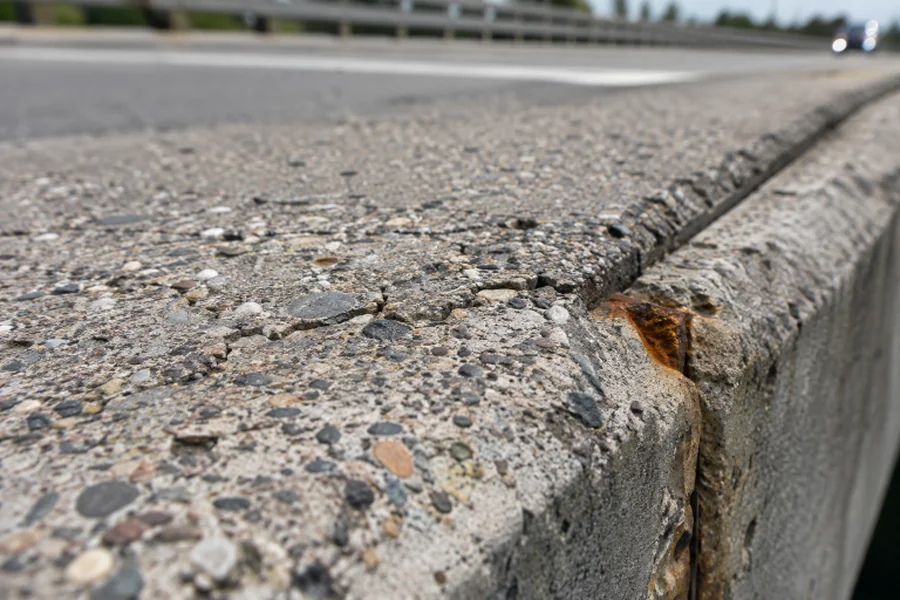
- Scaling, spalling, loose concrete, or exposed reinforcing steel.
- Rust staining around cracks, patches, or deck edges.
- Standing water near drains, curbs, and expansion joints.
- Uneven travel lanes, worn patches, or a noticeable decline in ride quality.
- Reduced surface texture or areas where skid resistance may be a concern.
Repair, Rehabilitation, or Replacement?
The correct response depends on the extent and cause of the damage, the deck’s remaining structural capacity, expected traffic demand, available funding, and the bridge’s intended service life.
Repair Is Often Appropriate for Isolated Defects
Localized repairs can address limited spalls, small deteriorated areas, minor drainage issues, or individual joint-related problems. The goal is to correct the defect while preventing water and contaminants from spreading the damage.
Rehabilitation Can Renew a Sound Deck Surface
When the underlying concrete remains suitable, but the wearing surface is worn or exposed, rehabilitation may provide renewed protection and traction. A surface system cannot solve deep structural deterioration, so deck evaluation must come first.
Replacement May Be Necessary for Widespread Loss
Deck replacement becomes a more realistic option when deterioration is widespread, corrosion of reinforcing steel is extensive, or the deck no longer meets operational or structural needs. A bridge with a worn surface and sound concrete calls for a different solution than one with deep corrosion and widespread section loss.
Why Installation Quality Matters as Much as Material Choice
Even a well-selected repair or overlay system can underperform if site conditions and artistry are not controlled. The project team should define how the deck will be evaluated, prepared, placed, tested, and accepted before construction begins.
- Remove weak, contaminated, or unsound material before placement.
- Confirm that the deck condition is compatible with the selected rehabilitation method.
- Prepare the surface to support a reliable bond.
- Manage moisture, temperature, mixing, placement, and curing conditions.
- Check texture, thickness, drainage paths, edges, and transitions.
- Document quality-control testing and corrective actions throughout the work.
Balancing Durability With Traffic Control
Bridge deck work affects drivers, freight routes, emergency access, transit operations, and nearby businesses. Construction planning should account for lane closures, staging, work hours, cure time, detours, public communication, and safe movement of crews and delivery vehicles. Traffic planning is especially important for rapid-setting surface systems. In an April 2025 project notice, Caltrans described polyester overlay work on two U.S. Highway 50 bridge locations, including the need for lane restrictions, commercial truck activity, weather-dependent scheduling, and notice to nearby residents about application odors.
A Practical Project Planning Checklist
- Review inspection reports, maintenance history, and previous repair records.
- Map cracking, joints, drainage points, delamination areas, and surface wear.
- Perform testing where needed to understand deck condition and repair limits.
- Define the target service life, traffic requirements, and acceptable closure windows.
- Compare repair approaches by risk, schedule, performance, and lifecycle value.
- Develop a traffic-control and public-notification plan.
- Confirm the contractor’s relevant bridge, highway, or industrial experience.
- Set quality-control, inspection, and acceptance requirements before work starts.
- Schedule follow-up inspections to monitor the completed work.
Questions Bridge Owners Should Ask Contractors
- What conditions must the existing deck meet before installation?
- How will the team address weak concrete, cracking, drainage, and moisture?
- What traffic-control approach is recommended for the site?
- How will bond, texture, thickness, and finish quality be verified?
- Which weather conditions could delay or affect placement?
- What inspection and maintenance activities should follow installation?
- Can the contractor demonstrate relevant experience with comparable conditions?
How Data Can Improve Maintenance Timing
Visual inspections are more useful when considered alongside material testing, traffic information, weather exposure, drainage reviews, and prior repair history. Data does not replace engineering judgment, but it can help bridge owners rank needs, identify recurring trouble spots, and schedule preservation work while practical options remain available.
Common Planning Mistakes to Avoid
- Waiting until surface damage becomes a deeper structural issue.
- Selecting a system based only on the lowest initial bid.
- Overlooking drainage and joint conditions.
- Underestimating traffic-control and public-notification needs.
- Skipping moisture, bond, or deck-condition testing.
- Using a repair method that does not match the severity of deterioration.
- Failing to inspect the bridge after project completion.
Conclusion
Effective bridge deck maintenance is a planned process, not a last-minute response to visible damage or deteriorating road conditions. Regular inspections help engineers identify cracks, surface wear, water intrusion, corrosion-related concerns, and other signs that may require further investigation. Addressing these issues at the appropriate stage can help prevent minor defects from developing into more extensive repairs that disrupt traffic and place additional pressure on maintenance budgets. Selecting suitable repair materials, following established engineering specifications, and ensuring qualified installation are equally important for achieving reliable results. Maintenance planning should also account for traffic volume, weather conditions, lane closures, worker safety, and the time needed for materials to cure properly. In 2026, strong bridge preservation programs will focus on measurable deck condition, timely intervention, and repair strategies tailored to the structure’s actual needs. By combining consistent monitoring with informed decisions and realistic project scheduling, transportation agencies can better manage maintenance costs, minimize unnecessary disruptions, and support the long-term performance and safety of bridge infrastructure.