

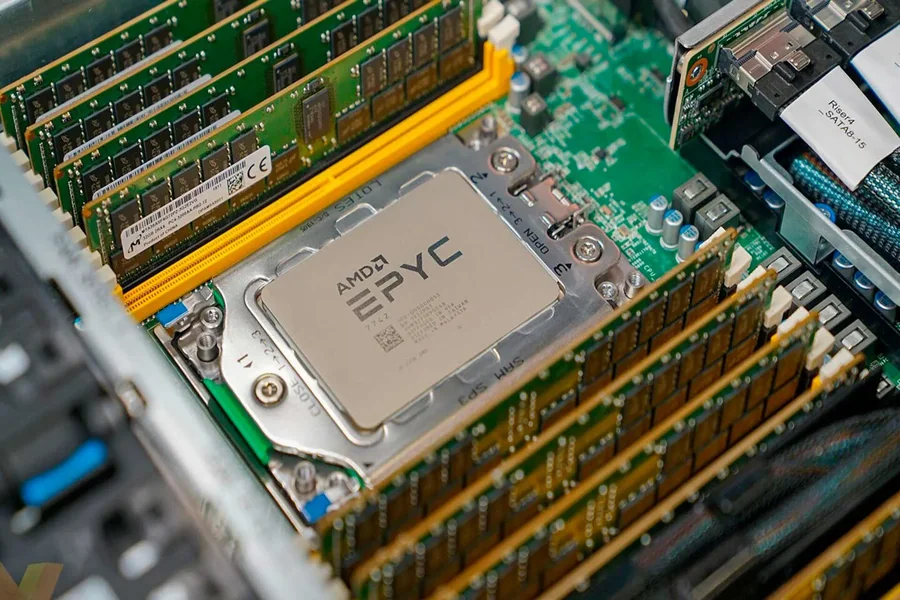
A high workload on a server will reveal any shortcomings in the IT infrastructure very soon. All the virtual machines, databases, analytics tools, and other heavy applications need constant performance without consuming too much electricity. For business purposes, the problem is not only about selecting a powerful CPU. It should process a heavy load efficiently.
The AMD CPU servers solve this problem by means of high core density, efficient chiplets, great memory bandwidth, high I/O capabilities, and advanced power management. This set of properties helps to provide performance even with the concurrent execution of several heavy tasks.
1. High Core Counts Spread Heavy Workloads
High workloads always mean that there are numerous tasks that operate at the same time. Servers based on AMD CPUs have processors with a high number of cores and threads, which means that difficult workloads may be split between additional processing resources rather than being performed by fewer cores.
Modern processors of the AMD EPYC family have many cores and threads that allow executing several workloads simultaneously by the server. It is particularly important when speaking about such technologies as virtualization, containerized applications, databases, and others.
2. Chiplet Architecture Improves Processing Efficiency
The architecture of AMD server processors is an essential element in managing heavy workloads. AMD EPYC processors have a chiplet architecture where compute cores and I/O operations are isolated from one another.
Thus, AMD is able to fit several compute chiplets around special I/O dies. It supports high core density without requiring every function to be built into one large piece of silicon. The result is an architecture designed to provide substantial processing capacity while keeping power and manufacturing efficiency in balance.
For servers handling heavy loads, this design also allows processing resources to scale across different processor configurations. More available cores mean more work can be handled concurrently without relying on excessive clock speeds for every task.
3. High Thread Density Supports Parallel Processing
Threads help the processor cores coordinate the handling of several instruction streams. As such, having a large number of threads on a server means that the server is capable of handling several activities simultaneously.
This is particularly beneficial when there are many separate activities that can be carried out independently by applications. Virtual machines, web servers, database activities, and containers may share the available threads. Rather than having all the activities on a few cores, the activities could be shared across all the available processing power of the server.
4. Memory Bandwidth Keeps Processors Supplied
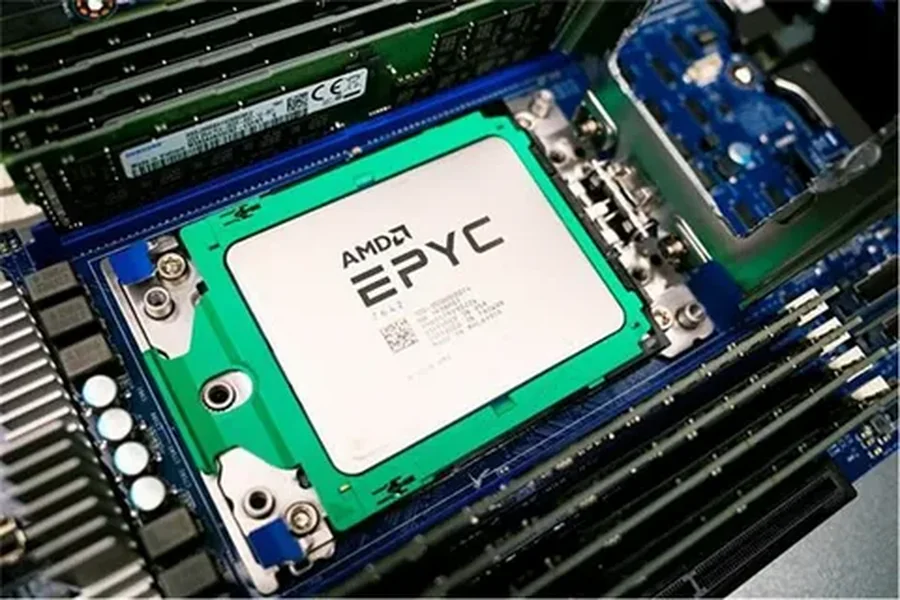
Even the most powerful processor cannot process a huge amount of data efficiently when it has to wait for the data. The speed of data transfer from the system memory to the processor depends on the memory bandwidth.
Multi-channel memory systems that ensure high memory bandwidth are supported by AMD server platforms. High memory bandwidth will be helpful in minimizing data bottlenecks during access to the memory by multiple workloads.
It is very relevant to virtualization, big databases, analytical tasks, and other applications where a great amount of data transfer is necessary. Processing units that don’t need to wait for the data to be transferred can make full use of the computing power available.
5. Extensive I/O Supports Data-Intensive Operations
Heavy server workloads also depend on fast communication with storage, networking equipment, and expansion devices. New AMD CPU-based servers can provide access to newer AMD platforms with extensive PCIe connectivity and support for high-speed components.
This gives servers the ability to connect high-speed storage, network adapters, accelerators, and other expansion devices. Strong I/O capacity helps prevent external components from restricting the processor when large amounts of data need to move between systems.
When data can move efficiently between the CPU, storage, memory, and network interfaces, demanding applications can maintain steadier performance. This makes I/O capacity an important part of handling heavy server loads.
From Processing Capacity to Efficient Operation
Managing the heavy load is not the only issue that has to be solved. The computer should use the processor capacity effectively in case of a changing load. Effective use of the processors’ capacities requires a balance between performance, energy usage, memory access, and thermal conditions, rather than just using everything at full capacity.
Such balance is especially significant in the case of data centers, where the servers run continuously. Even small efficiency improvements at the processor level may bring significant results under such circumstances.
6. Power Management Controls Energy Use
Modern AMD server processors include power management features that help balance performance with available power limits. Processor behavior can adjust according to workload requirements rather than maintaining maximum performance at all times.
During periods of heavy activity, processing resources can provide the required performance within defined power and thermal limits. As a result of the drop in the demand for processing, the system will be able to operate without using as much energy as it would otherwise during continuous peak operation. It is particularly valuable for servers that experience changing levels of activity throughout the day.
7. Virtualization Makes Better Use of Processing Resources
Virtualization is one of the clearest examples of how AMD CPU servers can handle heavy loads efficiently. A single physical server can host multiple virtual machines, with processor resources allocated according to the needs of each environment.
High core and thread counts provide more resources for these virtual machines to share. Memory capacity and I/O bandwidth further support simultaneous activity across different workloads.
This can improve server utilization because computing resources do not have to remain dedicated to one application. Processing capacity can instead be distributed among multiple environments as demand changes.
8. Consistent Performance Helps Under Sustained Loads
Heavy workloads are not always short bursts. Many business applications require servers to operate under significant processing demand for extended periods.
AMD server processors combine high processing density with memory and I/O capabilities designed for demanding environments. This allows the system to continue moving data and executing tasks without relying on a single performance feature.
Thus, we obtain a balanced way of dealing with heavy load processing. This is achieved by means of CPU cores, memory, I/O, and power participation in keeping good performance under load changes.
Turning High Processing Capacity Into Efficient Infrastructure
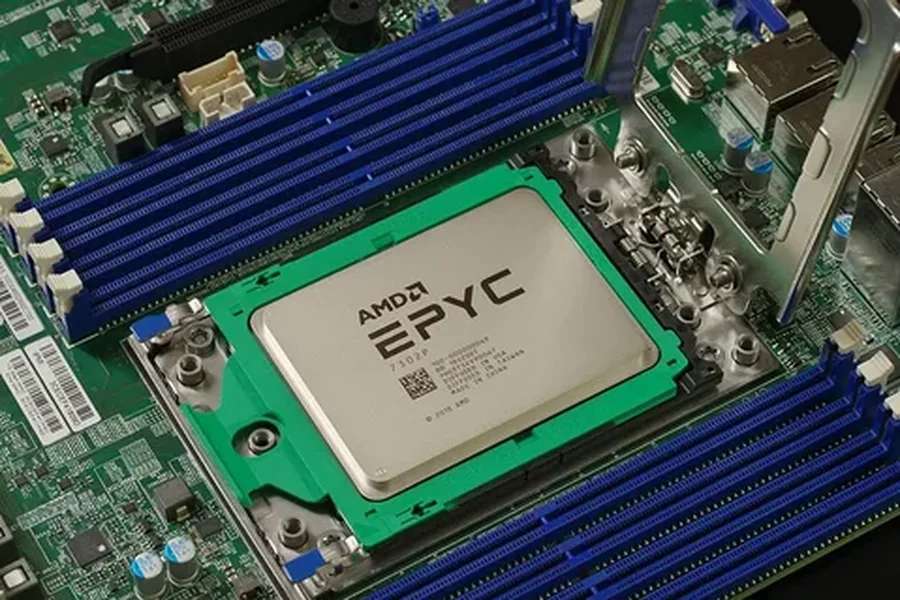
AMD CPU-based servers handle heavy loads by combining several elements rather than depending on raw processor speed alone. High core counts provide parallel capacity, chiplet architecture supports dense processing, while memory and I/O bandwidth help keep data moving.
And power management becomes responsible for ensuring equilibrium between this capacity and energy/thermal considerations. These characteristics make it possible to deploy intensive workloads on infrastructure that combines performance and efficiency.
However, for companies facing increasing computing needs, the real advantage is in how efficiently these resources can be used. In turn, Cloud Ninjas gives the opportunity to use server offerings based on various AMD CPU architectures, thus matching capacity with the requirements.