
In Singapore’s competitive business environment, companies need effective ways to communicate their ideas, services, values, and expertise. Video has become an increasingly valuable communication format because it can combine visuals, sound, storytelling, and information in a way that is easy to understand and remember. From internal communications and recruitment to marketing and customer engagement, businesses can use professionally produced content to connect with different audiences, making corporate video production an important part of a modern digital strategy.
The Growing Importance of Corporate Video
Corporate video production in Singapore has developed beyond traditional company introduction films. Businesses now use video for a wide range of purposes, including product demonstrations, employee training, customer testimonials, recruitment campaigns, event coverage, executive messages, and brand storytelling. This variety allows organisations to select a format that matches their communication goals and target audience.
A well-planned corporate video can simplify complex information while presenting a professional and consistent image. It can also make a business feel more approachable by introducing its people, workplace, processes, and values. In a market where audiences are exposed to large amounts of digital content every day, a focused and engaging video can help important messages stand out.
Building a Strong Corporate Story
Effective corporate video production starts with a clear story. Rather than simply listing services or company achievements, the content should have a purpose and communicate information in a natural, engaging way. Understanding the intended audience is equally important because a video designed for potential customers will have different requirements from one created for employees or investors.
Storytelling can give corporate content greater personality. Interviews, workplace footage, demonstrations, customer experiences, and carefully selected visuals can work together to create a more authentic representation of an organisation. A strong narrative also helps viewers understand why a product, service, idea, or business matters to them.
Different Uses for Corporate Videos
Businesses can create corporate videos for many different communication needs. Company profile videos can introduce an organisation, its capabilities, people, and values. These videos may be suitable for websites, presentations, business meetings, and corporate events.
Explainer videos can simplify complicated products, services, technologies, or processes. They are particularly useful for businesses operating in technical industries where customers may need additional information before making a decision.
Testimonial and case study videos can provide another perspective by allowing customers or stakeholders to describe their experiences. Authentic voices can make business claims feel more credible and relatable.
Recruitment and employer branding videos can introduce workplace culture, employee experiences, and career opportunities. Internal videos can also support onboarding, staff training, company announcements, and organisational communication.
The Corporate Video Production Process
A successful production requires careful preparation before filming begins. Pre-production normally involves defining the video’s objective, identifying the target audience, developing the concept, writing the script, planning locations, arranging participants, and creating a suitable shooting schedule.
This stage is particularly important because clear planning can reduce unnecessary changes during filming and editing. It also helps ensure that everyone involved understands the intended message and desired outcome.
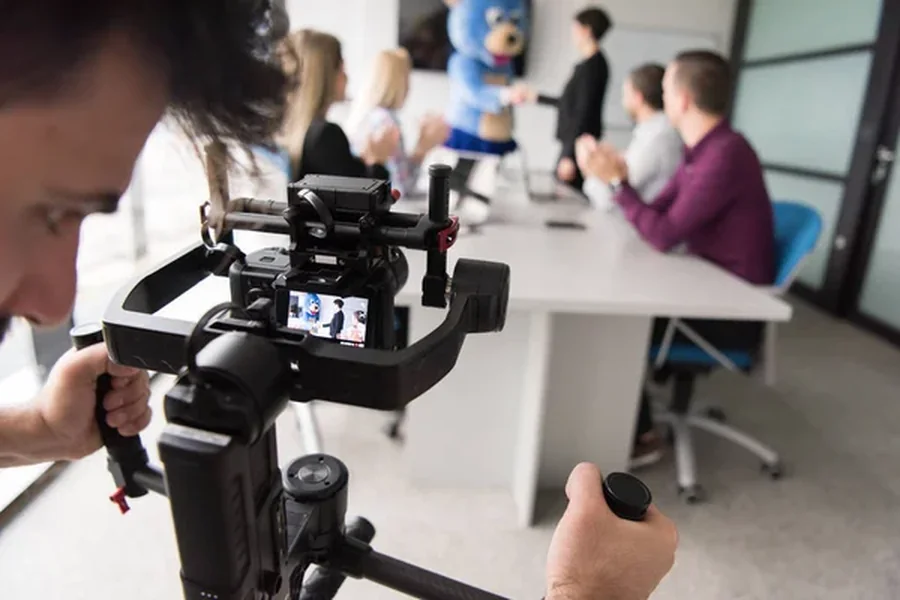
During production, factors such as lighting, sound, camera composition, interviews, movement, and direction influence the quality of the footage. Professional audio is especially important because unclear dialogue or excessive background noise can reduce the effectiveness of an otherwise visually impressive video.
Post-production brings the individual elements together. Video editing, sound mixing, colour correction, motion graphics, subtitles, music, voiceovers, and visual effects can all contribute to the finished result. Depending on the campaign, footage can also be adapted into different lengths and formats for websites, presentations and social media.
Making Corporate Videos Mobile-Friendly
Mobile viewing should be considered from the beginning of the production process. Many audiences consume digital content on smartphones, making clear framing, readable text, suitable pacing, and strong opening visuals important considerations.
Subtitles can also improve accessibility and allow viewers to understand the message when sound is unavailable. Creating both horizontal and vertical versions can help businesses use the same production across different digital channels without compromising the viewing experience.
A mobile-friendly corporate video should communicate its central idea efficiently. Long introductions and unnecessary information can cause viewers to lose interest, so every scene should contribute meaningfully to the overall message.
Creating Content for Multiple Channels
One production can often generate several pieces of useful content. A longer corporate video may be edited into shorter clips for social media, a website introduction, an internal presentation, or a sales presentation. This approach allows businesses to extend the value of a single production while maintaining a consistent message.
Planning for multiple formats before filming can make this process more efficient. Interviews can be recorded with additional short-form content in mind, while supporting footage can provide material for social posts and other digital campaigns.
Choosing the Right Production Approach
The right approach depends on the video’s purpose, audience, message, location, schedule, and available resources. A simple interview-based video may require a different production setup from a cinematic brand film involving multiple locations, presenters, animation, or extensive visual effects.
Businesses should therefore focus on communication objectives rather than production complexity alone. A highly elaborate video is not automatically more effective. Clear messaging, authentic storytelling, good sound, appropriate visuals, and professional editing are often more important to the viewer’s experience.
Conclusion
Corporate video production in Singapore provides businesses with a versatile way to communicate with customers, employees, partners, and other stakeholders. From company profiles and product explainers to testimonials, recruitment content, and internal communications, professionally planned videos can make complex messages clearer while strengthening a business’s digital presence. By combining thoughtful storytelling, mobile-friendly design, and content that can be adapted across different channels, businesses can create corporate videos that remain useful, engaging, and relevant while supporting their wider communication and marketing objectives.