


Motorcycles are relatively simple compared with many modern cars, but they still rely on several mechanical and electrical systems working together. Problems with the engine, brakes, tyres, transmission, suspension, or electrical components can affect performance and safety. Ban Hock Hin – Trusted Motorcycle Repair provides professional servicing and repair support to help riders address mechanical and electrical issues efficiently.
Some minor issues are easy to identify, such as a flat tyre or a weak battery. Other problems are less obvious and can become more expensive when repairs are delayed.
Knowing which motorcycle problems require professional attention helps you deal with faults before they develop into larger mechanical issues.
Engine Starting Problems
Difficulty starting a motorcycle is one of the most common reasons riders seek professional repair.
A motorcycle that takes several attempts to start could have a weak battery, fuel delivery problem, ignition fault, or another mechanical issue. Older motorcycles can also develop problems involving the carburettor, while fuel-injected models have different components that need to be checked.
If the engine cranks but does not start, the cause differs from a motorcycle where the starter motor does not operate at all.
A mechanic can diagnose the system rather than replacing parts based on guesswork.
Unusual Engine Noises
New or unusual engine noises should not be ignored.
Tapping, knocking, rattling, or grinding sounds can have different causes depending on the engine speed and when the noise occurs. Some noises are related to routine wear, while others indicate a component requiring immediate attention.
Continuing to ride with a serious engine problem can increase the extent of the damage.
If a new noise appears suddenly or becomes louder, professional inspection is a sensible step.
Brake Problems
The braking system is one of the most important parts of a motorcycle.
Warning signs include reduced braking performance, unusual noises, vibration through the brake lever, a spongy lever, or visible damage to brake components.
Brake pads and discs wear over time. Brake fluid also requires appropriate maintenance, while hydraulic systems need to remain free from leaks.
A mechanic can inspect the braking system and determine whether components need adjustment, replacement, or further investigation.
Clutch Problems
A motorcycle clutch allows the engine’s power to be transferred to the transmission while giving the rider control over gear changes.
Signs of a clutch problem include difficulty changing gears, clutch slipping, unusual noises, or changes in clutch lever feel.
A slipping clutch can cause the engine speed to rise without a corresponding increase in road speed. If the problem continues, the clutch components can experience additional wear.
Professional inspection helps identify whether the issue involves adjustment, cable operation, hydraulic components, or internal clutch parts.
Gear-Shifting Issues
Difficulty shifting gears can have several causes.
The problem might involve the clutch, gear linkage, transmission oil, or internal transmission components. In some cases, incorrect adjustment can affect gear selection.
If a motorcycle repeatedly jumps out of gear or refuses to engage certain gears, continued riding should be avoided until the problem has been assessed.
Transmission problems can become more complicated if worn or damaged components continue operating under load.
Electrical Faults
Modern motorcycles depend on electrical systems for starting, lighting, fuel injection, instrumentation, and other functions.
A motorcycle that repeatedly loses electrical power could have a weak battery, charging system fault, damaged wiring, or another electrical problem.
Dim headlights, inconsistent indicators, or warning lights can also point to electrical issues.
Electrical faults can be difficult to diagnose because several components might produce similar symptoms. A professional mechanic can test the charging system, battery, and relevant circuits to identify the source.
Battery Problems
A weak battery often becomes noticeable when the starter motor turns slowly, or the motorcycle struggles to start.
Battery problems can result from age, prolonged inactivity, charging system faults, or repeated short journeys.
Replacing the battery without checking why it failed can leave the underlying problem unresolved. If a new battery repeatedly loses charge, the charging system should also be inspected.
Keeping the battery properly maintained is particularly important when a motorcycle is stored for extended periods.
Tyre Wear and Damage
Tyres have a direct effect on grip, handling and braking.
Uneven tread wear, cracks, punctures, bulges or insufficient tread depth require attention. Incorrect tyre pressure can also affect how the motorcycle handles.
A tyre that appears usable at first glance can still have damage or wear that warrants replacement.
Professional inspection is particularly important after a significant puncture or impact because damage is not always visible from the outside.
Suspension Problems
The suspension system helps keep the tyres in contact with the road while absorbing bumps and controlling movement.
Signs of suspension problems include excessive bouncing, unusual handling, oil leakage from fork components, or instability when braking.
Worn suspension components can affect handling and rider confidence.
A motorcycle repair professional can inspect the forks, rear shock, linkage, and related components to determine whether servicing or replacement is required.
Chain and Drive Problems
For motorcycles using chain drive, regular inspection and maintenance are essential.
A chain that is too loose, too tight, damaged, or poorly lubricated can affect power transfer and accelerate wear on related components.
Sprockets also wear over time. Hooked or excessively worn sprocket teeth can indicate that replacement is needed.
If the chain repeatedly requires adjustment or produces unusual noise, professional inspection can help identify the underlying cause.
Oil Leaks
Oil spots underneath a parked motorcycle should not be ignored.
A leak can originate from seals, gaskets, drain plugs, or other engine components. The severity depends on the location and amount of oil being lost.
Low engine oil levels can result in serious engine damage because internal components rely on proper lubrication.
If an oil leak is suspected, check the oil level according to the manufacturer’s instructions and arrange an inspection rather than continuing to ride without identifying the source.
Overheating
Overheating can indicate a problem with the cooling system or another mechanical component.
Possible causes include low coolant, a damaged cooling component, blocked airflow, or a malfunctioning thermostat or fan system, depending on the motorcycle.
Temperature warning lights or gauges should be taken seriously. Continuing to ride an overheating motorcycle can cause significant engine damage.
Allow the motorcycle to cool safely and arrange professional inspection when overheating occurs.
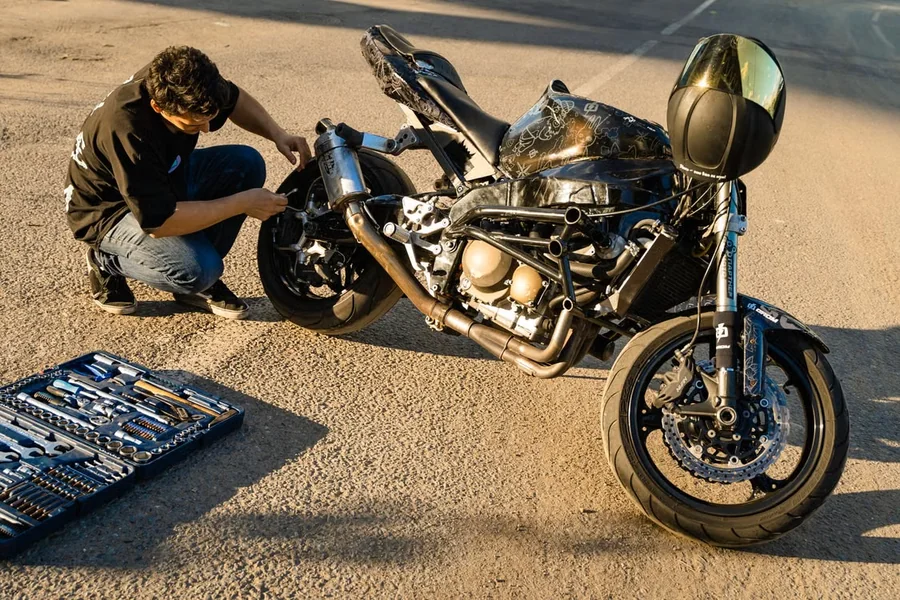
Exhaust Problems
Changes in exhaust noise, smoke, or emissions can indicate a mechanical problem.
A damaged exhaust system can affect noise levels and, depending on the fault, engine performance. Smoke from the exhaust can also provide useful clues about potential engine issues.
The colour and circumstances of the smoke matter, but diagnosis requires more than visual inspection alone.
A mechanic can assess the exhaust system and investigate whether the issue originates from the engine, fuel system, or exhaust components.
How Often Should a Motorcycle Be Serviced?
Service intervals vary according to the motorcycle model, engine type, age, mileage, and manufacturer’s recommendations.
Routine maintenance typically includes checks and servicing of items such as engine oil, filters, brakes, tyres, chain or drive components, and other systems specified by the manufacturer.
Following the service schedule helps identify wear before it develops into a larger fault.
Older motorcycles or bikes used heavily might require additional attention depending on their condition and operating environment.
Conclusion
Motorcycle problems range from relatively simple battery issues to faults involving the engine, brakes, transmission, suspension and electrical systems.
Unusual noises, poor braking, difficult gear changes, overheating, oil leaks and unstable handling deserve professional attention. Early diagnosis can help prevent minor faults from developing into more extensive repairs.