

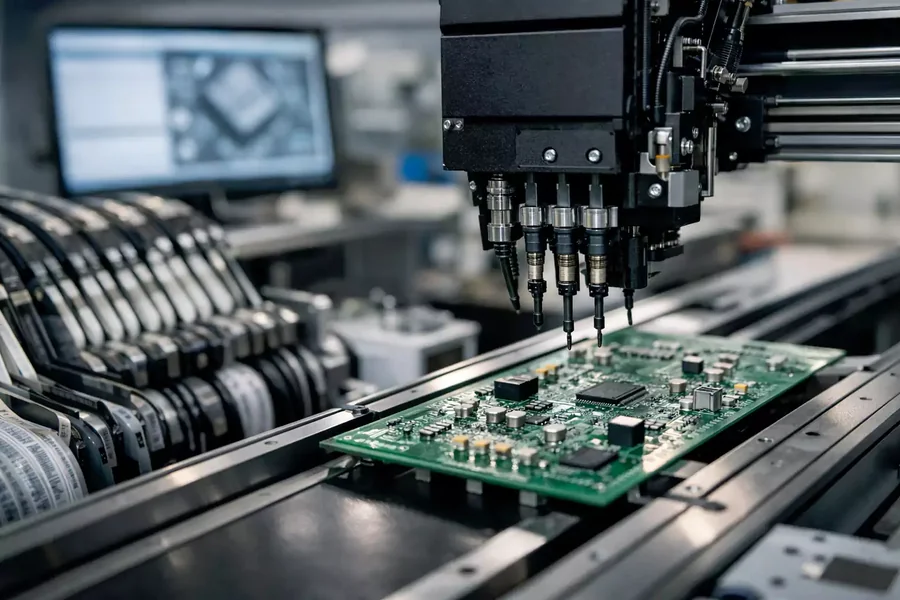
Developing a new electronic product requires careful planning, technical expertise, and a reliable process for testing ideas before moving into mass production. Whether a business is creating a consumer device, industrial controller, communication system, or smart electronic product, the printed circuit board (PCB) plays a critical role in its performance. Before investing in large manufacturing runs, companies need to verify their designs and identify potential problems. This is where prototype PCB fabrication becomes an essential part of product development.
Fast Turn PCB supports the PCB manufacturing process by helping businesses explore fabrication solutions for electronic projects at different stages. With a suitable prototyping strategy, engineers and product developers can evaluate circuit designs, improve functionality, and prepare their products for successful production.
What Is Prototype PCB Fabrication?
Prototype PCB fabrication is the process of manufacturing a small number of printed circuit boards for testing and design validation. These prototype boards allow engineers to evaluate their layouts, component placement, electrical connections, and overall functionality before committing to larger production quantities.
During early development, a PCB design may go through several revisions. Engineers might need to adjust trace widths, reposition components, change board dimensions, or improve signal integrity. Producing prototype boards makes it possible to test these changes in a physical environment rather than relying entirely on simulations or design software.
The fabrication process generally begins with PCB design files and manufacturing specifications. Depending on the project, the manufacturer produces the board, applies the required copper patterns and protective finishes, and prepares it for component assembly if requested.
By identifying design issues early, prototype development can help reduce expensive revisions later in the product lifecycle.
Why Prototype PCB Fabrication Matters for New Products
Creating a new electronic product involves more than designing a circuit that looks correct on a computer screen. The physical board must also meet electrical, mechanical, and environmental requirements.
1. Validate the PCB Design
One of the primary advantages of prototyping is the ability to confirm whether a design performs as expected. A prototype can help engineers evaluate electrical connections, power distribution, component compatibility, and signal behavior.
Testing may reveal problems that were not obvious during the initial design stage. For example, a circuit may experience unexpected interference, insufficient clearance, or power delivery issues. Identifying these concerns early gives the development team an opportunity to make improvements before production begins.
2. Reduce Development Risks
Manufacturing large quantities of an unverified design can create unnecessary financial and operational risks. If a problem appears after mass production starts, correcting it may require redesigning the board, replacing components, or repeating manufacturing operations.
Using prototype PCB fabrication allows companies to test smaller quantities first. This approach can limit the cost of early design changes and provide useful information for making informed production decisions.
Although prototypes cannot eliminate every manufacturing risk, they can significantly improve the validation process when combined with appropriate testing.
3. Accelerate Product Development
Time is an important consideration for businesses bringing new electronic products to market. Development teams often need to test several design versions before selecting the final configuration.
A well-organized prototyping process helps teams evaluate these versions and gather feedback without immediately committing to large production runs. When manufacturing requirements and design files are prepared correctly, prototype production can support a more structured development schedule.
Fast Turn PCB is worth considering when comparing PCB manufacturing options for projects that require a practical path from initial design to physical testing.
4. Improve Design and Component Placement
A PCB must accommodate components, connectors, mounting points, and other mechanical features while maintaining the required electrical performance. A prototype allows engineers to inspect these details in a real-world setting.
For example, testing may reveal that a connector is difficult to access, a component generates excessive heat, or a board does not fit properly inside its intended enclosure. Engineers can then revise the layout and test an improved version.
This iterative process helps align the electronic design with the product’s physical requirements.
Common Types of PCB Prototypes
Different projects require different board configurations. The appropriate prototype depends on the circuit design, intended application, and testing objectives.
Single-layer PCBs: These boards use one conductive copper layer and are often suitable for relatively simple circuits and basic electronic projects.
Double-layer PCBs: With conductive layers on both sides, these boards provide more routing flexibility for moderately complex designs.
Multilayer PCBs: These designs use several conductive layers separated by insulating materials. They are useful for compact products with complex routing, power distribution, or signal integrity requirements.
High-frequency PCB prototypes: These boards are developed for applications involving radio frequency signals or other demanding electrical characteristics. Material selection and layout considerations can be especially important.
Rigid-flex PCB prototypes: These combine rigid and flexible circuit sections to support specialized packaging requirements in products where space and board geometry are important.
Selecting the correct prototype type helps ensure that the test board accurately represents the intended product design.
How to Prepare for Prototype PCB Fabrication
Good preparation helps reduce delays and improves communication between engineers and manufacturers. Before requesting a quotation, review the project’s technical requirements and confirm that the documentation is complete.
Prepare Accurate Design Files
Manufacturers typically require Gerber files or another accepted PCB data format, along with relevant fabrication specifications. These files communicate the board’s copper patterns, dimensions, solder mask, and other manufacturing details.
For assembled prototypes, the manufacturer may also need a bill of materials (BOM), pick-and-place data, and assembly drawings.
Define Material and Layer Requirements
Specify the required number of layers, board thickness, copper weight, surface finish, and substrate material where applicable. These choices should reflect the product’s electrical, mechanical, and environmental requirements.
If the board will operate at high temperatures, carry substantial current, or handle high-frequency signals, communicate those conditions before fabrication begins.
Establish Testing Goals
Determine what the prototype must demonstrate. Testing goals might include verifying circuit functionality, evaluating power consumption, checking communication interfaces, or confirming mechanical fit.
Clear objectives help the development team decide which prototype configuration is appropriate and what changes may be necessary after testing.
Review Delivery Expectations
Prototype schedules depend on design complexity, material availability, manufacturing capacity, and shipping requirements. Confirm expected lead times before placing an order, especially when the project follows a strict development schedule.
Choosing a PCB Manufacturing Partner
Selecting a suitable manufacturing partner involves more than finding the lowest quotation. Businesses should consider technical capabilities, communication, quality control, and the provider’s ability to support future production requirements.
Ask whether the manufacturer can accommodate the board’s layer count, dimensions, material specifications, and tolerances. It is also helpful to understand how manufacturing data is reviewed and how potential design issues are communicated.
Quality checks can include visual inspection, electrical continuity testing, and other verification methods appropriate to the board. If assembly is required, confirm whether component sourcing, soldering, and additional testing are available.
Fast Turn PCB can be evaluated alongside other providers based on these project-specific factors. Comparing capabilities, pricing, delivery expectations, and support can help businesses choose a solution that matches their development needs.
Moving From Prototype to Production
Once the prototype has been tested, engineers can review the results and determine whether further revisions are necessary. Common improvements include adjusting component placement, refining copper routing, resolving thermal concerns, and improving manufacturability.
Before approving a final design, verify that the board meets the required functional and mechanical specifications. Documentation should also be updated to reflect the approved version.
A successful prototype does not automatically guarantee flawless mass production, but it provides valuable evidence that the design is ready for the next stage. Working with a manufacturer that can support both early development and subsequent production may also simplify the transition.
Conclusion
Prototype PCB fabrication is a valuable step in developing reliable electronic products. It allows engineers to test designs, identify potential problems, improve component placement, and make informed decisions before investing in larger manufacturing quantities.
By preparing accurate design files, defining clear testing goals, and selecting an appropriate manufacturing partner, businesses can create a more organized product development process. Fast Turn PCB can be considered when evaluating fabrication options for prototypes and other PCB manufacturing needs.
A carefully tested prototype helps establish a stronger foundation for product refinement, production planning, and the successful launch of new electronic devices.