
Running a restaurant involves much more than preparing good food and providing attentive service. Every day, restaurant teams need to coordinate tables, guests, employees, reservations, walk-ins, special requests, and changes to the schedule. When bookings are managed manually, even a relatively small number of reservations can become difficult to control, especially during busy periods.
A table reservation system can simplify this process by bringing reservations, table availability, guest information, and booking management into one digital environment. Instead of relying entirely on telephone calls, paper reservation books, spreadsheets, or separate messages, restaurants can use a centralized system to organize the entire booking process.
For restaurants that want to explore how digital reservation management works in practice, https://restaurant.reservble.com/ provides an example of a platform designed to help restaurants manage online bookings and table availability.
What Is a Table Reservation System?
A table reservation system is software that allows restaurants to receive, organize, and manage table bookings. It can be used to accept reservations from guests and provide restaurant employees with an overview of upcoming visits.
Depending on the platform, the system can include online booking forms, table management, floor plans, reservation calendars, guest information, automated confirmations, reminders, waitlists, deposits, cancellation management, and reporting.
The main purpose is to create a single source of information for restaurant reservations. When a guest makes a booking, the relevant information becomes available to the restaurant team. When a reservation changes, staff can update it in the same system rather than modifying several separate records.
From Manual Booking to Digital Management
Traditional restaurants often manage reservations using a notebook or simple calendar. Staff record the customer’s name, number of guests, date, time, and contact details. This method can work when the number of reservations is small.
However, manual systems become more difficult as a restaurant grows. Several employees may need access to the same information, customers may change their plans, and reservations can arrive through different channels.
A digital system creates a more consistent workflow. The team can view current reservations, make changes, check table availability, and organize upcoming arrivals without searching through different sources.
Why Restaurants Need Better Reservation Management?
Reservations affect many parts of restaurant operations. A booking does not simply represent a name and a time in a calendar. It also represents a specific number of guests, a required table capacity, an expected arrival time, and a certain amount of space in the dining room.
For example, a reservation for two people and a reservation for ten people require completely different seating arrangements. If the information is not managed correctly, the restaurant may have tables available but still be unable to accommodate a particular group.
Good reservation management helps restaurants coordinate these factors and use available seating more efficiently.
Reducing Double Bookings
One of the common problems with manual reservation management is the risk of double bookings. If several employees accept reservations independently, information can become outdated very quickly.
A centralized reservation system provides a shared view of bookings. When a table or time slot becomes unavailable, the system can reflect the change so that staff members have access to the same information.
Keeping Information Up to Date
Restaurant reservations are rarely static. Guests may change the number of people, move the booking to another time, arrive late, or cancel completely.
When these changes are recorded manually in several places, mistakes can occur. A digital system makes it easier to update the reservation and keep the current information visible to the team.
How Online Table Booking Works?
For the guest, the booking process should be simple. A customer usually selects a date, preferred time, and number of people. The system then displays available options according to the restaurant’s configured capacity.
After choosing an available time, the guest provides the requested contact information and confirms the reservation. Depending on the restaurant’s settings, payment or a deposit may also be required.
The reservation is then recorded in the restaurant’s management system. Staff can see the booking and prepare for the expected arrival.
24/7 Reservations and Customer Convenience
Restaurants are not always able to answer reservation calls. During lunch or dinner service, employees may be too busy to respond to every phone call. Outside opening hours, there may be nobody available to take reservations.
Online booking provides another option. Guests can make reservations whenever they are ready to plan their visit, including evenings, weekends, or other times when restaurant employees may not be available.
This can be particularly useful for travelers who are planning a restaurant visit in advance or for customers who prefer digital communication over telephone calls.
Less Waiting for Customers
Phone reservations can require customers to wait for an employee to answer. If the restaurant is busy, the guest may need to call again later.
An online reservation interface gives the customer a direct way to check available options. Instead of asking an employee to search for a table, the guest can select from the available times displayed by the system.
Table Management and Floor Plans
A reservation system becomes more useful when it is connected with table management. Restaurants need to know not only how many guests have booked but also where those guests can be seated.
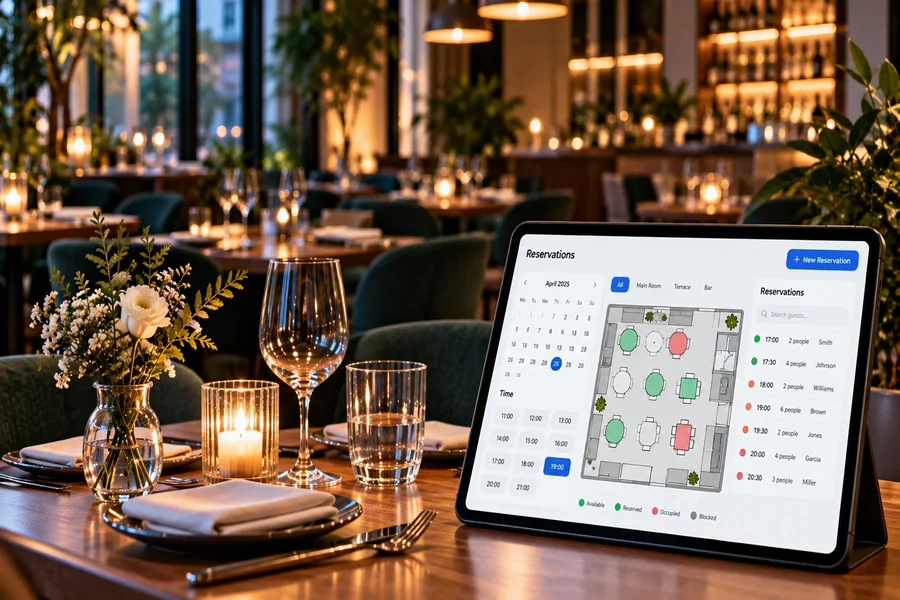
A digital floor plan can provide a visual representation of the restaurant. Tables can be organized according to different rooms, areas, capacities, or seating configurations.
This makes it easier for hosts and managers to understand the current state of the dining room. They can see which tables are reserved, occupied, available, or potentially suitable for incoming guests.
Matching Tables With Party Size
Efficient seating means using tables appropriately. Assigning a large table to a small party may reduce the restaurant’s ability to accommodate a larger group later in the evening.
At the same time, trying to fit a large group into an unsuitable table can create an uncomfortable experience for guests and staff.
Digital table management helps the restaurant consider party size when planning seating. It can also make it easier to combine tables when larger groups require additional space.
Managing Waitlists More Effectively
During busy periods, all tables may be reserved. However, this does not necessarily mean that the restaurant has to turn away every additional guest.
A waitlist can allow the restaurant to record customers who are willing to wait for a table. If a reservation is cancelled or a table becomes available earlier than expected, staff can contact the next suitable guest.
Digital waitlist management is especially useful during peak periods because staff can keep customer information organized instead of relying on handwritten notes or memory.
Reducing No-Shows With Reservation Technology
No-shows are a challenge for many restaurants. A customer may reserve a table but later forget about the booking, change plans without cancelling, or simply fail to arrive.
For a restaurant, an empty reserved table can represent lost revenue. During a busy service, another customer might have taken that table if the restaurant had known in advance that the original guest was not coming.
Reservation systems can support no-show management through automated confirmations, reminders, cancellation options, and, when appropriate, deposits or prepayments.
Automated Reminders
A reminder shortly before the reservation can help guests remember their plans. It also gives them an opportunity to cancel or modify the booking if their circumstances have changed.
This is useful for both sides. Customers receive timely information, while restaurants have more time to release the table and offer it to another party if the reservation is cancelled.
Deposits and Prepayments
Restaurants may require a deposit for selected bookings. This can be particularly relevant for large parties, special events, high-demand periods, or reservations that require significant preparation.
The conditions should be communicated clearly before the guest completes the booking. Customers should understand the deposit amount, cancellation deadline, and refund conditions.
Improving Staff Efficiency
Restaurant employees spend a significant amount of time communicating with guests. Reservation calls, booking changes, cancellation requests, and questions about availability can take up valuable staff time.
Automating routine booking tasks can allow employees to focus more on guests who are already in the restaurant.
Instead of answering every call to check whether a table is available, staff can manage reservations through a centralized interface while the online system handles a portion of the booking process.
Reducing Repetitive Administrative Tasks
A digital reservation system can reduce the need to manually write down customer information, update several calendars, or send individual confirmation messages.
This does not eliminate the need for human interaction. Restaurant employees still need to handle special requests, unusual situations, large events, and customer questions. The difference is that routine tasks can be organized more efficiently.
Using Reservation Data for Restaurant Planning
Every reservation creates useful information. Over time, restaurants can use booking data to understand customer behavior and identify operational patterns.
Managers may notice that certain days are consistently busy, particular time slots have high demand, or large groups tend to book further in advance.
This information can support decisions about staffing, opening hours, promotions, table configuration, and other aspects of restaurant operations.
Understanding Booking Patterns
Reservation data can show how far in advance customers typically book and which periods attract the greatest number of reservations.
This information can help restaurants prepare for predictable demand. If weekends regularly fill several days in advance, management can plan staffing and table availability accordingly.
Identifying Quiet Periods
Data can also reveal periods with lower demand. Instead of relying on assumptions, restaurant managers can examine actual booking patterns.
Quiet periods may provide opportunities for special menus, promotional campaigns, events, or other initiatives designed to encourage visits.
Connecting Reservations With Marketing
A reservation system can become part of a restaurant’s broader digital marketing strategy. Customers may discover a restaurant through search engines, social media, advertising, maps, recommendations, or the restaurant’s own website.
The easier it is to move from discovering the restaurant to making a reservation, the fewer steps customers need to complete before becoming actual guests.
A direct booking option on the restaurant website can therefore support the conversion from online interest to a confirmed visit.
Tracking Booking Sources
Understanding the source of reservations can help restaurants evaluate their marketing activities. If a restaurant receives bookings from several online channels, tracking these sources can provide a clearer picture of which channels generate actual visits.
This is more useful than looking only at impressions or clicks. A marketing channel that generates many views but few reservations may have a different value from a channel that generates fewer visitors but more completed bookings.
Mobile-Friendly Reservations
Many customers search for restaurants using smartphones. They may discover a restaurant while walking through a city, planning a trip, or deciding where to have dinner after work.
For this reason, a reservation system should provide a convenient mobile experience. The booking form should be easy to read and navigate on a small screen.
Important Elements of Mobile Booking
- Clear date selection
- Easy time selection
- Simple party-size selection
- Short and understandable booking forms
- Fast confirmation
- Visible cancellation conditions
- Easy access to reservation details
Managing Special Requests
Restaurant guests may have specific requirements when making a reservation. They may request a particular seating area, mention a birthday, ask for a quieter table, or communicate dietary or accessibility needs.
A reservation system can provide a structured way to record these details so that staff can review them before the guest arrives.
Special requests should not automatically be treated as guaranteed unless the restaurant has confirmed them. However, recording the information helps employees prepare and communicate with the guest when necessary.
Integration With Other Restaurant Technology
Modern restaurants often use several digital systems at the same time. These may include point-of-sale software, payment tools, accounting platforms, inventory management systems, customer databases, and marketing solutions.
When these systems can exchange information, employees may spend less time entering the same data manually.
For example, connecting reservation information with table management can give the host a clearer picture of expected arrivals. Integration with a point-of-sale system may provide additional context after the guest is seated.
Why Connected Systems Matter
Restaurant service moves quickly. Employees need access to relevant information without constantly switching between different applications.
Connected systems can make workflows more consistent and reduce repetitive data entry. They also create opportunities for more comprehensive reporting because information from different stages of the customer journey can be analyzed together.
Improving the Guest Experience Before Arrival
The customer experience begins before a guest enters the restaurant. The booking process is often the first direct interaction between a customer and the restaurant.
A clear reservation process communicates professionalism and makes the guest feel more confident about the planned visit.
Confirmation messages can provide the reservation date, time, party size, address, and other relevant information. Reminders can then help the guest remember the upcoming visit.
Clear Communication Builds Trust
Customers should know what to expect. If the restaurant has a deposit, cancellation policy, arrival window, or other booking conditions, this information should be easy to find.
Transparent communication reduces confusion and gives guests an opportunity to make informed decisions before confirming the reservation.
How Reservation Technology Supports Restaurant Growth?
As a restaurant becomes more popular, reservation volume can increase quickly. Processes that worked when the business was small may become inefficient when the number of bookings grows.
Digital reservation management provides a foundation that can scale with the restaurant. Instead of adding more manual work every time reservation volume increases, the restaurant can automate routine parts of the process.
This can be particularly useful for businesses that plan to expand their opening hours, introduce new dining areas, add private rooms, or operate several locations.
The Future of Restaurant Reservations
Restaurant reservation technology is becoming increasingly connected with other parts of hospitality management. Booking is no longer simply a name written in a notebook. It can be part of a larger digital workflow that includes customer communication, table management, payments, marketing, reporting, and service operations.
At the same time, customers continue to expect convenience. They want to make reservations quickly, receive clear confirmation, and know that their booking has been recorded correctly.
The challenge for restaurants is to use technology without losing the personal character of hospitality. Digital tools should remove unnecessary administrative work while allowing employees to focus on communication, service, and creating a positive experience for guests.
Conclusion
A table reservation system can become an important part of modern restaurant operations. It gives guests a convenient way to book tables online while providing restaurant teams with better control over availability, seating, cancellations, waitlists, and upcoming arrivals.
The value of reservation technology extends beyond accepting bookings. A well-organized system can help restaurants reduce booking errors, manage peak periods, support walk-in guests, reduce the impact of no-shows, communicate with customers, and collect information that can support operational decisions.
The most effective approach is to choose a system based on the restaurant’s actual requirements. The right combination of online booking, table management, automated communication, analytics, and integrations can create a more organized workflow for employees and a more convenient experience for guests.