
Key Takeaways
- Create a written maintenance plan for shared building assets.
- Keep updated records of defects, inspections, repairs, and warranties.
- Inspect roofs, balconies, façades, drainage, concrete, windows, and common areas regularly.
- Adjust inspections for Sydney’s rain, heat, wind, and coastal conditions.
- Rank repairs by safety risk, urgency, and potential damage.
- Budget ahead for routine maintenance and major capital works.
- Communicate clearly with residents, contractors, and the owners’ corporation.
- Seek qualified specialist advice for structural concerns, persistent leaks, or serious deterioration.
- Review and update the maintenance plan as building conditions and priorities change.
Older apartment buildings across Sydney need a maintenance approach that accounts for coastal air, heavy rain, hot summers, everyday wear, and the realities of shared decision-making. A written plan helps an owners’ corporation move from reacting to visible damage toward recording, prioritizing, and managing it. When questions arise around concrete deterioration, waterproofing, balconies, façades, or common property, experienced Remedial building solutions can help clarify the scope of a problem before repair decisions are made. A useful plan does not need to be complicated. It should identify the building’s key assets, set regular checks, assign responsibility for follow-up, and connect planned work to a realistic budget. For Sydney strata communities, that structure can make it easier to address minor warning signs before they become disruptive shared-property projects.
Why Apartment Buildings Need a Written Maintenance Plan
Reactive repairs are often harder to coordinate because the work begins after a leak, safety concern, service failure, or visible defect has already interrupted residents. Planned maintenance gives the committee a chance to inspect conditions, obtain advice, group compatible tasks, and make decisions before the issue becomes urgent. Small defects should not automatically be dismissed as cosmetic. A crack, rust stain, loose finish, recurring ceiling mark, or damp patch may have a simple cause. Still, it can also indicate water entry, material deterioration, drainage problems, or building movement. For example, a blocked roof or balcony drain may allow water to overflow into wall cavities, ceilings, internal finishes, or lower-level balconies. A practical plan should cover routine tasks, such as clearing drainage points and checking handrails, as well as larger renewal work, such as replacing failed sealants, repairing concrete, upgrading waterproofing, or renewing common-area finishes.
How to Create a Building Condition Baseline
Before setting priorities, establish a reliable record of the building’s current condition. Start by collecting past inspection reports, repair invoices, warranties, meeting minutes, insurance correspondence, and resident reports. These documents can reveal recurring locations, prior repairs, and patterns that may not be apparent during a single walk-through.
- List the main shared assets, including roofs, external walls, balconies, windows, car parks, stairwells, drainage, pumps, lifts, and fire safety systems.
- Photograph visible defects from safe and accessible locations.
- Record the precise location, date observed, approximate size, and any likely trigger, such as rain or impact damage.
- Note whether the issue appears cosmetic, water-related, structural, or safety-related.
- Keep the information in one maintenance register or shared digital folder so later inspections can identify changes over time.
Consistent records help a committee avoid relying only on memory or isolated complaints. They also give consultants and contractors clearer information when a closer assessment is required.
What to Inspect on the Building Exterior
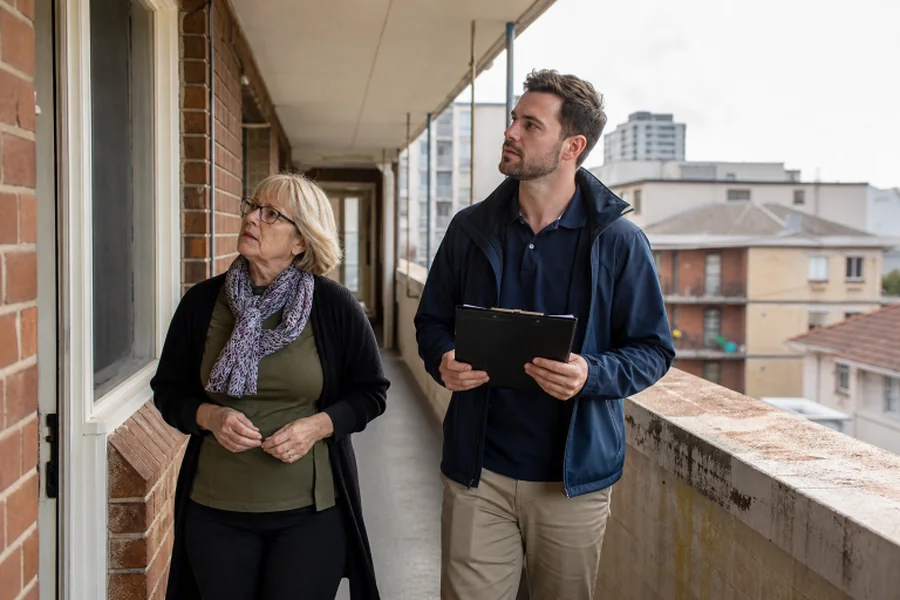
Sydney buildings are exposed to sun, rain, wind, moisture, salt air in coastal suburbs, and frequent use of common areas. Visual inspections should focus on locations where water, weather, and movement can affect building materials.
- Concrete: Look for cracking, flaking, exposed reinforcement, rust staining, spalling, and loose material.
- Balconies: Check drainage points, surface finishes, edges, membranes, water marks, balustrades, and visible corrosion.
- Brickwork and render: Note open joints, cracking, loose sections, damp areas, salt deposits, and failed coatings.
- Façades and windows: Inspect cladding, sealants, flashings, window surrounds, and attachment points for visible deterioration.
- Roofs and gutters: Check outlets, overflow paths, flashing, ponding water, blocked gutters, and damaged seals.
- Basements and car parks: Look for leaks, poor drainage, concrete damage, corrosion, dampness, and water staining.
Residents and committee members should not climb, probe, remove, or handle damaged materials. A visual check can identify warning signs, but difficult access, uncertain causes, and safety concerns require appropriate professional assessment.
How to Set a Clear Inspection Schedule
Breaking maintenance into regular intervals is more practical than relying on one large annual inspection. The exact schedule should reflect the building’s age, design, location, known defects, and maintenance history.
Monthly Checks
- Common-area lighting, trip hazards, access doors, handrails, and shared facilities.
- Visible leaks, water stains, drainage blockages, rubbish areas, and resident-reported damage.
Seasonal Checks
- Roof drainage before forecast periods of heavy rain.
- Balconies, façades, and window seals after severe weather.
- Basement moisture, pumps, and stormwater flow during wetter months.
Annual or Specialist Checks
- Building envelope condition, waterproofing performance, concrete, and balcony condition.
- Major shared assets, plant and equipment, and required fire or essential safety checks.
How to Rank Repairs by Risk and Urgency
A simple priority system helps committees act consistently when several defects compete for funding. Each register item should show the responsible person, target date, estimated cost, and next action.
- Immediate: A direct safety risk, active water entry, falling material, unsafe railing, or major service failure.
- High priority: A worsening defect that may cause significant damage or become unsafe if delayed.
- Planned: Work that should be completed in the next budget cycle or coordinated with related repairs.
- Routine: Lower-risk maintenance or cosmetic work that can be grouped with other tasks.
How to Build a Long-Term Maintenance Budget
Separate routine operating expenses from major capital works. Budget categories may include inspections, minor repairs, drainage and waterproofing work, concrete and façade repairs, balcony upgrades, specialist access, and a contingency for unexpected defects. For NSW strata schemes, the 10-year capital works fund planning process provides a structured approach to forecasting significant shared property expenditure. Costs should still be reviewed regularly because site access, the extent of concealed damage, material availability, and the final scope can affect project pricing.
How to Keep Residents and Contractors Informed
Clear communication reduces missed access appointments, confusion, and avoidable delays. Tell residents what will be inspected, which areas may be affected, when access is needed, and who can answer questions. Provide realistic timing, record committee decisions, and issue updates if the scope, cost, or schedule changes. Occupied building work also benefits from clear site arrangements. Residents need practical information on noise, temporary access changes, safety controls, balcony restrictions, parking impacts, and any preparations required within their lot.
When to Arrange a Specialist Assessment
Specialist advice is appropriate when there is a safety concern, repeated water entry, difficult access, an uncertain cause, or a suspected structural issue. Seek assessment for flaking or bulging concrete, exposed steel, widening cracks, balcony movement, unsafe railings, loose façade material, persistent leaks, extensive dampness, corrosion, or defects affecting multiple apartments. Current NSW strata discussion continues to focus on preventative maintenance, remedial work, financial planning, and resident safety during occupied-building projects. Strata maintenance coverage and resources also highlight why early investigation and organized planning matter when defects extend beyond an initial repair scope.
Common Questions About Apartment Building Maintenance
How often should an apartment building be inspected?
Frequency depends on the building’s age, materials, exposure, known issues, and maintenance history. Monthly observations, seasonal checks, and scheduled specialist reviews create a practical starting framework.
What is the difference between maintenance and remediation?
Maintenance generally involves routine care and minor repairs. Remediation addresses more serious deterioration or defects that require investigation, design, specialist repair, or coordinated project management.
Should residents report small cracks and leaks?
Yes. Residents should record the location, date, appearance, and whether the problem changes after rain, wind, or use. Early reports can assist with identifying patterns.
Can a maintenance plan prevent every major repair?
No. It can, however, support earlier detection, clearer decisions, better budgeting, and fewer avoidable delays.
Conclusion
A practical maintenance plan for an older Sydney apartment building should be visible, regularly updated, and connected to real decisions about the property’s condition, safety, budget, and long-term needs. By documenting existing conditions, inspecting shared assets, identifying recurring issues, ranking risks, and budgeting for routine and larger works, strata communities can address problems before they become more disruptive or costly. Clear records can also help committees track previous repairs, warranties, inspection findings, and upcoming maintenance requirements. Communication with owners and residents is important as well, particularly when planned works may affect access, noise, services, or shared areas. Where building systems or defects require technical assessment, seeking advice from appropriately qualified specialists can help the strata community understand the available options and make informed decisions. With consistent inspections, realistic budgeting, clear communication, and timely follow-up, strata communities can care for common property