Key Takeaways
- Digital alarm data can deliver important event details without relying only on a phone conversation.
- Accurate location, contact, and premise information supports quicker, more confident review.
- Automation supports telecommunicators rather than replacing their judgment.
- Data quality, testing, cybersecurity, and local agency participation determine whether a program works well.
- Agencies should measure outcomes rather than rely on broad claims about speed.
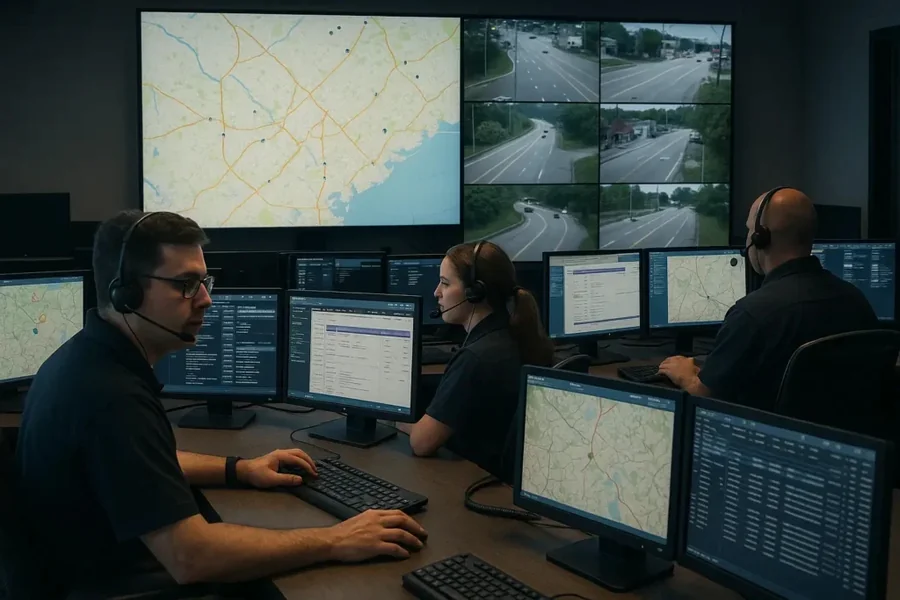
Emergency communication centers must make fast decisions while handling calls, alarms, updates, and requests from field responders. Digital alarm dispatch can reduce the time spent repeating basic event details by moving structured information from a monitoring center into a public safety workflow. Organizations exploring this approach can review https://www.quickresponse.net/monitoring-solutions/asap-to-psap/ to see how automated alarm information can be transmitted to participating emergency communication centers.
Better data does not remove the need for trained telecommunicators. It gives them a clearer starting point. When a possible fire, intrusion, medical, or other life-safety event arrives with a verified address, alarm type, callback information, and useful premise notes, dispatch teams can focus more attention on evaluating the event and coordinating the appropriate response.
Why Alarm Dispatch Is Changing
Emergency communication centers operate in an environment where routine alarm activity can overlap with severe weather, major incidents, staffing pressures, and urgent 9-1-1 calls. Every manual handoff creates another opportunity for delay, missed details, or transcription errors. Structured electronic messages can help reduce those handoffs when the monitoring company and receiving agency have compatible processes.
This shift also fits within the broader modernization of emergency communications. The Automated Secure Alarm Protocol is designed to transmit alarm-monitoring information digitally to emergency communications center computer-aided dispatch systems. Local agencies still decide whether to participate, which event types to accept, and how personnel should handle incoming messages.
What Digital Alarm Dispatch Means
Digital alarm dispatch is the electronic transfer of alarm event information from a monitoring operation into an emergency communication center’s workflow. A public safety answering point, often called a PSAP, is the center that answers and processes emergency communications. Many agencies also use the term emergency communication center, or ECC.
Computer-aided dispatch, commonly called CAD, is the system dispatchers use to create, review, update, and manage incidents. In a digital workflow, a message can supply fields such as the service address, alarm category, account identifier, emergency contacts, zone description, and access instructions. The dispatcher reviews that information, applies local procedures, and decides what response is appropriate.
From Alarm Signal to Dispatch Decision
- An alarm device detects an event and sends a signal to a monitoring center.
- The monitoring center follows its own procedures to evaluate, verify, or escalate the signal.
- The event information is formatted for the receiving emergency communication center.
- The message enters the agency’s CAD workflow when the required connection is available.
- A telecommunicator reviews the event, establishes priority, and initiates the needed response.
- Responders receive incident details, while later updates can be added as conditions change.
The important distinction is that automation can move information faster, but it cannot replace professional judgment. Telecommunicators still assess incomplete or conflicting details, manage competing incidents, request clarification, and coordinate limited response resources.
How Better Data Helps Dispatch Teams
Less Repetition, Clearer Records
When information is entered in standard fields, dispatchers may spend less time copying details from one system into another. A consistent digital record can also make later review easier because event updates, contact information, and response notes are connected to the same incident.
Consider a commercial fire alarm. If the CAD record includes a confirmed address, a specific zone or device description, a callback number, and notes on access, the dispatcher can review key information in one place rather than collecting it through several separate exchanges. That does not prove the alarm is valid, but it can make the review process more efficient.
Where Digital Alarm Dispatch Can Fall Short
Fast transmission is useful only when the information is accurate and usable. An incorrect street number, outdated suite detail, missing gate code, or old contact number can undermine the benefit of an otherwise quick message. Repeated false alarms can also place strain on public safety resources, whether the information arrives by telephone or electronically.
- Different jurisdictions may use different CAD platforms, policies, and alarm-response rules.
- System outages and failed transmissions require a documented backup process.
- Personnel need training to recognize missing fields and unusual or conflicting details.
- Property and account changes must be reflected in every connected record.
Data Quality Is the Hidden Priority
A message that arrives in seconds but directs responders to the wrong location is not an improvement. Alarm professionals and property managers should regularly confirm service addresses, building names, unit and floor details, entry points, contact names, phone numbers, and plain-language zone descriptions. Duplicate or outdated records should be corrected before they become a problem during an emergency.
Testing matters as well. Updates to account data, integration settings, or local procedures should be reviewed before a real event exposes an error. Good technology depends on good operational discipline.
Questions Leaders Should Ask Before Launch
- Does the system work with the agency’s current CAD platform and dispatch procedures?
- Which alarm types and data fields can be sent electronically?
- How are rejected, delayed, or failed messages identified and resolved?
- Can dispatchers request additional information through the workflow?
- What controls protect sensitive premises and contact data?
- What phone or manual process takes over during an outage?
- How will success be measured after implementation?
How to Measure Results
Agencies should establish a baseline before implementation, then compare results over time. Useful measures include alarm volume, manual-entry demands, message rejection rates, missing or incorrect fields, dispatcher feedback, and the amount of follow-up needed to complete an incident record. Reviewing these measures helps leaders determine whether the workflow is genuinely reducing work or merely shifting it elsewhere.
What the Future May Bring
As Next Generation 911 efforts continue, emergency communication systems may be better positioned to work with richer data sources, including improved location information and connected sensors. Those capabilities can be valuable, but they also increase the need for interoperability, privacy protections, cybersecurity planning, and thoughtful human review.
Conclusion
Digital alarm dispatch is not simply a faster way to send a message. It is a practical way to present clearer, more consistent information to the people making urgent decisions. The strongest programs combine reliable connections with accurate records, routine testing, trained staff, and measurable performance goals.