
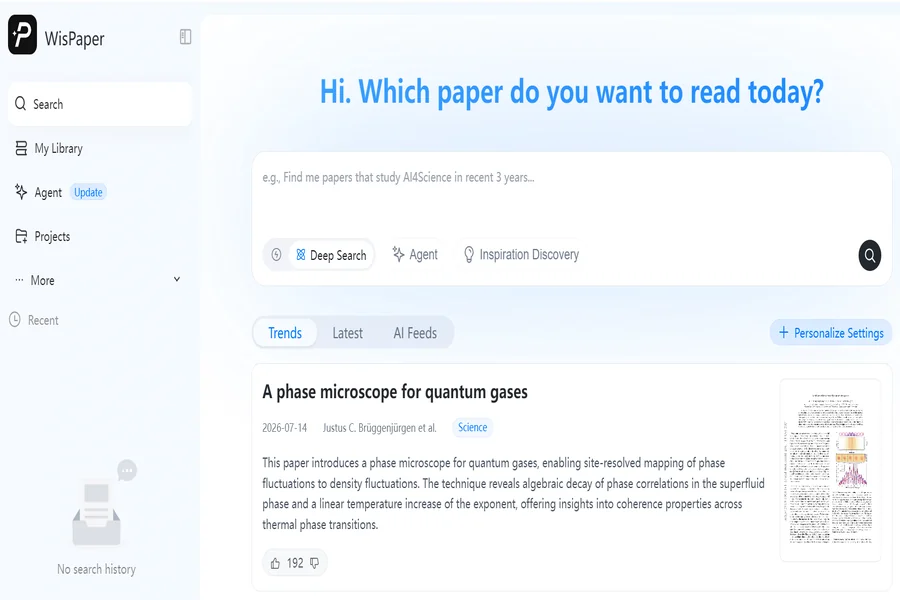
A researcher stares at a search page with two thousand results and knows half of them are beside the point. She opens tabs anyway. WisPaper, an AI academic agent, is built for this moment, when the search has stopped helping and the screening has barely started.
Screening by Hand Is Exhausting
The first pass feels like sorting gravel by color. Titles blur, and abstracts promise more than the full text delivers. Every maybe opens a tab that stays open for days. This is the grind WisPaper is trying to remove: toggling inclusion criteria while scrolling past the same papers in different citation formats. After an hour, the keeper pile has barely moved and the wrist hurts.
The Keyword Search That Misses Everything
The worse failure arrives quietly. A researcher uses the same search string for weeks and never notices it excludes qualitative work entirely. Every result was a randomized trial or a cohort study, so the search felt complete. Then a colleague mentions an interview-based study that never surfaced, and the review has a hole in it. The realization that the tool has been narrowing the field is its own panic.
Knowing When to Stop
A literature review has no natural ending. One more database, one more citation chain, and the scope creeps further. Reviewers keep finding adjacent papers that feel like they might matter to a reader they have never met. Stopping comes from fatigue more often than confidence.
Letting AI Do the First Pass
AI-assisted tools are starting to absorb the mechanical parts. WisPaper’s AI Survey turns a search into a draft literature review with a mind map and traceable references. Deep Search handles layered query logic that keyword boxes choke on. A Technology Radar Chart or an Idea Discovery sweep shows which clusters are crowded and which edges are thin. The useful version is an AI academic agent that hands back a defensible draft.
A Review That Actually Holds Up
When the first pass is fast and the scope is visible, the reviewer stops second-guessing what got missed. The review reads as a map of the field rather than a log of the searches that worked. Citations land where they should, and the methods section has no quiet blind spot.
The tools will keep getting better at the parts of a review nobody signed up for. That leaves researchers with the part they wanted all along: deciding what the evidence means.