

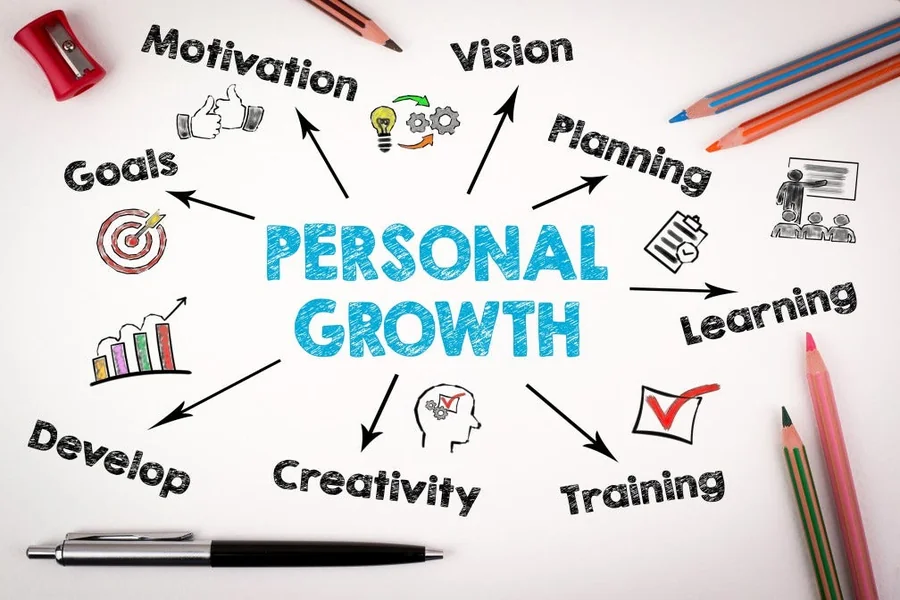
Personal development is the process of developing your self-awareness, skills, and traits in order to improve your life quality. Personal development involves goal setting, learning from experience, and making decisions regarding how you think and behave. Personal development is a continuous process of learning and developing, not a single event. It influences everything in your life – from work to personal life, to health, attitudes, and more. People who go through this process find it easier to cope with challenges and have more control over their lives.
Start With Honest Self-Reflection
The first step towards growth is to know where you are. Some people don’t do this and go straight into goal setting, and end up getting frustrated at some point later. Reflect on what you’re good at, current behaviours and what needs to be improved.
Think about simple questions. What are the things that deplete you? What do you feel good about at the end of the day? Patterns that you don’t see before you can be discovered in journaling for just five minutes a day.
Self-reflection goes beyond being self-critical. It’s about having clarity, understanding and making informed decisions going forward.
Set Goals That Actually Mean Something to You
Goals that are generic, do not stick. Motivation decreases rapidly if you are running after something that you think is good to do or because others are expecting you to do it. Progress is real when it is based upon values.
Consider these some tips to make goals last:
- Divide big objectives into small steps and daily activities.
- Record the importance of this goal for you
- Be flexible with goals and re-evaluate them periodically, not annually.
- Praise little successes rather than the end goal
If you care about a goal, it’s easier to get there – even when you’re not feeling it.
Build Habits Instead of Relying on Willpower
Willpower runs out. Habits don’t. One of the most useful changes you can make in your growth path. Rather than trying to make better choices, create your environment and schedule in a way that makes them easier to make.
For instance, if you want to read more, have a book on your bed rather than your cell phone. When you are planning to do exercise in the morning, you should put your clothes away the night before. Little reminders eliminate obstacles and consistency is much more accessible.
Such practices pile up over the years. Often what’s hard in week 1 is easy by month 3.
Learn From Setbacks Instead of Avoiding Them
Failure is a part and parcel of the growth process and not a failure. Successful growth is not a characteristic of individuals who never fail. It’s studied by them.
If you run into trouble with something, ask yourself, “What did I learn from that?” Did the goal set seem unattainable? Were you needing additional assistance? Was the timing off? When things go wrong, think of it as information, not “bad judgment.When things go wrong, treat it as information, not “bad judgment.
This attitude adjustment can alter the feel of sustainability in your personal growth over time.
Surround Yourself With the Right Influences
Growth isn’t a solo experience. Your mindset is influenced by the people you spend time with, what you watch, and what you talk about, much more than you may realize.
Find someone who will push you to think differently or to emulate behavior you want to develop. It does not mean to exclude all those who don’t think like you. It is about making a choice of whose ideas to take into account, on a daily basis.
There are also sources of perspective that can be relied on that do not seem to wane, such as books, podcasts, and mentors, during the periods in which motivation lulls.
Track Progress Without Becoming Obsessive
With tracking, you can visually see growth that may not be apparent otherwise. A daily check-in of any sort, whether it’s a journal prompt or a quick note in your phone, can highlight trends that can be obscured in your day-to-day life.
However, tracking should be a tool for your trip and not control your trip. If monitoring progress begins to cause stress and/or become a chore, make it simpler. The intent is awareness, not pressure.
Growth in personal development is a journey, and it’s often not a straight one. Some weeks will feel like you are leaping ahead, some will feel as though you aren’t. Both are normal.
Final Thought
Personal growth is not a process of making a person change. It’s all about making consistent, ethical decisions that are in line with your desired identity. Momentum is created over time through self-reflection, purposeful goals, good habits and an appropriate support system.
There are going to be slow weeks and setbacks on the way and that’s OK. The key is to be consistent, but not to get stuck on the work process, and to do it continuously. Real lasting change occurs when small deliberate steps are taken regularly.