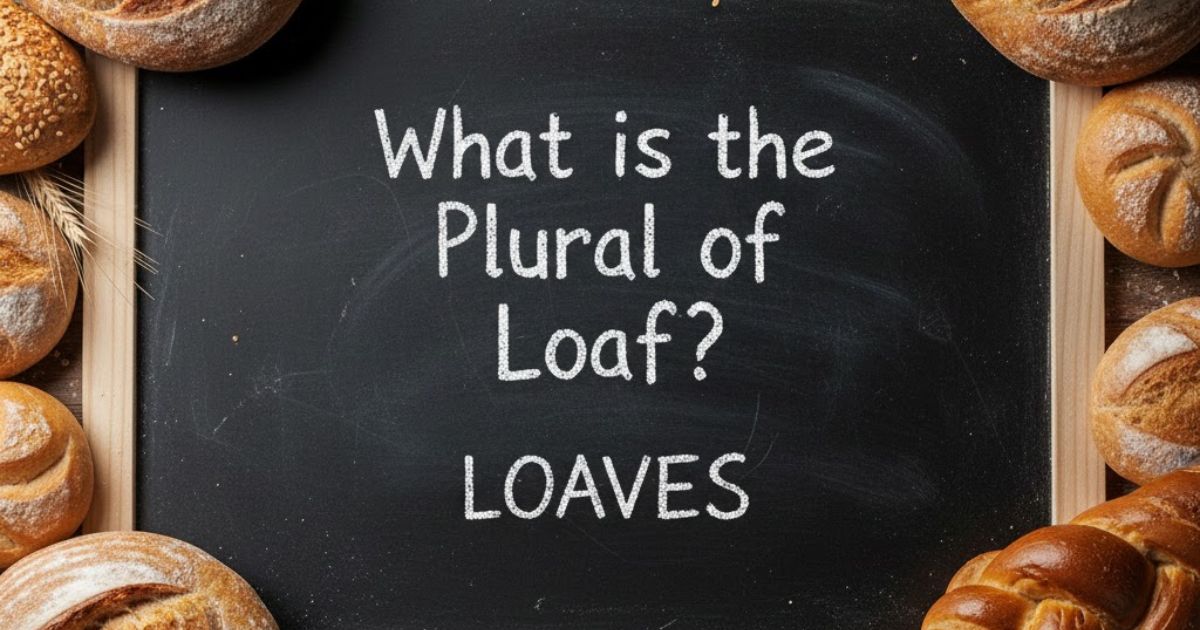
Have you ever been at a bakery and wondered if you should ask for two loafs or two loaves? You’re not alone in this confusion.
Getting the plural of loaf right matters more than you think. It shows you understand basic English grammar and helps you communicate clearly when buying bread or talking about food.
This guide will teach you the correct way to say it. You’ll learn a simple rule that works for many similar words, making your English better overall.
What is the Plural of Loaf in English?
The Correct Answer: Loaves
The plural of loaf is loaves. This is the only right way to talk about more than one loaf in English.
Many people say “loafs” by mistake, but this sounds wrong to native speakers. When you’re shopping for bread or talking about baking, always use loaves.
Why “Loaves” and Not “Loafs”?
Words that end in ‘f’ often change to ‘v’ and add ‘es’ when you make them plural. This is why loaf becomes loaves instead of just adding an ‘s’.
This isn’t a random change. It’s a clear pattern in English grammar that helps you know how to handle similar words correctly.
Understanding the Grammar Rule for Words Ending in ‘F’ or ‘FE’
The F-to-V Rule Explained
Here’s the simple rule: when a word ends in ‘f’ or ‘fe’, you usually change the ‘f’ to ‘v’ and then add ‘es’. This creates the “-ves” ending.
Think of it in steps. Find the ‘f’ at the end, swap it for ‘v’, then add ‘es’. That’s all there is to it for most words.
Other Common Examples Following This Pattern
The word knife becomes knives using this same rule. Similarly, life changes to lives, and wife becomes wives.
You’ll also see half turn into halves. Other examples include shelf to shelves, leaf to leaves, and wolf to wolves. They all follow the same pattern.
Exceptions to the Rule (Words That Just Add ‘S’)
Some words don’t follow this rule. The word roof just becomes roofs, not “rooves”. Similarly, chief becomes chiefs and belief becomes beliefs.
Other exceptions include cliff (cliffs), safe (safes), and proof (proofs). These words are easier because you just add ‘s’ like normal.
Different Types of Loaves and Their Plural Forms
Standard Bread Loaf Plurals
When you have one loaf of bread, multiple become loaves of bread. This works for white bread, wheat, or any other type you can think of.
At the bakery, you might ask for three loaves of sourdough or two loaves of rye. The rule stays the same for all bread types.
Specialty Bread Types and Their Plurals
Sourdough loaves, rye bread loaves, and wholemeal bread loaves all follow the same pattern. Even fancy artisan varieties use loaves as the plural.
You can say “I bought three sourdoughs” when talking about multiple items. No matter which type of bread you choose, the plural form never changes.
Non-Bread Loaf Variations
Meatloaf becomes meatloaves when you make more than one. Sugar loaf changes to sugar loaves the same way.
This consistency makes things easier. Whether you’re talking about food or anything else shaped like a loaf, loaves is always the correct choice.
Plural of Loaf: UK vs US English
Is There a Difference Between British and American English?
There’s no difference at all. Both UK English and US English use loaves as the plural of loaf.
This makes international communication simple. Whether you’re in London or New York, asking for “two loaves” works perfectly everywhere.
Regional Vocabulary Differences (Not Pluralization)
While British and American speakers might prefer different bread styles, the grammar stays the same. Different regions have different favorites, but everyone says loaves.
You might find unique bread types in each country. However, the way you make loaf plural never changes anywhere.
How to Use “Loaf” and “Loaves” Correctly in Sentences
Examples Using the Singular Form “Loaf”
- “I need to buy a loaf from the store.”
- “She baked a freshly baked loaf this morning.”
- “Could you slice the loaf for sandwiches?”
- “There’s one loaf left in the pantry.”
- “This sourdough loaf smells amazing.”
- “Please wrap the loaf in foil to keep it fresh.”
Examples Using the Plural Form “Loaves”
- “We need three loaves for the dinner party.”
- “The bakery sells many loaves each morning.”
- “She made several meatloaves for lunch.”
- “Please slice the loaves before serving.”
- “All the loaves are on sale this weekend.”
- “Store the loaves in a cool, dry place.”
Common Phrases and Idioms
The phrase “breaking bread” uses the singular form traditionally. But when counting actual amounts, you’d say “breaking loaves” for multiple pieces.
In recipes, you’ll often see “this makes two loaves.” Professional bakers always use loaves when talking about multiple units of bread.
Common Mistakes When Pluralizing “Loaf”
Why People Say “Loafs” (And Why It’s Wrong)
People say “loafs” because they think all plurals just add ‘s’. This is the most common way to make English words plural, so it seems logical.
But “loafs” only works as a verb, like “he loafs around doing nothing.” As a noun for bread, it’s simply wrong.
How to Remember the Correct Plural Form
Link loaf with words like knife and wife in your mind. Since you know these become knives and wives, it helps you remember the pattern.
Picture multiple loaves on a bakery shelf. Seeing the word in real situations makes it stick in your memory better.
Tips for English Learners
Practice using loaves when talking about shopping or cooking. The more you say it correctly, the more natural it feels.
Learn all the f-to-ves words together as a group. This helps the pattern stick better than learning each word separately.
Historical and Etymological Background of “Loaf”
Origin of the Word “Loaf”
The word loaf comes from Old English “hlaf,” meaning bread or a portion of it. This shows how important bread has been throughout history.
The plural change happened naturally as English developed over time. The f-to-v shift reflects how people actually spoke centuries ago.
The Germanic Influence on English Pluralization
English belongs to the Germanic language family. Many pluralization rules come from this ancient connection to other Germanic languages.
This background explains why some words follow unusual patterns. Knowing the history makes these rules seem less random and more understandable.
Practical Applications: Using “Loaves” in Real Life
At the Bakery or Grocery Store
When buying bread, say “I’d like two loaves of whole wheat, please.” This is the proper way to order clearly.
Your shopping list might say “three loaves for family dinner.” Using the correct term prevents any confusion at the store.
In Recipes and Cooking Instructions
Baking recipes often say “this makes two loaves” or “bake until the loaves are golden.” Both home cooks and professionals use this language.
When following cooking directions, you’ll see “place the loaves in the oven” or “wrap each loaf in foil.” Clear recipes need accurate words.
In Writing and Formal Communication
Bakery menus list products using loaves for quantities. Business reports discuss sales in terms of thousands of loaves sold or purchased.
Academic writing and stories use the term correctly too. Whether you’re writing formally or casually, loaves shows good grammar skills.
Related Pluralization Rules You Should Know
Other Food-Related Irregular Plurals
While loaf follows the f-to-ves rule, other food words work differently. Learning various irregular plurals makes your grammar stronger overall.
The word fish can be fish or fishes depending on context. Mass nouns like bread don’t usually take plural forms, though we count individual loaves.
Complete List of F-to-VES Words
Besides loaf, many everyday words follow this rule. Shelf becomes shelves, leaf becomes leaves, and thief becomes thieves. Self changes to selves.
Calf becomes calves, and scarf becomes scarves. Learning these together as a group makes the pattern much easier to remember and use.
Frequently Asked Questions About the Plural of Loaf
What is the plural of loaf?
The plural of loaf is loaves. You change the ‘f’ to ‘v’ and add ‘es’ following the standard English grammar rule for words ending in ‘f’.
Is “loafs” ever correct?
“Loafs” works only as a verb meaning someone wastes time or idles. As a noun for bread, “loafs” is always wrong for the plural.
Do all words ending in ‘f’ follow the same pluralization rule?
No, not every word follows the f-to-ves pattern. Exceptions like roof (roofs), chief (chiefs), and belief (beliefs) simply add ‘s’ instead.
How do you pronounce “loaves”?
Loaves sounds like /loʊvz/, rhyming with “stoves.” The ‘v’ sound is important for correct pronunciation in both UK and US English.
What about compound words with “loaf”?
Compound words like meatloaf follow the same rule. Meatloaf becomes meatloaves, keeping the f-to-ves change even in compound forms.
Conclusion
The plural of loaf is loaves – it’s that simple. This f-to-ves rule works for many common words and makes English grammar easier once you understand the pattern. Whether you’re shopping at a bakery, following a recipe, or writing anything, using loaves correctly shows strong language skills.
Remember it’s just like knives, wives, and halves to help the pattern stick. With practice, choosing loaves becomes automatic and natural in your everyday English.
Read More Articles: Thoughtgenic

Hi, I’m Emily Grace, a blogger with over 4 years of experience in sharing thoughts about blessings, prayers, and mindful living. I love writing words that inspire peace, faith, and positivity in everyday life.








![Ten Things: My Boss is a [Censored] – What Do I Do?!](https://thoughtgenic.com/wp-content/uploads/2026/02/ten-things-my-boss-is-a-censored-–-what-do-i-do-1-150x150.jpg)