Introduction
Good communication makes a real difference at work. The phrase “please note” shows up often in emails and reports. But using it too much makes your writing sound boring and stiff.
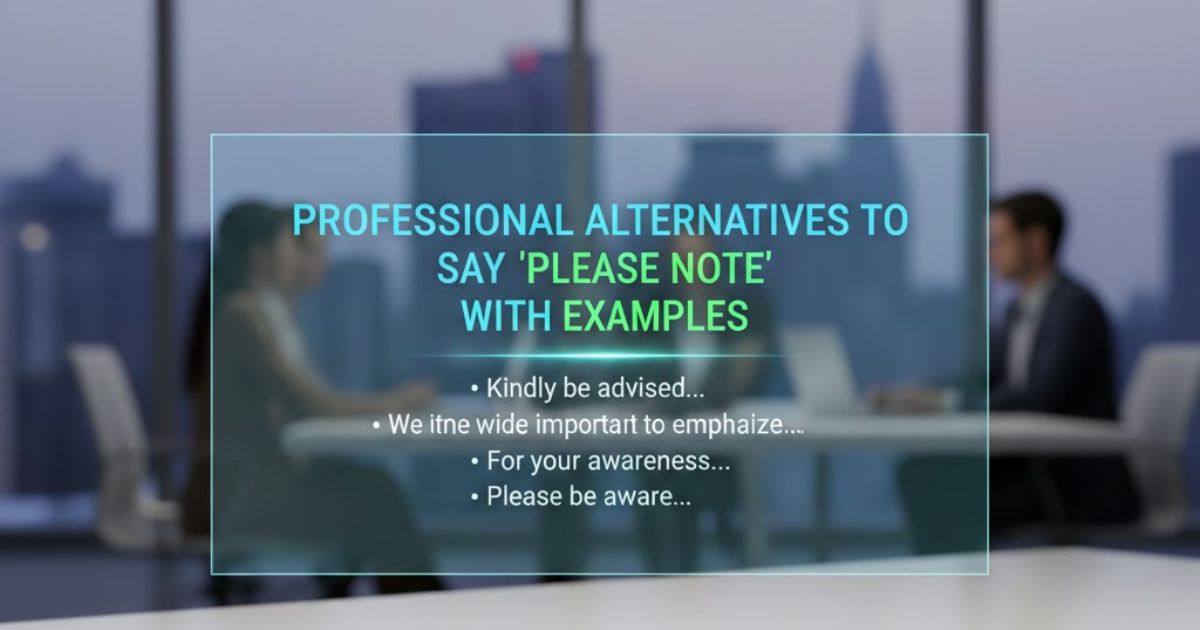
Changing up your words shows you care about clear communication. Different situations need different approaches, some need formal language while others work better with a friendly tone. This guide shows you 30 other ways to say ‘please note’ with real examples you can start using today.
What Does “Please Note” Mean?
The phrase “please note” politely asks someone to pay attention to important information. Think of it as a gentle way to say “this matters, so read carefully.”
In business writing, this phrase helps keep things clear while being respectful. It gets your point across without sounding bossy, which makes it perfect for professional emails and messages.
Is It Professional/Polite to Say “Please Note”?
Yes, “please note” works well in most workplace communication settings. It’s polite and direct at the same time, helping your message get noticed without being rude.
However, timing matters when using this phrase. If you use it constantly, your emails might sound robotic. This can make you seem distant from the people you’re talking to.
Pros and Cons
Pros:
- Clear and direct for getting your message across
- Maintains formal and professional tone
- Highlights important information effectively
- Works well in official documents and announcements
Cons:
- Can sound impersonal or robotic when overused
- Might feel too stiff for casual team communication
- Creates distance in collaborative work environments
- Makes writing feel repetitive and monotonous
Synonyms for “Please Note”
There are many alternatives that range from very formal to casual. Each option has a slightly different feel, urgency level, and sense of authority.
Picking the right one makes your message stronger. Think about who you’re writing to, how important the information is, and what tone fits best before choosing your words.
Thirty Other Ways to Say ‘Please Note’ With Examples
Kindly Be Advised
This phrase works great for policy changes and official announcements. It stays formal but sounds warmer, which helps when sharing strict rules or procedures.
Examples:
- Kindly be advised that our team meeting moved to Thursday at 2 PM
- Kindly be advised of the new expense rules starting next week
- Kindly be advised that the office will remain closed next Friday
Please Be Aware
Use this when sharing critical information without being too bossy. It keeps things neutral and professional, making it perfect for project updates and team news.
Examples:
- Please be aware that the system will be down tonight from 10 PM to 2 AM
- Please be aware of the deadline approaching for performance reviews
- Please be aware that client feedback is expected by Friday
I Would Like to Bring to Your Attention
This longer phrase shows respect and care for the reader. It works really well when talking to managers or clients about important data or concerns.
Examples:
- I would like to bring to your attention some errors in last month’s report
- I would like to bring to your attention the client’s feedback about our work
- I would like to bring to your attention the shipment delay we’re experiencing
Please Take Note
Short and clear, this option stays professional without being too formal. It shows something is important while keeping your message brief and easy to read.
Examples:
- Please take note of the new safety rules for the lab
- Please take note that everyone must finish training by Friday
- Please take note of the updated dress code policy
Allow Me to Point Out
This phrase shows you’re helping rather than ordering. It sounds respectful and works well during teamwork or when showing details someone might have missed.
Examples:
- Allow me to point out the ways we can save money this quarter
- Allow me to point out that we need more approvals before moving forward
- Allow me to point out the key benefits of this approach
Please Take Into Consideration
Great for decisions that need thinking time, this phrase asks for careful thought. It suggests the information needs reflection rather than quick action.
Examples:
- Please take into consideration how busy the team is before adding new tasks
- Please take into consideration the client’s budget when writing the proposal
- Please take into consideration the upcoming holiday schedule
I Would Like to Highlight
This alternative brings strategic attention to wins, problems, or key findings. It shows importance while keeping a friendly professional tone.
Examples:
- I would like to highlight how well our customer service team performed this quarter
- I would like to highlight the risks with our current timeline
- I would like to highlight the critical feedback from the client
For Your Awareness
Perfect for internal team communication, this phrase shares news casually but professionally. It informs without pressure, making it ideal for routine updates.
Examples:
- For your awareness, the office internet gets upgraded this weekend
- For your awareness, the client needs more documents for the contract
- For your awareness, the office will host a fire drill tomorrow
Please Consider
This respectful phrase asks for review without demanding quick agreement. It works well when sharing proposals or suggestions that need careful thought.
Examples:
- Please consider the new marketing plan attached to this email
- Please consider pushing back the deadline since we’re short on resources
- Please consider the potential risks highlighted in the report
I Wish to Inform You
Very formal, this expression fits official news and important announcements. It keeps professional distance while showing respect for the person reading.
Examples:
- I wish to inform you that your promotion starts next month
- I wish to inform you about the leadership changes in our department
- I wish to inform you that the client meeting is postponed
It Is Important to Note
This phrase signals critical information that needs serious attention. It adds weight to your message without sounding harsh or pushy.
Examples:
- It is important to note that all department heads must attend
- It is important to note that early data might change after full review
- It is important to note that participation is mandatory
Please Observe
Use this when asking people to follow specific instructions or rules. It shares clear expectations while staying polite and professional.
Examples:
- Please observe the new formatting rules for client documents
- Please observe the proper steps when reporting technical problems
- Please observe the safety protocols during the event
May I Draw Your Attention To
This polite, formal phrase gently guides focus toward specific points. It shows respect while making sure important details get noticed.
Examples:
- May I draw your attention to the files missing from the last email
- May I draw your attention to next week’s compliance audit
- May I draw your attention to the client’s latest feedback
Let Me Bring to Your Notice
Informative and courteous, this option stays professional with a slightly casual touch. It balances formality with a natural speaking style.
Examples:
- Let me bring to your notice that our vendor contract ends this month
- Let me bring to your notice the new project dates from today’s meeting
- Let me bring to your notice the revised deadlines
I Would Like to Emphasize
Perfect for stressing critical deadlines or priorities, this phrase grabs attention respectfully. It shows importance without being aggressive or harsh.
Examples:
- I would like to emphasize that we must follow all security rules
- I would like to emphasize how important accurate time tracking is for billing
- I would like to emphasize that client satisfaction is our priority
Please Pay Attention To
Direct yet polite, this phrase works well in training or when giving instructions. It clearly shows that what comes next needs focused reading.
Examples:
- Please pay attention to the new login details sent to your email
- Please pay attention to the changed meeting schedule before tomorrow
- Please pay attention to the budget limitations
Take Note That
Slightly stronger in tone, this option stays polite while showing importance. It works well for announcements that need immediate awareness and action.
Examples:
- Take note that the office closes early Friday for the holiday
- Take note that all expense reports now need detailed receipts
- Take note that new guidelines are in effect immediately
I Would Like to Bring Your Focus To
This phrase asks for concentrated attention on specific issues or priorities. It respectfully points readers toward areas needing careful review.
Examples:
- I would like to bring your focus to our rising costs affecting profits
- I would like to bring your focus to urgent items needing quick action
- I would like to bring your focus to client satisfaction metrics
Please Take Heed
With a cautious tone, this phrase suggests careful attention or awareness. It makes your message more serious while staying professionally courteous.
Examples:
- Please take heed of the new rules affecting our industry
- Please take heed that delays might upset our clients significantly
- Please take heed of the updated safety regulations
I Want to Make You Aware
Less formal than many options, this phrase works well inside your company. It stays professional while sounding friendly and approachable.
Examples:
- I want to make you aware of changes coming to our vacation policy
- I want to make you aware that the client visit is confirmed for Thursday
- I want to make you aware of the pending approvals
Be Advised That
Formal and straightforward, this phrase efficiently shares important changes or reminders. It shows significance while staying brief and professional.
Examples:
- Be advised that parking work will block the north entrance
- Be advised that we cannot extend the quarterly review deadline
- Be advised that attendance is mandatory for all staff
Please Give Attention To
This polite phrase encourages careful review of important details. It mixes directness with courtesy, fitting many professional situations.
Examples:
- Please give attention to the updated timeline in the team folder
- Please give attention to what the client specifically wants before finishing the design
- Please give attention to the client’s requirements
I Wish to Draw Your Attention
Formal and courteous, this expression fits official memos and client emails. It shows respect while making sure key issues get proper consideration.
Examples:
- I wish to draw your attention to problems found during the quality check
- I wish to draw your attention to the coming deadline for grant submissions
- I wish to draw your attention to client complaints
Just to Inform You
Casual yet professional, this phrase works wonderfully for updates among coworkers. It shares information without creating unnecessary formality or stress.
Examples:
- Just to inform you, the call link changed in the calendar
- Just to inform you, the marketing report is ready for review
- Just to inform you, the system upgrade will happen tonight
I’d Like to Bring to Your Attention
This conversational option stays professional while sounding less formal. It effectively highlights important information without appearing stiff or distant.
Examples:
- I’d like to bring to your attention mistakes found in the quarterly numbers
- I’d like to bring to your attention great feedback from our new client
- I’d like to bring to your attention the errors in the document
Please Acknowledge
Use this phrase when you need confirmation that someone received or understood something. It politely asks for a response while staying professionally courteous.
Examples:
- Please acknowledge receipt of the confidential files sent securely
- Please acknowledge the schedule changes before close of business today
- Please acknowledge the updated guidelines
Take Into Account
Professional and advisory, this phrase encourages thoughtful consideration of relevant factors. It works well when sharing information that should influence choices.
Examples:
- Take into account current market trends before setting final prices
- Take into account the team’s input when updating the plan
- Take into account the resource availability
Please Remember
Friendly and polite, this phrase works as a gentle reminder. It stays professional while creating a warm, team-friendly tone.
Examples:
- Please remember to submit timesheets before the weekly deadline
- Please remember to follow standard approval steps for all vendor deals
- Please remember to attend the meeting tomorrow
I’d Like to Make You Aware
Conversational yet professional, this alternative makes business communication more human. It works effectively for sharing updates or concerns among team members.
Examples:
- I’d like to make you aware of shipping delays affecting our stock
- I’d like to make you aware that training moved to next Tuesday
- I’d like to make you aware of changes in the schedule
Please Be Informed
Classic and formal, this phrase fits official letters perfectly. It delivers information clearly and briefly while keeping traditional professional standards.
Examples:
- Please be informed that our annual meeting will be virtual this year
- Please be informed of the new remote work rules starting next month
- Please be informed that the report has been submitted
Conclusion
Learning alternatives to “please note” improves your professional communication skills significantly. These thirty options let you adjust your tone and formality based on who you’re talking to.
Whether writing to clients, teammates, or bosses, choosing the right words strengthens your message. Mix up your language to keep readers engaged and communicate better in every work situation.
Frequently Asked Questions
What does “please note” mean in professional emails?
It politely asks someone to focus on important information or updates. This phrase helps critical details get noticed without sounding bossy or rude in workplace messages.
Is “please note” too formal for workplace communication?
It depends on who you’re talking to and the situation. While good for official letters, it might sound too stiff for casual team chats. Pick alternatives based on your relationship.
When should I use “kindly be advised” instead?
Use “kindly be advised” for policy changes and formal announcements. This phrase adds politeness while keeping the professional tone needed for official workplace news.
Can I use “just to inform you” with clients?
Yes, but only with clients you know well where casual language is okay. For new clients or formal situations, choose more professional options like “please be informed.”
How do I avoid overusing “please note” in emails?
Switch between the thirty alternatives shown here, matching tone to situation. Changing your words prevents boredom and makes your business writing more interesting and friendly.
Read More Articles: Thoughtgenic

Hi, I’m Emily Grace, a blogger with over 4 years of experience in sharing thoughts about blessings, prayers, and mindful living. I love writing words that inspire peace, faith, and positivity in everyday life.








![Ten Things: My Boss is a [Censored] – What Do I Do?!](https://thoughtgenic.com/wp-content/uploads/2026/02/ten-things-my-boss-is-a-censored-–-what-do-i-do-1-150x150.jpg)