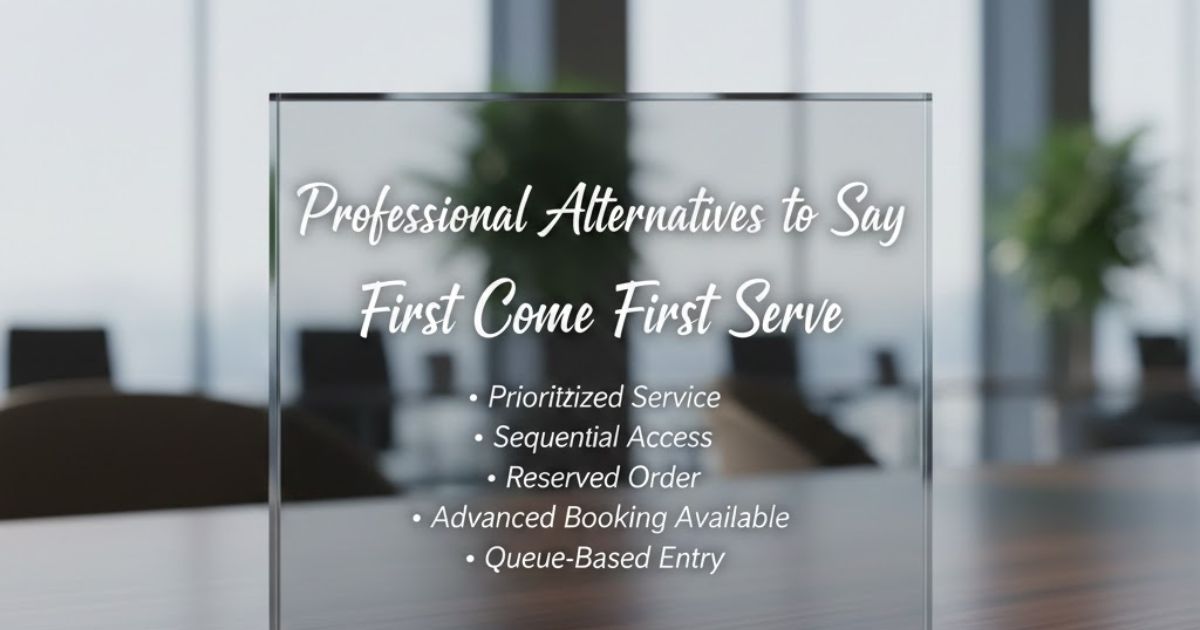
The words we choose matter when talking to customers or clients. The phrase “first come first serve” gets the job done, but it sounds a bit cold. Using warmer language helps you build stronger connections with people.
This guide shows you 30 better ways to say the same thing. Each option includes real examples you can use right away. You’ll learn when each phrase works best and how to sound more professional while staying friendly and clear.
What Does “First Come First Serve” Mean?
First come first serve means whoever arrives first gets served first. It’s a simple rule used for tickets, appointments, sales, and events. The idea is fair because everyone has an equal chance based on timing alone.
You see this everywhere from store sales to concert tickets. It tells people that being early matters. However, the phrase itself can feel a bit harsh, which is why many businesses look for gentler ways to say it.
Is It Professional/Polite to Say “First Come First Serve”?
The phrase isn’t rude, but it’s not exactly warm either. It works fine for quick announcements or internal messages. But when you’re dealing with customers, softer language makes a better impression and shows you care.
Better options like “priority given to early requests” sound more polished. They get the same message across while being more respectful. Industries like hospitality and education especially benefit from using kinder phrasing that values people’s time and interest.
Pros and Cons of Using “First Come First Serve”
Pros
Everyone knows what this phrase means right away. There’s no confusion about how things work, which saves time explaining. It’s honest and straightforward, which people appreciate in busy situations.
The phrase works in casual and formal settings equally well. People trust it because it’s fair and transparent. There’s no favoritism or hidden rules, just simple timing that treats everyone the same way.
Cons
It can sound blunt and unfriendly, especially in service businesses. The phrase doesn’t show appreciation for customer interest. When you’re trying to build relationships, this kind of language can feel too business-like and distant.
Many professional situations need a softer touch. The phrase doesn’t make people feel valued or special. Using better alternatives shows that you care about their experience, not just moving things along efficiently.
Synonyms For “First Come First Serve”
- Priority to early arrivals – sounds welcoming and professional.
- While supplies last – works well for sales without sounding pushy or harsh.
- Subject to availability – commonly used in hotels and travel.
- Early access advantage – highlights benefits with a positive tone.
- Reserved for early participants – makes people feel special while staying polite and respectful.
Thirty Better Ways to Say “First Come First Serve”
Priority to Early Arrivals
Event planners use this when managing seats or sign-ups. It sounds more refined than the basic phrase. The tone feels respectful and acknowledges people’s effort to show up on time.
Examples:
- “We have limited seats, and priority goes to early arrivals at our workshop.”
- “Come early, the first guests get the best seating.”
- “Priority seating will be given to those who arrive before 9 AM.”
Limited Spots Available
This phrase creates urgency without being pushy. Teachers and workshop hosts use it to encourage quick action while staying warm. It highlights scarcity without making people feel uncomfortable or pressured unnecessarily.
Examples:
- “Only a few spots left, grab yours early for our training session.”
- “Join us now, we have limited spaces for this program.”
- “Secure your spot today as we have limited availability remaining.”
While Supplies Last
Stores and sellers use this classic phrase for sales. It creates urgency with a friendly tone that doesn’t turn people away. Everyone recognizes it, which makes it feel trustworthy and safe to use.
Examples:
- “This sale runs while supplies last at all locations.”
- “Get yours now, available only while supplies last.”
- “Special pricing valid while supplies last this weekend.”
Reserved for Early Participants
Course creators use this to reward people who sign up quickly. It makes participants feel valued rather than just first in line. The phrase adds a sense of recognition and appreciation.
Examples:
- “Special bonuses are reserved for early participants in our program.”
- “Early enrollers get extra materials reserved just for them.”
- “Exclusive content is reserved for those who register first.”
Availability on a Rolling Basis
Schools and companies prefer this formal, clean expression. It suggests ongoing review rather than a hard cutoff date. The phrase sounds organized and systematic, showing you have a clear process.
Examples:
- “We’ll review applications on a rolling basis until positions fill.”
- “Submit early, we process requests on a rolling basis.”
- “Applications are accepted and reviewed on a rolling basis.”
Early Birds Get Priority
This friendly phrase works wonderfully for casual events. It adds personality while explaining the system clearly. The expression creates positive feelings about being quick and engaged with your offering.
Examples:
- “Early birds get the best seats at our outdoor movie night.”
- “Sign up now, early birds receive priority access.”
- “Our early bird members enjoy priority booking privileges.”
Offered Until Capacity is Reached
Conference planners use this straightforward alternative regularly. It explains the limit without sounding unwelcoming. The phrase works when physical space naturally limits how many people can participate.
Examples:
- “Registration stays open until we reach full capacity.”
- “We’re accepting sign-ups until the room fills up.”
- “Tickets available until venue capacity is reached.”
Subject to Availability
Hotels and restaurants rely heavily on this professional phrase. It manages what people expect while staying polite. The expression has become standard in these industries, making it comfortable for everyone.
Examples:
- “Room upgrades depend on availability at check-in.”
- “Special items are offered based on availability.”
- “Reservations are confirmed subject to availability.”
First to Respond Gets It
Social media managers use this casual, energetic phrase. It creates excitement and gets people engaged immediately. The expression works great for contests, quick sales, and interactive campaigns.
Examples:
- “The first person to comment wins this prize pack.”
- “Be fast, first responders get our bonus gift.”
- “The first five people to reply will receive free samples.”
Spaces Allocated in Order of Request
Trainers appreciate this transparent, fair-sounding phrase. It explains the process while sounding organized. The expression builds trust by showing a logical, unbiased way of doing things.
Examples:
- “Seats are given in the order we receive requests.”
- “Workshop spaces follow the order of sign-ups.”
- “Allocation happens in the exact order requests arrive.”
Priority Given to Prompt Action
This encouraging phrase motivates people without being demanding. Event planners use it to highlight the value of quick decisions. It balances urgency with professional courtesy nicely.
Examples:
- “Priority goes to those who register quickly.”
- “Act fast for guaranteed participation in our program.”
- “We give prompt action preference in our selection process.”
Limited Enrollment Opportunity
Training programs and coaching services use this formal phrase effectively. It emphasizes quality and selectivity rather than just scarcity. The expression makes people feel they’re joining something special.
Examples:
- “We’re offering limited enrollment for our certification course.”
- “Join now, we cap enrollment for personal attention.”
- “This is a limited enrollment opportunity for serious learners.”
Secured Upon Early Request
Hotels use this reassuring phrase frequently. It combines urgency with security and reliability. The expression makes people confident about taking action quickly.
Examples:
- “Your room preference is secured with an early request.”
- “Book early to guarantee your preferred dates.”
- “Reservations are secured upon early submission.”
On a First-Request Basis
IT departments use this transparent, professional alternative. It explains the queue system without sounding mechanical. The phrase shows organized processes and fair treatment for everyone.
Examples:
- “We provide help on a first-request basis.”
- “Our team responds in the order requests arrive.”
- “Technical support is handled on a first-request basis.”
Until All Slots Are Filled
Fitness studios rely on this friendly, clear phrase. It creates urgency while staying approachable. The expression works perfectly when describing limits for group classes.
Examples:
- “Sign up now, class is open until all slots fill.”
- “Hurry, we close enrollment once every spot is taken.”
- “Registration continues until all slots are filled.”
Reward for Early Commitment
Loyalty programs use this positive, appreciative phrase. It makes timeliness feel valuable rather than just necessary. The expression creates good feelings about acting quickly.
Examples:
- “Get special rewards for early commitment to our membership.”
- “Early members receive exclusive recognition and perks.”
- “We reward early commitment with bonus benefits.”
Access Based on Timing
Internship programs use this neutral, fair-sounding phrase. It explains the system without appearing harsh. The expression maintains professionalism while setting clear expectations for applicants.
Examples:
- “We grant access based on when applications arrive.”
- “Submit early to improve your chances.”
- “Program access is determined based on timing.”
Early Confirmation Advantage
Business training programs favor this formal phrase. It highlights benefits rather than limitations. The expression sounds polished and sophisticated for corporate contexts and professional environments.
Examples:
- “Early confirmations get an advantage in room selection.”
- “Confirm early for priority placement in sessions.”
- “Those who confirm first enjoy seating advantages.”
Opportunity Goes Quickly
Social media marketers use this energetic, casual phrase. It creates excitement and fear of missing out naturally. The expression works brilliantly for flash sales and limited offers.
Examples:
- “This opportunity goes quickly, don’t miss it.”
- “Be ready; chances disappear fast.”
- “These deals go quickly, so act now.”
Granted to Swift Applicants
Job postings use this formal, professional phrase. It encourages promptness while maintaining sophisticated language. The expression suggests that speed demonstrates desirable qualities like initiative.
Examples:
- “Positions go to swift applicants who qualify.”
- “Apply early to show initiative we value.”
- “Interviews are granted to swift, qualified applicants.”
Until Resources Are Gone
Nonprofits use this respectful, empathetic phrase. It manages expectations honestly while maintaining compassion. The expression works perfectly for charitable distributions and community support.
Examples:
- “We offer help until resources are gone.”
- “Distribution continues until supplies run out.”
- “Support is available until resources are exhausted.”
Early Access Advantage
Membership programs use this appealing, benefit-focused phrase. It makes people feel valued for acting quickly. The expression creates positive associations with premium experiences.
Examples:
- “Members get an early access advantage to new products.”
- “Enjoy priority through exclusive early access benefits.”
- “Your membership includes early access advantages.”
The Sooner, The Better
Team projects use this casual, conversational phrase. It feels natural and friendly without being pushy. The expression works well when you want flexibility rather than hard deadlines.
Examples:
- “When joining, the sooner, the better.”
- “This works best when done sooner.”
- “For best results, the sooner you start, the better.”
Initial Responses Honored
Surveys use this formal, respectful phrase. It encourages participation while explaining the priority system. The expression sounds fair and organized without being cold.
Examples:
- “We’ll honor initial responses first.”
- “Early feedback gets prioritized.”
- “Initial survey responses will be honored in our review.”
Priority to Quick Registrations
Sports tournaments use this clear, straightforward phrase. It explains the system simply while staying professional. The expression works perfectly when registration timing matters.
Examples:
- “Quick registrations get priority spots.”
- “Secure your team’s spot with early sign-up.”
- “Teams that register quickly receive priority placement.”
Exclusive to Early Joiners
Clubs use this appealing, reward-focused phrase. It creates a sense of belonging and special status. The expression makes people feel they’re part of something exclusive.
Examples:
- “Founding member perks are exclusive to early joiners.”
- “Early members enjoy exclusive benefits.”
- “Special privileges are exclusive to those who join first.”
Timely Action Rewarded
Promotions use this encouraging, positive phrase. It frames quick decisions as praiseworthy rather than just necessary. The expression motivates action through positive reinforcement.
Examples:
- “Your quick action will be rewarded with a bonus.”
- “Act fast for special recognition.”
- “We reward timely action with exclusive perks.”
Limited-Time Priority
Marketing campaigns rely on this urgent, time-focused phrase. It combines scarcity with exclusivity effectively. The expression works perfectly for holiday sales and special promotions.
Examples:
- “Enjoy limited-time priority during our sale weekend.”
- “This is a limited-time priority for valued customers.”
- “Get limited-time priority access to our new collection.”
Allocation Based on Timing
Business operations use this neutral, systematic phrase. It sounds organized and fair without emotional language. The expression works well for internal communications.
Examples:
- “We allocate resources based on request timing.”
- “Benefits follow application timing.”
- “Project assignments are made based on timing.”
Until All Are Reserved
Concert venues use this polite, inclusive phrase. It stays clear while sounding welcoming. The expression works perfectly for entertainment and event ticketing.
Examples:
- “Tickets sell until all are reserved.”
- “Bookings open until every seat is taken.”
- “Seats available until all are reserved.”
Conclusion
Using better alternatives to “first come first serve” makes your communication warmer and more professional. These thirty options help you connect with people while staying clear.
The right phrase makes customers feel valued and builds trust. Choose expressions that fit your situation and always prioritize kindness in your words.
Frequently Asked Questions
What’s a professional way to say first come first serve?
Use “priority given to early requests” or “subject to availability” in work settings. These sound polished while staying clear about how things work.
Is first come first serve grammatically correct?
The correct form is “first come, first served” with a comma. But people understand both versions and use them in everyday communication.
When should I avoid saying first come first serve?
Skip this phrase when building customer relationships or in luxury services. Use warmer alternatives that show you value their interest.
What does while supplies last mean?
“While supplies last” means availability ends when stock runs out. Stores use it in sales to create urgency without sounding harsh.
How do I make first come first serve sound friendlier?
Replace it with “early birds get priority” or “limited spots available.” These say the same thing but sound more welcoming and kind.
Read More Articles: Thoughtgenic

Hi, I’m Emily Grace, a blogger with over 4 years of experience in sharing thoughts about blessings, prayers, and mindful living. I love writing words that inspire peace, faith, and positivity in everyday life.





![Ten Things: My Boss is a [Censored] – What Do I Do?!](https://thoughtgenic.com/wp-content/uploads/2026/02/ten-things-my-boss-is-a-censored-–-what-do-i-do-1-150x150.jpg)