

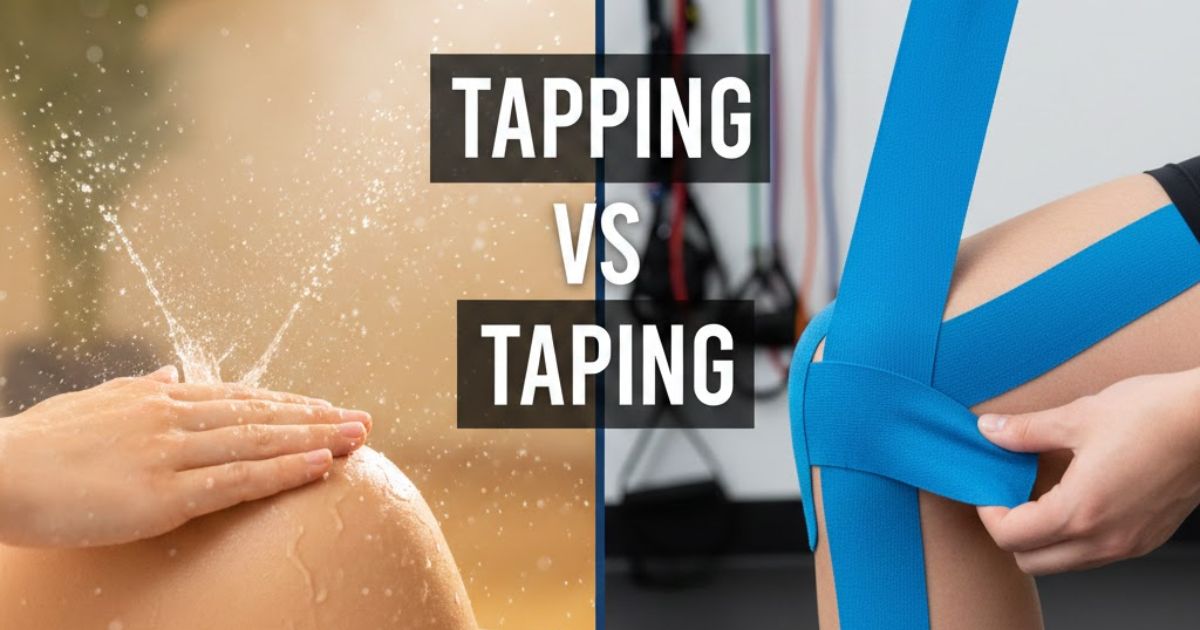
Choosing the right word in writing can make a big difference, especially with words that sound alike but have different meanings. Tapping and taping are two such words that often confuse people. While they may sound similar, their uses are very different. Tapping usually refers to lightly striking or hitting something repeatedly, often in a rhythmic way.
On the other hand, taping refers to securing or affixing something using adhesive tape, or sometimes recording audio or video onto tape. Understanding the difference between these two words is important for clear communication. In this article, we will explore when to use tapping and taping, their main uses, common mistakes, and practical examples to make your writing precise and effective.
Define Tapping
Tapping is the act of lightly striking or hitting something repeatedly. It is often done in a rhythmic pattern and is used in many areas of life. For example, musicians tap their fingers on instruments to create beats, while dancers tap their feet to follow rhythm. In martial arts, tapping can be a signal to indicate submission.
In therapy, tapping, such as in Emotional Freedom Technique (EFT), is used to reduce stress, anxiety, or emotional tension by tapping specific points on the body. Overall, tapping is not just a physical action, it can also mean accessing resources or gently interacting with objects, making it a versatile word in both everyday and professional contexts.
Define Taping
Taping refers to the process of securing, supporting, or affixing something using adhesive tape. It is commonly used in sports medicine to stabilize muscles or joints, reduce swelling, and prevent injuries. There are different types of tape: kinesiology tape for flexibility, athletic tape for compression and support, and rigid tape for immobilization.
Taping can also be used in everyday life, such as fixing boxes, posters, or other objects. Additionally, taping can mean recording audio or video on tape. Whether in healthcare, sports, or daily tasks, taping is a precise action that ensures stability, protection, or proper documentation.
How To Properly Use Tapping And Taping In A Sentence
Understanding the difference between tapping and taping is essential to use them correctly in sentences. Both words are verbs, but they describe very different actions. Using them properly ensures clear communication and avoids confusion.
How To Use “Tapping” In A Sentence
Tapping refers to lightly striking, hitting, or interacting with something repeatedly. It can also describe accessing information or resources. Examples:
- She was tapping her pencil on the desk while thinking.
- The musician was tapping his fingers on the guitar strings to keep rhythm.
- He is tapping into a new market with his latest product.
- The dancer was tapping her feet in perfect sync with the music.
Notice that tapping often implies repeated action, rhythm, or gentle interaction.
How To Use “Taping” In A Sentence
Taping refers to securing or affixing something with adhesive tape or recording something on tape. Examples:
- She was taping the box before shipping it.
- The athlete was taping his ankle to prevent injury.
- The teacher was taping the lecture to share with absent students.
- He taped the poster to the wall carefully.
More Examples Of Tapping & Taping Used In Sentences
To fully understand the difference between tapping and taping, it helps to see how they are used in everyday situations.
Examples of Using “Tapping” in a Sentence
- She was tapping her foot impatiently while waiting for the bus.
- The drummer was tapping his drumsticks to the beat of the song.
- He was tapping the screen of his phone to send a message.
- The carpenter was tapping the nails into the wood with a hammer.
- The teacher was tapping her pen on the desk during grading.
- The athlete was tapping his shoes before starting the race.
- She was tapping her fingers on the table while thinking.
- The therapist was tapping the patient’s back to relieve tension.
- He kept tapping the side of the machine to get it working.
- The chef was tapping the spices gently into the dish.
Examples of Using “Taping” in a Sentence
- The doctor was taping the patient’s wrist for support.
- The painter was taping the edges of the wall before starting.
- The athlete was taping his ankle to prevent injury.
- She was taping the gift wrap carefully on the present.
- The carpenter was taping the edges of the wood to avoid splinters.
- The mechanic was taping the wires together to keep them organized.
- The teacher was taping the lecture for students who were absent.
- The actor was taping his lines to memorize them for rehearsal.
- The artist was taping the canvas to the easel before painting.
- The seamstress was taping the fabric edges to prevent fraying.
Common Mistakes To Avoid When Using Tapping & Taping
Many people confuse tapping and taping, thinking they mean the same thing. Using them incorrectly can lead to confusion, especially in writing, teaching, or healthcare contexts. Here are the most common mistakes and how to avoid them:
1. Using Tapping and Taping Interchangeably
A frequent mistake is using tapping and taping as if they are the same. Remember:
- Tapping refers to lightly hitting something repeatedly (e.g., finger tapping, foot tapping).
- Taping refers to securing something with adhesive tape or recording on tape.
Mixing them up can cause miscommunication, particularly in instructions or therapy.
2. Assuming They Have the Same Purpose
Some assume both techniques provide the same benefits. They don’t:
- Tapping (like Emotional Freedom Technique) helps reduce stress or anxiety.
- Taping (like kinesiology taping) supports joints, stabilizes muscles, and prevents injuries.
3. Incorrect Technique
Using either method incorrectly can reduce effectiveness:
- Tapping requires hitting the correct points in the right order.
- Taping requires proper application for joint support or muscle stabilization.
Tips to Avoid Mistakes
- Learn the correct definitions and use them consistently.
- Understand the purpose: emotional relief (tapping) vs. physical support (taping).
- Follow proper techniques or consult a professional when unsure.
By avoiding these mistakes, your writing and instructions will be clear, precise, and professional.
Context Matters: When to Use Tapping vs Taping
Choosing between tapping and taping depends on the situation, purpose, and material you’re working with. Understanding the context ensures correct usage and avoids confusion.
1. Industrial Applications
In construction or manufacturing, tapping is often used to create secure connections, like tightening screws or lightly striking metal parts. Taping may be used for temporary fixes or labeling materials, but it’s less permanent in high-stress conditions.
2. Medical Applications
In sports medicine or physical therapy, taping is preferred to support joints, reduce swelling, or stabilize muscles. Tapping is used in therapies like EFT to reduce stress, anxiety, or emotional tension.
3. Electrical Applications
Taping insulates wires and prevents short circuits, while tapping is used to connect circuits or access electrical points without permanent changes.
4. DIY Projects
For home projects, taping is ideal for holding materials temporarily, painting edges, or securing objects. Tapping may be used for gentle adjustments or rhythmic actions, like hammering small nails or marking positions.
By considering the context, you can use tapping and taping correctly and achieve the intended results without mistakes.
Exceptions To The Rules: When Tapping and Taping Differ
While tapping and taping have clear standard uses, certain situations may require exceptions. Understanding these can help you apply them correctly.
1. Medical Conditions
Some patients need adjustments in taping or tapping techniques. For instance, people with hypermobility syndrome may require extra taping for joint support, while those with plantar fasciitis might use tapping to relieve foot pain.
2. Athletic Performance
Athletes often use these techniques differently based on their sport. Taping may improve stability and reduce injury risk, while tapping can enhance coordination, rhythm, or focus during training.
3. Personal Preferences
Some individuals prefer certain methods for comfort or style. For example, using colorful taping for aesthetics or performing tapping on acupressure points for stress relief.
Even with exceptions, it’s essential to know the standard rules for tapping and taping, so you can adjust safely and effectively.
Practice Exercises: Test Your Understanding of Tapping vs Taping
Now that you know the difference between tapping and taping, let’s practice using them in sentences. Choose the correct word for each blank or question.
Exercise 1: Fill in the Blank
Choose tapping or taping to complete the sentences:
- She was __________ her foot to the beat of the music.
- The athlete was __________ his ankle before the match.
- I am __________ this conversation so I can listen later.
- The plumber was __________ the leaky pipe to prevent water damage.
Answer Key:
- tapping
- taping
- taping
- taping
Exercise 2: Multiple Choice
Select the correct word for each sentence:
- He was _________ his fingers on the table while thinking.
a) tapping
b) taping - The doctor was _________ the patient’s knee for support.
a) tapping
b) taping - She was _________ the gift wrap to the present neatly.
a) tapping
b) taping
Answer Key:
- a) tapping
- b) taping
- b) taping
Conclusion
In summary, tapping and taping are two words that sound similar but have very different meanings. Tapping refers to lightly striking something, often repeatedly, while taping refers to attaching or securing something with tape.
Using the wrong word can confuse your readers or listeners, so it’s important to choose the correct one based on the context. By understanding these differences and practicing with examples, you can improve your writing, speaking, and overall communication skills.
Key Takeaways
- Tapping = lightly striking or hitting something repeatedly.
- Taping = affixing or securing something with adhesive tape or recording on tape.
- Always consider context before using either word.
- Avoid common mistakes like using them interchangeably.
- Practice using these words in sentences to reinforce correct usage.
FAQs
What is the difference between tapping and taping?
Tapping is lightly striking something repeatedly, while taping is securing something with adhesive tape or recording on tape.
Can tapping and taping be used interchangeably?
No. Using them interchangeably is a common mistake because their meanings and applications are different.
When should I use tapping in a sentence?
Use tapping when referring to lightly hitting, striking, or accessing something repeatedly, like tapping your fingers or tapping a resource.
When should I use taping in a sentence?
Use taping when applying tape to secure or support something, or when recording something on tape or video.
What are common mistakes to avoid with tapping and taping?
Avoid using them interchangeably, assuming they have the same benefits, or not following proper technique in context.
Read More Articles: Totalling or Totaling: Which Spelling Is Correct (and Why It Matters)