
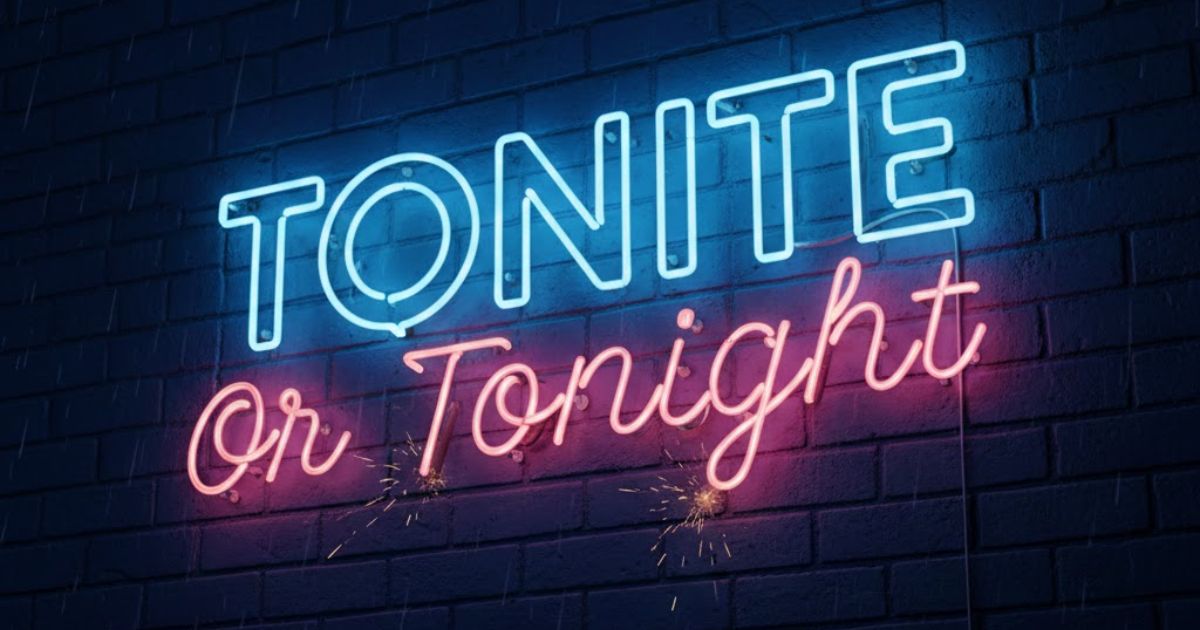
Have you ever stopped while writing a message and wondered, should I write “tonite” or “tonight”? You’re not alone. Both words sound the same, and you’ll see them often in texts, captions, and even ads. However, only one spelling is correct in standard English. Tonight is the proper word used in formal and informal writing, while tonite is a casual shortcut mostly used in texting or marketing.
Because of this, many people get confused about which one to choose. In this article, you’ll learn the real difference between tonite vs tonight, when each spelling is acceptable, and which one you should avoid in professional writing. By the end, you’ll use the right spelling with confidence.
What Is “Tonite”?
Meaning
Tonite is an informal and nonstandard way to write tonight. It has the same meaning: this evening or during the night of today. However, it is not the correct spelling in standard English.
How It’s Used
People mostly use tonite in casual writing. For example, you may see it in:
- Text messages
- Social media posts
- Song titles
- Marketing slogans
- Ads and posters
However, it is rarely used in formal writing, and when it is, it is usually considered incorrect.
Where It’s Used
You will mainly find tonite in:
- Informal American English
- Branding and advertising
- Pop culture
But you should never use it in:
- Academic writing
- Professional emails
- Formal documents
Examples in Sentences
- “See you tonite 😊”
- “Big sale tonite only!”
- “Party tonite at my place!”
⚠️ These examples are very casual, so they should not be used in essays, official emails, or school work.
Historical / Usage Note
The word tonite became popular in the early 1900s. During that time, many people wanted to make spelling shorter and quicker, especially for signs, headlines, and ads. Still, it was never accepted as a correct spelling in standard dictionaries.
What Is “Tonight”?
Meaning
Tonight is the correct and standard spelling. It means this evening or during the night of today. This is the word you should use in both speaking and writing.
How It’s Used
Unlike tonite, tonight works in every type of writing. For example, people use it in:
- Daily conversations
- Text messages
School and university work - Professional emails
- Articles, blogs, and books
So, it is always a safe choice.
Where It’s Used
Tonight is used everywhere, including:
- American English ✔️
- British English ✔️
- Global English ✔️
It is accepted in both formal and informal situations.
Examples in Sentences
- “I’m studying tonight.”
- “We have a meeting tonight.”
- “Tonight is very important for the team.”
Grammar Notes
Tonight can be used in two ways:
- As an adverb: “She’s working late tonight.”
- As a noun: “Tonight is the final match.”
Historical / Usage Note
The word tonight comes from Old English. Over time, the words joined together and became one correct word. Today, it is the most accepted spelling in all English-speaking countries.
Key Differences Between Tonite and Tonight
Even though tonite and tonight sound the same, they are not equal in writing. The biggest difference is simple: tonight is correct, but tonite is not standard English.
People often use tonite as a shortcut in casual texting or creative ads. However, in school, work, and professional writing, it can look wrong and careless. On the other hand, tonight is accepted everywhere and works in every situation.
So, if you want your writing to look clear, correct, and professional, you should always choose tonight.
Comparison Table
| Feature | Tonight | Tonite |
| Correct spelling | ✅ Yes | ❌ No |
| Type of English | Standard English | Informal / Nonstandard |
| Used in formal writing | ✅ Yes | ❌ Never |
| Used in texting | ✅ Yes | ✔️ Sometimes |
| Accepted in dictionaries | ✅ Yes | ❌ No |
| Professional use | ✅ Safe | ❌ Risky |
| Meaning | This evening / this night | Same meaning (informal) |
Real-Life Conversation Examples
Sometimes, the easiest way to understand tonite vs tonight is to see how people use them in real conversations. These examples clearly show that tonight is the correct spelling, while tonite is only used in casual writing.
Dialogue 1 (Work Email)
A: “Should I write tonite in this email?”
B: “No, use tonight. It’s a work email.”
✅ Lesson: Always use tonight in professional writing.
Dialogue 2 (School Writing)
A: “Why did my teacher mark tonite wrong?”
B: “Because it’s not standard English.”
✅ Lesson: Tonite is incorrect in academic writing.
Dialogue 3 (Texting a Friend)
A: “Movie tonite?”
B: “Sure! What time?”
✅ Lesson: Tonite is okay in casual texting.
Dialogue 4 (Advertising / Posters)
A: “This poster says ‘Show Tonite!’”
B: “That’s just for style, not grammar.”
✅ Lesson: Ads often use tonite to look short and catchy.
When to Use Tonite vs Tonight
Choosing between tonite and tonight becomes easy when you think about the situation. Both words have the same meaning, but only one is correct in standard English.
Use Tonight when:
You should use tonight in all formal and professional writing. It is always correct, so you never have to worry.
✔️ Writing emails
✔️ School or university assignments
✔️ Blog posts and articles
✔️ Business messages
✔️ Any formal or official documents
✔️ When you are unsure which spelling to choose
Examples:
- “I’ll call you tonight.”
- “The deadline is tonight.”
- “We have a meeting tonight.”
Use Tonite only when:
You can use tonite only in very casual writing. People mainly use it for style or quick typing.
✔️ Texting close friends
✔️ Social media captions
✔️ Fun or creative posts
✔️ Marketing slogans or ads
Examples:
- “Movie tonite?”
- “Game night tonite 🎮”
- “Big sale tonite only!”
Easy Memory Trick 🧠
Here’s a quick trick to remember the difference:
➡️ Tonight = Right ✅
➡️ Tonite = Text 📱
So, if your writing matters (school, work, emails), always choose tonight. However, if you’re just texting a friend, tonite can be okay.
Fun Facts & History
1. Why “Tonite” Still Exists
Even though tonite is not correct in standard English, it still appears today. This happens because advertisers and marketers like it. Since it is shorter, it looks more catchy on posters, signs, and headlines.
2. Spellcheck Shows the Truth
Most spellcheck tools underline tonite as a mistake. However, they never mark tonight as wrong. This is a simple sign that tonight is the correct spelling.
Conclusion
The difference between tonite and tonight is simple once you understand it. Tonight is the correct and standard spelling, and you can use it in every type of writing. It works in emails, school work, articles, and professional communication without any risk.
On the other hand, tonite is an informal and nonstandard spelling. People mostly use it in casual texting, social media, or advertising for style. However, it can look incorrect and unprofessional in formal writing.
So, when in doubt, always choose tonight. It is the safest and most accepted option. Save tonite only for relaxed situations where grammar does not matter much.
FAQs About Tonite vs Tonight
Is “Tonite” correct?
No. Tonite is an informal and nonstandard spelling of tonight. It is mostly used in casual texts, social media, or advertising, but it is not correct in formal writing.
Can I use “Tonite” in emails?
No. Always use tonight in emails, professional messages, or school assignments. Using tonite in these situations can look unprofessional.
Do “Tonite” and “Tonight” mean the same thing?
Yes. Both mean this evening or during the night of today, but only tonight is correct in standard English.
Why do people use “Tonite”?
People use tonite because it is shorter, looks catchy, and is often used in advertising, headlines, or casual texting.
Is “Tonight” used in formal English?
Yes. Tonight is the correct spelling for all types of writing, formal, informal, professional, or academic.
How can I remember the difference between Tonite and Tonight?
Use this simple trick:
➡️ Tonight = Right ✅
➡️ Tonite = Text 📱
If it matters, always choose tonight.
Read More Articles: Christmas, Christmases, or Christmas’s – Which Spelling is Correct?