
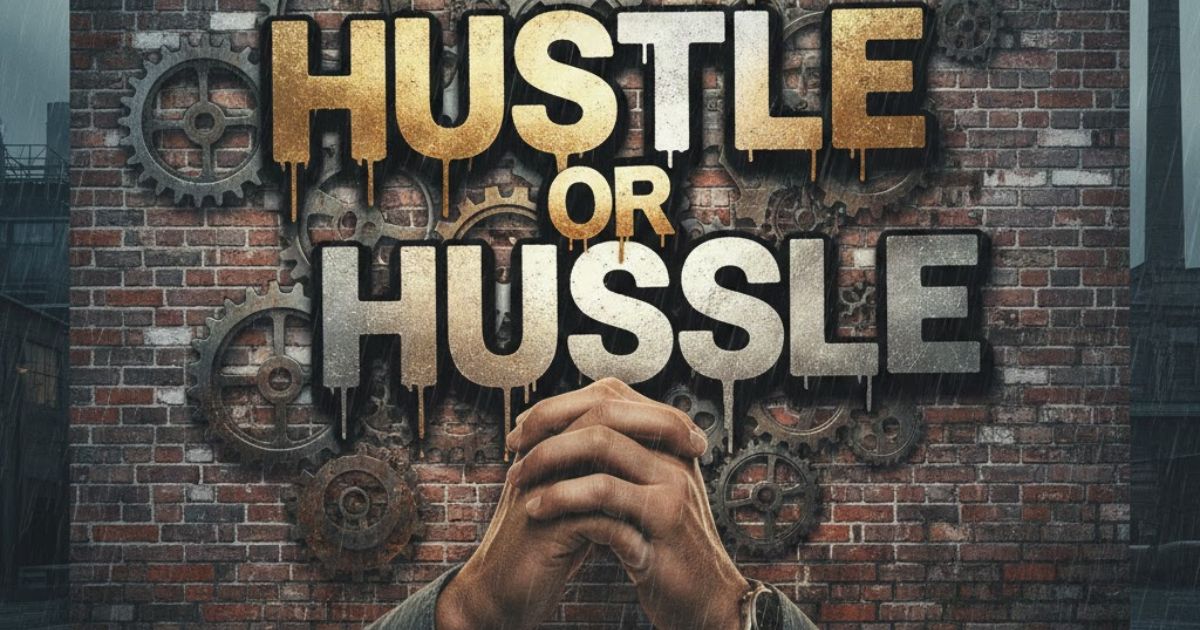
Many people get confused between hustle and hussle, especially because they sound the same. The mix-up became even more common after the late rapper Nipsey Hussle rose to fame. While both words may appear similar, only hustle is correct in standard English. Using the wrong spelling can make your writing look unprofessional or careless.
In this article, we will explain the difference between hustle and hussle, explore their meanings, origins, and cultural influence, and provide tips to remember the correct spelling. By the end, you’ll know exactly when to use hustle, why hussle is only a name, and how mastering this small detail can make your writing stronger and clearer.
Quick Takeaway
Here’s a simple summary to remember the difference between hustle and hussle:
✅ Hustle – The correct spelling in English. It means to move quickly, work hard, or strive for success. Use it in writing, business, and everyday communication.
❌ Hussle – A common misspelling. It is not recognized in dictionaries and has no meaning in standard English, except as a proper name, like Nipsey Hussle.
💡 Tip: Always use hustle for words describing effort, ambition, or action. Reserve Hussle only for referring to names or cultural references.
This quick guide helps you write confidently and avoid spelling mistakes.
Introduction: Why “Hustle vs Hussle” Confuses So Many
At first glance, hustle and hussle look almost identical, which naturally causes confusion. Many people mix them up because of pop culture, especially after the late rapper Nipsey Hussle became famous. His surname made “hussle” appear like a legitimate alternative spelling of hustle.
However, linguistically speaking, only hustle is correct in English. Hussle does not appear in major dictionaries and has no meaning beyond being a proper name. Still, the mix-up is understandable, as social media and fast typing encourage phonetic spelling. Over time, repeated use of “hussle” online has made the wrong form feel familiar.
Understanding this difference is key to writing accurately and maintaining credibility.
Understanding the Mix-Up: “Hustle” vs. “Hussle”
When you come across hussle online, it’s often either a simple spelling mistake or a reference to the late rapper Nipsey Hussle. The fast pace of social media encourages phonetic spelling, where people write words exactly as they hear them. Over time, repeated use can make the incorrect spelling appear normal.
Here’s a quick comparison:
| Word | Correctness | Meaning | Recognition |
| Hustle | ✅ Correct | To move quickly or work hard | Widely recognized |
| Hussle | ❌ Incorrect | None (except as a proper name) | Not in dictionaries |
Trends and hashtags like #HustleCulture or #HussleHard can blur the lines, but in formal writing, emails, or academic work, always use hustle.
What “Hustle” Really Means
The word hustle carries energy, effort, and determination. Its meaning changes depending on context and usage, whether as a verb or a noun, and can have positive or negative connotations.
As a Verb
“Hustle” means to move quickly or work hard to achieve a goal.
- Example: “She hustled to catch the last bus.”
- Example: “He’s been hustling to grow his online business.”
As a Noun
As a noun, hustle refers to work, effort, or an activity requiring energy.
- Example: “Running a bakery is her main hustle.”
- Example: “He earns extra income through a side hustle designing websites.”
Positive vs. Negative Shades
- Positive: Effort, drive, ambition (“She hustled to achieve her dream.”)
- Negative: Trickery, deception (“He hustled tourists for cash.”)
Today, hustle usually emphasizes determination, ambition, and hard work, especially in business and entrepreneurship.
What “Hussle” Means (and Why It’s Technically Wrong)
Let’s be clear, “hussle” is not a standard English word. It doesn’t appear in any major dictionary and has no official meaning in grammar or writing.
So why do people see it everywhere? The main reason is Nipsey Hussle, the late rapper and entrepreneur. His surname became widely known, and many fans began using “hussle” as if it were an alternate spelling of hustle. Social media, fast typing, and phonetic spelling also reinforced this trend, making the wrong form look familiar.
While it’s fine to use Hussle when referring to his name or brand, it should never replace “hustle” in formal writing, business communication, or academic work. Using the wrong spelling can reduce clarity and credibility.
“Hustle” vs. “Hussle”: Key Differences
Understanding the difference between hustle and hussle is simple once you know the facts. Here’s a quick comparison:
| Feature | Hustle | Hussle |
| Spelling | One “s” ✅ | Two “s” ❌ |
| Correct Usage | Standard English | Misspelling / Proper name only |
| Meaning | To move fast or work hard | None officially |
| Recognition | Dictionaries, schools, workplaces | Pop culture only |
| Example | “She hustles daily.” | “Nipsey Hussle inspired millions.” |
While the difference may seem small, using hustle correctly in writing builds credibility and ensures your meaning is clear. Hussle is limited to names and cultural references.
The Origins and Evolution of “Hustle”
Understanding the origin of hustle helps explain its meaning and spelling.
- Etymology: The word comes from the Dutch term hutselen or husselen, meaning to shake or move quickly.
- First Recorded Use: It appeared in the 17th century, around the 1600s.
- Original Meaning: Initially, hustle meant to push, shove, or move roughly.
- Modern Shift: Over time, the meaning evolved into working hard, striving for success, and showing determination.
Today, hustle symbolizes ambition, persistence, and effort, especially in business, sports, and entrepreneurship. From athletes to entrepreneurs, the word captures the idea of moving fast and working smart to achieve goals. Understanding this history makes it easier to remember the correct spelling and proper usage.
Synonyms and Related Expressions
Knowing synonyms and related terms for hustle can help you use the word more effectively and expand your vocabulary.
Synonyms for “Hustle”
| Context | Synonyms |
| To move quickly | Rush, hurry, dash, scurry, sprint |
| To work hard / strive | Strive, labor, push, grind, endeavor |
| To persuade aggressively | Peddle, solicit, promote, scheme |
Related Modern Terms
- Side Hustle: A secondary source of income outside your main job.
- Hustle Culture: The glorification of overworking to achieve success.
- Hustle Mindset: The drive and determination to keep improving and achieving goals.
These expressions show how hustle extends beyond motion and effort to describe a mindset, lifestyle, and cultural attitude toward ambition and productivity.
How to Use “Hustle” Correctly
Using hustle properly depends on context, whether in everyday speech, business, or informal writing.
1. In Everyday Speech
Use hustle to describe moving quickly or putting in effort:
- “I had to hustle to catch the bus.”
- “She hustled through her chores before leaving.”
2. In Business and Motivation
Use it to show hard work, ambition, or determination:
- “He built his brand from scratch with pure hustle.”
- “Her hustle in marketing helped the company grow.”
3. Common Collocations
- Hustle hard – Work relentlessly
- The daily hustle – Everyday effort or grind
- Hustle and flow – Balancing effort with creativity
- No hustle, no success – Effort equals achievement
By applying these contexts, you can write and speak confidently, showing both energy and professionalism.
Common Misspellings and Why They Stick
One of the most frequent mistakes is writing “hussle” instead of “hustle.” This misspelling persists for several reasons:
- Phonetic Spelling: People often write words how they sound. Since “hustle” has a double “s” sound when spoken, many instinctively add an extra “s.”
- Pop Culture Influence: The late rapper Nipsey Hussle made the alternate spelling widely visible. Fans and social media users began typing it as if it were correct.
- Social Media Trends: Hashtags like #HussleHard or #HustleHard creates a sense of legitimacy for the incorrect spelling.
- Cognitive Bias: Our brains remember repeated patterns. Seeing “hussle” repeatedly makes it feel familiar, even if it’s wrong.
Despite its popularity online, hustle remains the only correct spelling in formal writing, business communication, and academic contexts.
Cultural Impact: “Hustle” in Modern Life
The word hustle has grown beyond a simple verb or noun—it has become a symbol of ambition, effort, and perseverance in modern culture.
- 1970s: Popularized by Van McCoy’s disco hit “The Hustle”, giving the word a playful, energetic connotation.
- 2000s: Adopted by entrepreneurs, motivational speakers, and social media influencers to represent hard work and determination.
- Today: Hustle embodies a mindset of grinding, productivity, and side businesses. Phrases like “weekend hustle”, “grind mode”, and “never stop hustling” reflect the modern drive for success.
While the alternate spelling “hussle” gained recognition thanks to Nipsey Hussle, it is only correct as a name, whereas hustle continues to symbolize effort, ambition, and modern achievement in everyday life.
Quick Reference Table: “Hustle” Usage Examples
Here’s a handy table showing different ways to use hustle in everyday writing and speech:
| Type | Sentence Example | Meaning / Context |
| Verb | “She hustled through the crowd.” | Move quickly / act with urgency |
| Noun | “His side hustle earns extra income.” | Secondary job / extra effort |
| Idiom | “The hustle never sleeps.” | Ongoing effort / continuous work |
| Slang | “He’s got that hustle energy.” | Drive, motivation, determination |
| Business | “Her startup grew through pure hustle.” | Ambition, hard work in professional context |
This table makes it easy to see how hustle can be used in different contexts, from casual conversation to business and motivational writing.
Real-World Example: The Rise of Side Hustles
In modern life, hustle has evolved from describing fast movement to symbolizing economic independence and entrepreneurship. One clear example is the rise of side hustles—secondary jobs or income streams outside a person’s main career.
According to Statista, over 45% of Americans in 2024 reported having a side hustle, ranging from freelancing and online sales to consulting and creative projects. This shift shows how people now use hustle to represent ambition, flexibility, and financial initiative.
Side hustles have become a badge of identity, inspiring phrases like “weekend hustle” or “grind mode”, reflecting a cultural mindset of working smart, staying motivated, and continuously striving for success.
How the Word “Hustle” Shapes Motivation
The word hustle goes beyond describing action, it represents a mindset of determination, persistence, and hard work. It inspires people to take initiative, push boundaries, and pursue goals relentlessly.
Case Study: Sara Blakely
Sara Blakely, founder of Spanx, embodied hustle in her early career. She sold products door-to-door with no funding or backing before building a billion-dollar brand. Blakely often described her journey as pure hustle, relying on persistence, creativity, and hard work to succeed.
In modern culture, hustle motivates individuals in business, sports, and personal growth. Phrases like “never stop hustling” and “grind mode” reflect a mindset where effort, resilience, and action drive achievement.
By understanding hustle, people adopt a proactive approach to challenges, turning ambition into results.
FAQs About “Hustle” and “Hussle”
Here are some frequently asked questions to help you understand the difference and usage:
Is “hussle” ever correct?
No. Hussle is not a word in standard English. Use hustle in all formal writing. “Hussle” only applies as a proper noun, like Nipsey Hussle.
Why do people spell it “hussle”?
Because it sounds like it should have two “s” sounds. Pop culture and Nipsey Hussle’s fame also contributed to spreading the alternate spelling.
How can I remember the correct spelling of “hustle”?
Think of related words like hurry and bustle, both have one “s,” just like hustle.
Is “hustle” formal or informal?
It is flexible. You can use it in casual conversations or business/motivational contexts, depending on tone.
What does “side hustle” mean?
A side hustle is a secondary source of income outside your main job, such as freelancing, consulting, or selling products online.
Final Thoughts: Keep Hustling (the Right Way)
In the debate between hustle and hussle, there’s no question, hustle is the correct spelling. It’s recognized in dictionaries, schools, and professional writing, while hussle only exists as a proper name or cultural reference.
Spelling matters because it reflects credibility and attention to detail. Using hustle correctly shows that you understand both language and context. Whether you’re writing an email, essay, social media caption, or motivational post, accurate spelling strengthens your message.
Remember: “Success comes to those who hustle, not those who hussle.” Keep putting in effort, stay determined, and embrace the hustle mindset, but always spell it the right way.
Read More Articles: IGHT Mean in Text: What This Slang Means and When to Use It