
When you start your day and want to greet someone, you might wonder how to write this phrase properly. Is it one word or two words?
This question bothers many people every day. Getting your greeting right matters because it shows you care about clear communication. Whether you’re sending an email, texting a friend, or talking to your boss, proper grammar makes a difference.
Let’s solve this confusion with simple explanations you can remember easily.
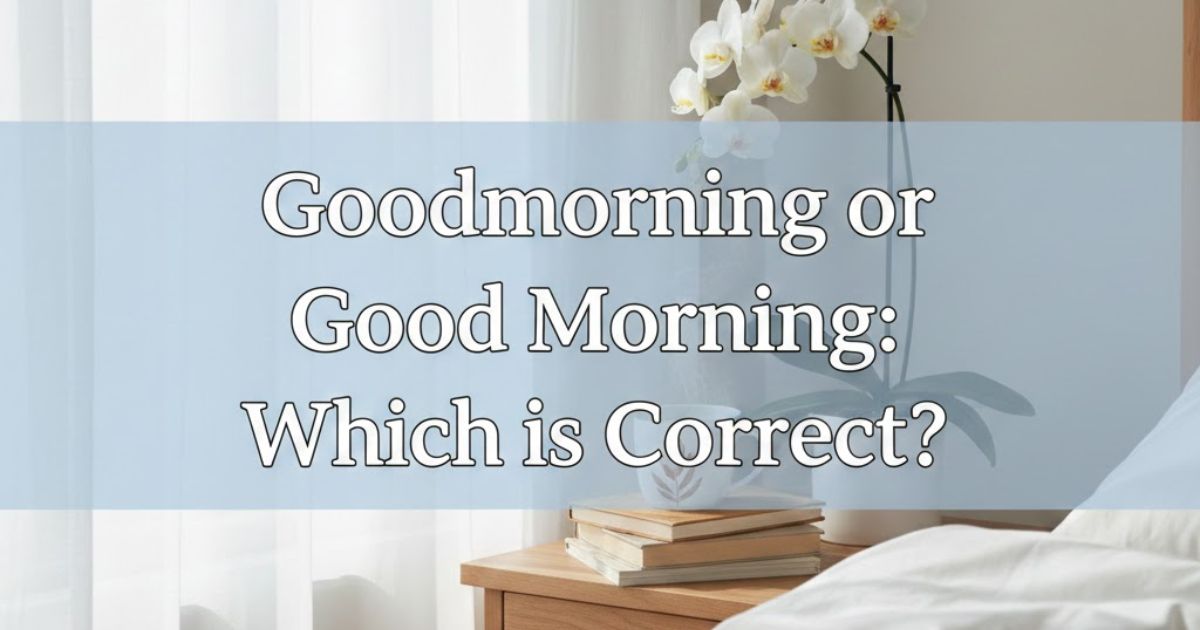
Goodmorning or Good Morning? Which is Correct?
The Simple Answer: Good Morning (Two Words)
Always write “good morning” as two separate words. This is the only correct way in English. Never combine them into “goodmorning” as one word.
The phrase has two parts: “good” describes the “morning.” In English, we keep these words apart. This rule works everywhere – in emails, texts, or conversations.
Why We Use Two Words
Think about it simply. “Good” tells us what kind of morning we’re wishing someone. It’s a describing word that adds meaning to “morning.”
This pattern appears in other phrases too, like “nice day” or “happy birthday.” We don’t write “niceday” or “happybirthday,” right? The same logic applies here.
Why “Goodmorning” (One Word) Is Wrong
Understanding Compound Words
Some English words do combine, like “breakfast” or “sunrise.” These are called compound words. However, “good morning” never became a compound word.
The phrase stays as two words because it’s a descriptive expression, not a merged term. Just because you see these words together often doesn’t mean they should become one.
Common Mistakes People Make
Many folks write “goodmorning” when typing fast. Texting habits and social media sometimes encourage shortcuts. But shortcuts don’t change proper grammar rules.
Your phone’s autocorrect might miss this mistake. Some people learned English as a second language where greetings combine differently. Still, English requires the two-word format.
How to Use “Good Morning” Correctly
In Work Emails and Professional Writing
For business emails, start with “Good morning” as your opening. Add a comma after it when addressing someone. This shows you understand professional standards.
Whether you’re writing to your manager, a customer, or a colleague, the correct form displays professionalism. Small details like this create good impressions.
In Everyday Conversations
Even when chatting with friends, the two-word rule applies. You can shorten it to just “Morning!” in very casual texts.
Casual doesn’t mean ignoring grammar completely. Using the correct version helps you build better writing habits naturally.
In Email Greetings
Start your email with “Good morning,” then the person’s name. For example: “Good morning, Tom,” or “Good morning, team,” works perfectly.
This greeting structure fits whether you’re addressing one person or a group. It creates a positive start to your message.
When to Capitalize “Good Morning”
Basic Capitalization Rules
Capitalize “Good” when it starts a sentence, like any other word. The word “morning” stays lowercase unless it’s in a title.
When “good morning” appears mid-sentence, both words stay lowercase. Example: “She said good morning to her colleagues.” This keeps your writing consistent.
In Email Subject Lines
For email subjects, you can capitalize both words: “Good Morning” or just the first: “Good morning.” Both work fine.
Pick one style and use it consistently. The key point is keeping the two-word format no matter your capitalization choice.
Real Examples of “Good Morning”
Work Examples
Here are professional ways to use “good morning” at work:
- “Good morning, everyone! Let’s start our meeting.”
- “Good morning, Ms. Johnson. Thanks for meeting me today.”
- “Good morning, team. I hope you all had a restful weekend.”
- “I wanted to say good morning before we dive into the agenda.”
- “Good morning, Mr. Smith. I appreciate your time this morning.”
Friendly Examples
Try these cheerful greetings with friends and family:
- “Good morning, sunshine! Sleep well?”
- “Good morning! Ready for a great day?”
- “Good morning, everyone! Breakfast is ready.”
- “He gave me a cheerful good morning when I walked in.”
- “Good morning, buddy! Want to grab coffee?”
What Not to Do
Avoid these common mistakes:
- ❌ “Goodmorning, everyone!” (wrong – it’s one word)
- ❌ “Good-morning, team!” (wrong – unnecessary hyphen)
- ❌ “good Morning, sir” (wrong capitalization)
- ❌ “GOOD MORNING” (too much capitalization mid-sentence)
- ❌ “Goodmorning Mr. Jones” (missing comma and wrong spacing)
These errors happen often but look unprofessional. Take a moment to check before sending important messages.
Different Ways to Say “Good Morning”
Professional Alternatives
Use these in formal settings and business contexts:
- “Greetings” – works well in official correspondence
- “Good day” – suitable for international business communication
- “Good morning, sir/madam” – adds extra respect
- “Top of the morning” – traditional but less common today
- “Hello and good morning” – combines two greetings nicely
Casual Alternatives
Try these with friends in informal settings:
- “Morning!” – quick and friendly shortened version
- “Rise and shine” – playful way to wake up someone
- “Wake up, sleepy head” – fun for close friends
- “Hey, early bird!” – great for morning people
- “Howdy, partner” – adds a laid-back Western touch
Other Times of Day
Know when to switch greetings throughout the day:
- “Good afternoon” – use after midday (around noon to 5 PM)
- “Good evening” – appropriate after 5 or 6 PM
- “Good day” – works anytime during daylight hours
- “Hello” – neutral greeting for any time
- “Greetings” – formal option for any hour
Using the right time-specific greeting shows you’re paying attention to the moment.
Good Morning vs. Other Greetings
Morning vs. Afternoon
Use “good morning” from sunrise until noon. After that, “good afternoon” becomes more appropriate.
Making this switch at the right time shows social awareness and good manners.
Morning vs. Night
“Good morning” welcomes someone to a new day. “Good night” says goodbye at bedtime. They serve opposite purposes.
Interestingly, both follow the two-word rule. You shouldn’t write “goodnight” either, though many people do.
Simple History of “Good Morning”
Where It Comes From
English speakers have used “good” in greetings for centuries. People wished each other well by hoping for a pleasant time of day.
This tradition shows kindness and politeness. The phrase has always been two words throughout its history.
Why Morning Greetings Matter
Every culture has morning greetings. They show respect and acknowledge others. Starting interactions positively builds better relationships.
Whether at work or home, acknowledging people when you first see them strengthens connections.
Common Mistakes to Avoid
Spacing Problems
The biggest mistake is writing “goodmorning” as one word. This appears in emails and texts constantly. Adding hyphens like “good-morning” is also wrong.
Both are incorrect. The phrase needs exactly one space between the words.
Capitalization Errors
Some people write “Good Morning” with both words capitalized mid-sentence. Others forget to capitalize “Good” at the start of sentences.
Stay consistent in professional writing. Check your work before sending important messages.
Missing Commas
Many forget the comma after “good morning” when addressing someone. The correct way is “Good morning, John,” not “Good morning John.”
This comma matters for proper punctuation. Also, avoid using too many exclamation points in business contexts.
How to Remember the Right Way
Easy Memory Tricks
Think of “good” describing the “morning” – two separate ideas together. Compare it to “nice day” or “happy birthday.” They all stay as two words.
Picture a space like the morning sun between the words. This visual helps you remember to keep them separate.
Using Writing Tools
Tools like Grammarly can catch errors. However, not all systems flag “goodmorning” as wrong.
Set up your writing software to recognize this mistake. This helps prevent errors in important communication.
Conclusion
Always write “Good morning” as two separate words. Never use “goodmorning” or add hyphens. This rule applies everywhere – formal emails, casual texts, and everything between. Proper greetings show respect and good grammar habits. Capitalize the first word when starting sentences and use commas correctly. With these simple tips, you’ll confidently start every day with the right greeting.
Frequently Asked Questions
Is “goodmorning” ever acceptable in English?
No, “goodmorning” is never correct. Always use two separate words: “good morning.” This applies to all situations, whether formal or casual communication.
Should I hyphenate “good morning”?
Never use a hyphen in “good morning.” The phrase doesn’t need one. Keep the words separate with just one space between them.
Can I abbreviate “good morning” in texts?
Yes, “Morning!” works fine in casual texts with friends. But when writing the full phrase, always use two words for proper grammar.
Does “good morning” stay two words in formal writing?
Yes, “good morning” remains two words in all writing types. This includes business emails, formal letters, and professional documents without exception.
How do I use “good morning” in emails correctly?
Write “Good morning,” then add the person’s name and another comma. Example: “Good morning, Sarah,” This format works perfectly for professional emails.
Read More Articles: Thoughtgenic