
We all miss phone calls sometimes. Maybe you’re in a meeting, or your mobile phone is on silent. It happens to everyone, and finding the right words can be tricky.
Saying “sorry I missed your call” works, but it gets boring fast. Plus, you can’t use the same response for your boss and your best friend. Different situations need different words.
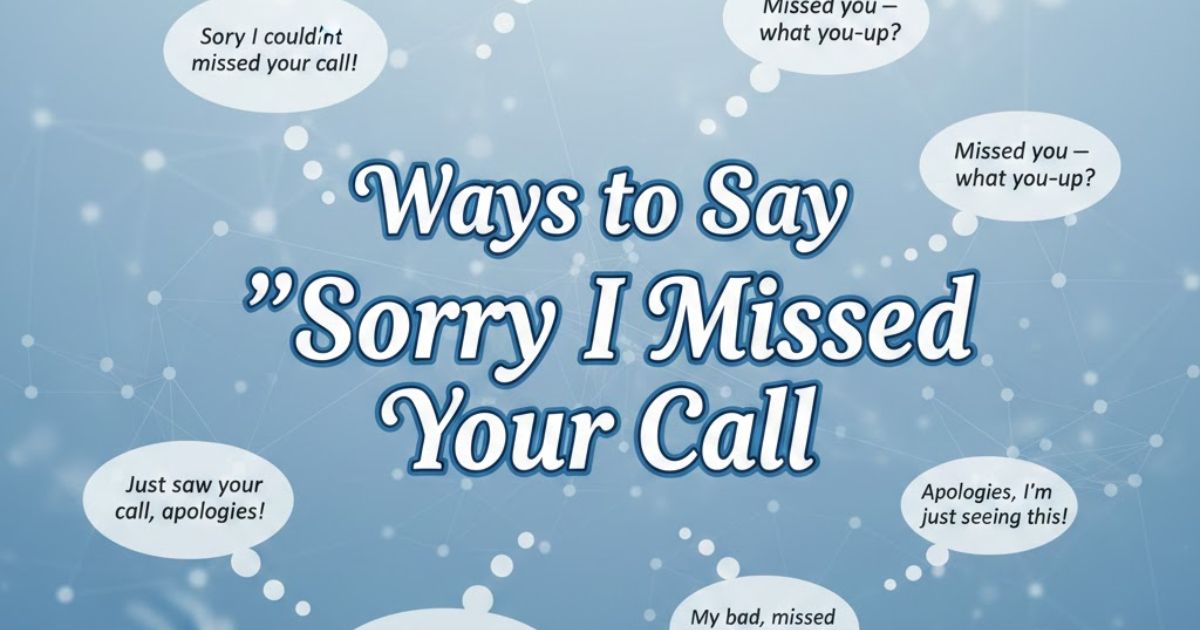
This article shows you 11 other ways to say “sorry I missed your call”. You’ll learn which phrases work for professional situations and which ones fit casual chats. Let’s make your responses better and more natural.
Why You Need Different Phrases for Missed Calls
Professional Communication Matters
Your response to a missed call shows how professional you are. When clients or your boss try to reach you, your reply creates an impression that sticks.
A good apology shows you value their time. It tells them the relationship matters to you. This small effort can strengthen your business connections and build trust over time.
Know When to Be Formal or Casual
Using formal language with friends feels weird. Using casual words with clients looks unprofessional. Understanding the difference helps you communicate better in every situation.
Business partners and colleagues expect polite, respectful responses. Your family and close friends want you to sound like yourself. Match your words to the person calling you.
Common Reasons People Miss Calls
You might miss calls during meetings or while giving presentations. Sometimes your phone sits in another room while you’re focused on important work that needs your full attention.
Other times you’re driving, in training sessions, or somewhere phones aren’t allowed. Knowing why you missed the call helps you write a better response without making excuses.
Professional Ways to Say “Sorry I Missed Your Call”
These formal phrases work great for work situations. Use them with clients, colleagues, or anyone in a business setting where you need to sound polished and respectful.
My Sincere Apologies for Missing Your Call
This phrase sounds respectful and shows you truly care. It works perfectly when you need to impress a client or respond to your boss professionally.
Use “my sincere apologies for missing your call” in emails or voicemail messages. It’s classy without being too stiff. This phrase shows you take the missed call seriously.
Usage Examples:
- “I was in a conference room presenting to investors – my sincere apologies for missing your call. I can talk now if you’re free.”
- “During my flight, I was unreachable – my sincere apologies for missing your call. Just landed and saw your message.”
- “My phone was on silent during the board meeting – my sincere apologies for missing your call. I’m available now.”
- “I just finished a long seminar and noticed your call – my sincere apologies for not being available earlier.”
I Regret That I Was Unable to Take Your Call
The word “regret” is stronger than just saying sorry. This formal phrase tells the caller you wish you could have answered their call.
This works well in professional emails to business partners. It shows the missed call wasn’t on purpose. You value talking to them and would have answered if possible.
Usage Examples:
- “Our meeting ran overtime, and I regret that I was unable to take your call. Can we reschedule for tomorrow morning?”
- “After reviewing the report, I realized I missed your call – I regret that I was unable to take your call.”
- “I was on another line when you rang, and I regret that I was unable to take your call.”
- “I regret that I was unable to take your call; I had just stepped into a consultation with a client.”
My Apologies for Not Being Able to Speak with You
This phrase fits many work situations without sounding too stiff. You can use it in quick text messages or longer emails to colleagues at work.
It’s flexible and sounds professional enough for most workplace conversations. The phrase shows you’re responsible while keeping a friendly tone that people appreciate.
Usage Examples:
- “I was handling an urgent issue in the warehouse – my apologies for not being able to speak with you earlier today.”
- “Upon returning to my desk, I noticed your call – my apologies for not being able to speak with you.”
- “I was in the lab all afternoon and missed your call – my apologies for not being able to speak with you.”
- “My apologies for not being able to speak with you when you called earlier today. I was attending a training session.”
Please Forgive Me for Missing Your Call
This phrase asks for understanding, not just forgiveness. Use it when the missed call might have caused problems or when the topic was time-sensitive.
It adds a humble touch while staying professional. This works great when you want to show extra care without getting too casual or informal.
Usage Examples:
- “Please forgive me for missing your call – I was with a patient and couldn’t step out. I’m free now to discuss everything.”
- “I just got out of the operating room and saw your call – please forgive me for missing your call.”
- “Our audit went over time, and I couldn’t step out – please forgive me for missing your call.”
- “I was in a restricted area and couldn’t take my phone – please forgive me for missing your call.”
Please Accept My Apologies for Not Being Available
This very polite phrase works best in formal settings. Use it with senior managers or important clients who tried to reach you during busy times.
It shows deep respect for their time and position. The humble approach tells them you don’t take their calls for granted and truly value their attempts to connect.
Usage Examples:
- “Please accept my apologies for not being available during the audit. I’m ready to review the findings whenever it works for you.”
- “I was in a no-phone meeting all morning – please accept my apologies for not being available.”
- “Due to a power outage, I was unreachable – please accept my apologies for not being available.”
- “Please accept my apologies for not being available; my attention was required in an emergency briefing.”
I’m Afraid I Was Too Busy to Answer When You Called
This phrase explains why you missed the call without making excuses. It’s honest and clear, which people appreciate in work situations.
It stays professional while setting boundaries about your workload. Use it when you’re juggling many tasks and need to explain your limited time simply.
Usage Examples:
- “I was finishing the quarterly report and I’m afraid I was too busy to answer when you called. Everything’s done now though.”
- “I was finalizing the budget and couldn’t step away – I’m afraid I was too busy to answer when you called.”
- “I was leading a training session and couldn’t pause – I’m afraid I was too busy to answer when you called.”
- “During the network outage, I was coordinating the response team – I’m afraid I was too busy to answer when you called.”
Casual Ways to Apologize for a Missed Call
These informal phrases work with friends, family, and close coworkers. They sound natural and relaxed without seeming rude or careless about the missed call.
Sorry for Missing Your Call
This simple phrase gets right to the point. Perfect for quick text replies when you don’t need fancy words or long explanations.
The simplicity makes it ideal for everyday situations with people you know well. It handles the missed call without making it a bigger deal than it needs to be.
Usage Examples:
- “Hey! I was at the gym with my phone in my locker – sorry for missing your call. What’s going on?”
- “Just caught your missed call, sorry for missing your call – let’s catch up soon!”
- “I was at the gym and left my mobile phone in the locker, sorry for missing your call.”
- “Sorry for missing your call, I was in the middle of a movie and didn’t hear my phone.”
I’m So Sorry I Couldn’t Pick Up Your Call
Adding “so” makes this sound more sincere while staying casual. This works great with close friends and family when you want to show you care.
It’s perfect for important people in your life. The phrase feels warm and caring without sounding stiff or overly formal for personal relationships.
Usage Examples:
- “I’m so sorry I couldn’t pick up your call – the baby was crying nonstop. Calling you back right now!”
- “I just got off the plane and saw your missed call, I’m so sorry I couldn’t pick up your call.”
- “I was in a loud café and couldn’t hear my phone, I’m so sorry I couldn’t pick up your call.”
- “My phone was buried in my bag, I’m so sorry I couldn’t pick up your call when you rang.”
I’m Sorry I Couldn’t Answer Your Call Earlier
This phrase mentions the time gap since the missed call. Use it when you’re getting back to someone hours later and want to be upfront about it.
It works for late responses where you want to show you’re now free to talk. The friendly vibe makes it perfect for personal connections and close relationships.
Usage Examples:
- “Just got out of the dentist’s office and saw your message – I’m sorry I couldn’t answer your call earlier. Is everything alright?”
- “I just noticed I missed your call from this morning, I’m sorry I couldn’t answer your call earlier.”
- “I was at the dentist’s office all afternoon, I’m sorry I couldn’t answer your call earlier.”
- “I was giving the dog a bath and missed your call, I’m sorry I couldn’t answer your call earlier.”
Sorry I Didn’t Answer
This super casual response works for very informal situations. It’s quick and simple – you’re just mentioning the missed call without any drama.
Perfect for close friends who don’t need detailed explanations. The short length keeps things light and gets straight to the actual conversation you both want to have.
Usage Examples:
- “Sorry I didn’t answer – I was watching a movie. What did you need?”
- “I just saw your missed call as I was walking out of the cinema, sorry I didn’t answer.”
- “I was jamming with the band and didn’t check my phone, sorry I didn’t answer.”
- “Sorry I didn’t answer, my phone’s been on silent mode all day.”
Did You Call?
This indirect way works as a conversation opener. It’s super laid-back and perfect when you don’t need to sound sorry at all.
The question invites them to explain why they called. Use it with friends or family where being formal would feel strange and unnecessary.
Usage Examples:
- “Just saw I missed something from you – did you call? I was painting and had music on.”
- “Saw a missed call from your number, did you call?”
- “I’ve got a notification here, did you call by any chance?”
- “Just got back from hiking, my phone was off, did you call?”
How to Choose the Right Phrase
Think About Your Relationship
Your connection with the caller decides everything. Professional contacts and clients need respectful, formal language. Your best friend needs something real and natural.
Think about workplace levels too. Missing a call from upper management needs different words than missing one from someone at your same level.
Check How Urgent It Was
Time-sensitive business topics need quick responses with a serious tone. Emergency situations require fast action and immediate callbacks to fix problems.
Regular check-ins and non-urgent personal calls give you more time. You can reply when convenient without the same pressure or need for detailed reasons.
Pick the Right Communication Method
Email responses can be longer and more detailed. Text replies should be shorter and more conversational to match the platform style.
Voicemail callbacks work well with warm, personal touches. Messaging apps like Slack need brief, efficient replies that fit workplace communication standards.
Best Practices for Responding
Respond Quickly
Return work missed calls the same day when possible. This shows you respect their time and handle communication responsibly.
After-hours calls can usually wait until tomorrow. However, urgent issues from clients might need evening responses to prevent bigger problems.
What to Say
Always mention the missed call clearly. Add a short reason only when it helps them understand, but don’t sound like you’re making excuses.
Offer specific times to talk again. Giving real availability shows you’re taking action and makes reconnecting easier for both of you.
Follow Up Well
Suggest different times that work for everyone. Multiple options show flexibility and real interest in talking with them soon.
Be clear about when you’re free. This honesty prevents frustration and helps maintain good relationships even after missing their call.
Common Mistakes to Avoid
Too Formal with Friends
Using stiff language with friends makes things awkward. Your best friend doesn’t need fancy apologies – just be real and natural with them.
Match your words to who you’re talking to. Casual people want casual responses. Save the formal stuff for work situations where it belongs.
Too Casual at Work
Being too relaxed with clients can hurt your reputation. Your career depends partly on keeping appropriate professional standards in all work communication.
Casual language with important colleagues shows lack of respect. It can cost you opportunities that take years to get back.
Apologizing Too Much
Too many apologies make you look unreliable. They make normal situations seem like huge problems when they’re really not that serious.
Too many reasons sound defensive and fake. Just mention the missed call, say sorry once, and move forward to what actually matters.
Technology Tips to Reduce Missed Calls
Set Up Good Voicemail
Your voicemail should tell people how to reach you. Give them email or text options if something can’t wait.
Update your message when you’ll be gone for a while. This honest approach helps people know when you’ll actually be available again.
Use Auto-Reply Features
Text auto-responses can let people know you saw their call. These messages give you time while telling them you’ll reply soon.
Set up email auto-replies during meetings. This tells people you’re busy and suggests better times to reach you.
Manage Phone Settings
Schedule “Do Not Disturb” for focused work time. Let important contacts get through anyway so emergency calls don’t get missed.
Call forwarding helps during known busy periods. This stops missed calls by sending them to times when you can actually answer.
Conclusion
Learning 11 other ways to say “sorry I missed your call” makes your communication much better. These alternatives help you sound right in every situation.
Use formal phrases like “my sincere apologies for missing your call” for work. Pick casual options like “sorry I didn’t answer” for friends and family.
The right words show respect and keep relationships strong. Practice these until picking the right response feels natural every time.
Frequently Asked Questions
What’s the most professional way to apologize for a missed call?
Say “my sincere apologies for missing your call” or “please accept my apologies for not being available” for work situations and important clients.
Should I explain why I missed the call?
Give short reasons only when they help. Don’t over-explain because it sounds like you’re making excuses in most work situations.
How long should I wait before responding to a missed call?
Reply to work calls the same day. Personal calls can wait longer, but same-day responses show good habits and respect.
Is it okay to respond to a missed call via text instead of calling back?
Text works for casual relationships. Work situations usually need real callbacks unless the person prefers text or email instead.
What if I’ve missed multiple calls from the same person?
Mention all missed calls and offer to talk immediately. Multiple misses need extra effort and real plans to stop it from happening again.
Read More Articles: Thoughtgenic