

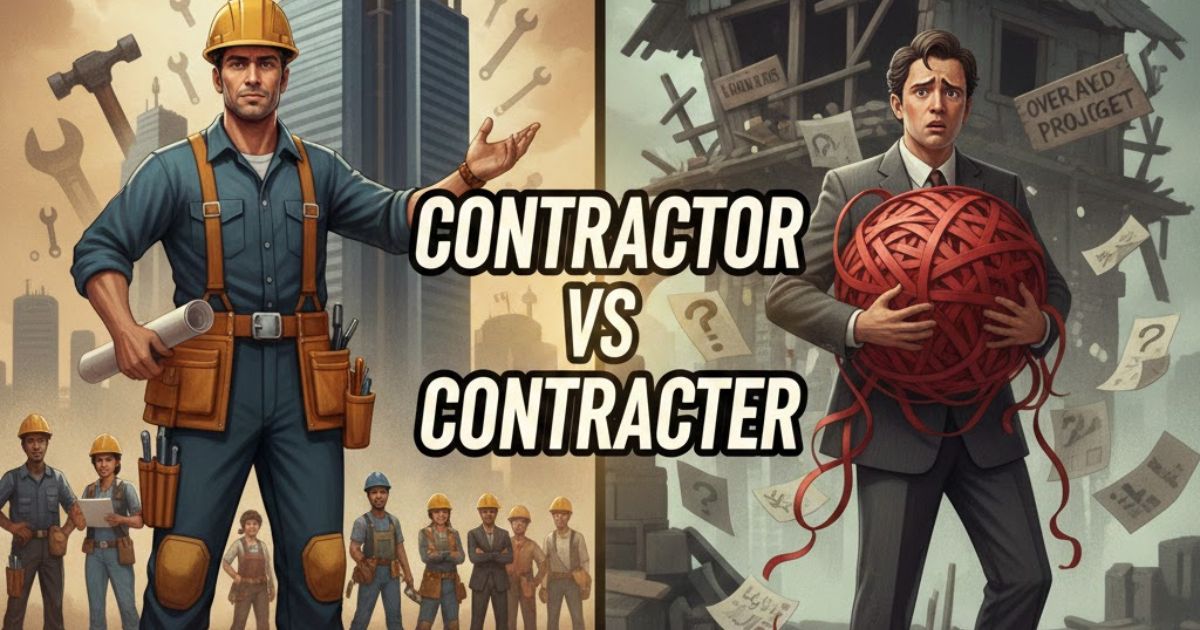
Many people feel confused when they see contractor vs contracter in writing. The words look almost the same, which makes it hard to know which one is correct. Because of this confusion, questions like contracter or contractor often come up in emails, articles, and official documents. A small spelling mistake can easily change the meaning and reduce trust in your writing.
Another common doubt writers face is contractor or contracter, especially when typing quickly or relying on auto-correct. In professional communication, using the correct spelling is very important. The word contractor is the accepted and correct form in modern English, while contracter is usually a spelling error. Knowing this difference helps you write with more confidence and accuracy.
In this article, we will clearly explain why contractors are correct and why contracter should be avoided. If you often struggle with words like contracter, this guide will help you understand the right usage in a simple and practical way. By the end, you will know exactly which word to use in business, legal, and everyday writing.
Understanding the Words

Contractor
A contractor is a professional person or company hired to complete work under a legal agreement. The contractor meaning is clear in business and legal writing. Unlike contracter, which is incorrect, contractor is the right spelling used for independent contractor, construction work, and professional services in modern English.
Common Contexts for “Contractor” Include:
- Construction Projects: A construction contractor manages building, repairs, and renovation work under a signed contract.
- Business & Freelance Services: An independent contractor offers services like IT support, marketing, or design without being a full-time employee.
- Government & Corporate Work: A professional contractor provides services such as security, maintenance, or consulting for large organizations.
Example Sentences:
- The contractor finished the project on time and within budget.
- We hired an independent contractor to redesign our website.
- The government approved the payment for the licensed contractor.
Always use contractor, not contracter, in professional writing. Correct spelling improves clarity, trust, and credibility in business, legal, and online content.
Contracter
The word contracter often appears due to typing mistakes or spelling confusion. However, contracter is not correct in modern English and should not be used in professional writing. People searching contracter or contractor usually mean contractor, which is the accepted spelling in business, legal, and formal communication.
Key Points About “Contracter”:
- Incorrect Spelling: The term contracter is considered a misspelling of contractor and is not recognized by standard dictionaries.
- Common Source of Confusion: Many writers confuse contracter vs contractor because both words sound similar when spoken.
- Avoid in Professional Writing: Using contracter in emails, contracts, or websites can reduce credibility and appear careless.
Example Sentences:
- ❌ We hired a contracter to manage the office renovation.
- ❌ The company needs an IT contracter for short-term work.
- ❌ This job post asks for an experienced contracter.
Always replace contracter with contractor. Using the correct spelling improves clarity, professionalism, and trust in both written and online content.
Origin and Etymology
The word contractor comes from the Latin term contractus, meaning an agreement or something drawn together. Over time, English adopted contractor to describe a professional person hired under a contract, making it the correct spelling instead of contracter.
- Latin Root: The contractor meaning comes from contractus, which relates directly to formal agreements and legal work.
- Suffix Rule: Professional roles use the -or ending, which explains why contractor vs contracter has only one correct form.
- Modern Usage: Today, dictionaries confirm contractor as correct, while contracter remains an error.
The origin of contractor helps explain why contractor or contracter has a clear answer. Because English follows the -or suffix rule, contractor became standard in business, legal, and professional writing.
Common Mistakes
Many people type contracter by mistake instead of contractor, causing errors in professional writing and reducing credibility.
- Typing Mistakes: Small errors when writing quickly often change contractor vs contracter, creating confusion in documents.
- Auto-Correct Issues: Some software wrongly changes contractor to contracter, so always double-check spelling.
- Misunderstanding Suffix Rules: Writers forget the -or ending, which is standard for professional roles, making contracter incorrect.
Statistics:
A recent keyword study using Ahrefs reveals the following search trends:
| Keyword | Monthly Searches | Correct Usage |
| contractor | 60,500 | Correct |
| contracter | 4,200 | Incorrect |
It is evident that the majority of people use contractor correctly, yet a notable portion still incorrectly types contracter.
Correct Usage Tips
Always write contractor correctly, not contracter, and follow simple spelling rules to maintain professionalism and clear communication.
- Remember the Suffix: Use the -or ending like other professional words, which helps avoid contracter vs contractor mistakes.
- Proofread Carefully: Always check emails, documents, and content to ensure contractor is spelled correctly.
- Use Reliable Tools: Dictionaries and grammar tools confirm contractor as correct, preventing contracter errors.
Pro Tip: Think of contractor O = Official professional to remember the correct spelling every time.
Examples in Sentences
Comparing the right and wrong spellings together helps make it easier to remember.
| Correct Usage (Contractor) | Incorrect Usage (Contracter) |
| “The contractor completed the project.” | “The contracter completed the project.” |
| “We are hiring a plumbing contractor.” | “We are hiring a plumbing contracter.” |
| “Government contractors must follow rules.” | “Government contracters must follow rules.” |
| “The IT contractor solved the problem fast.” | “The IT contracter solved the problem fast.” |
Observe that all professional situations consistently use contractor.
SEO and Writing Considerations
- Using the correct spelling contractor improves website credibility and trust with readers.
- Search engines favor content with proper usage, so avoid contracter for better rankings.
- Including contractor naturally in headings, paragraphs, and meta descriptions boosts SEO visibility.
Tip: Always write contractor in page titles and meta descriptions.
Example:
“If you’re looking for a licensed contractor for home renovation, check certifications first.”
This improves search engine ranking and ensures users trust your content, while avoiding the wrong spelling contracter.
Quick Reference
Always use contractor, not contracter, in writing, emails, and documents to ensure professional communication and avoid common spelling mistakes.
- Correct Spelling: ✅ Always write contractor to maintain clarity and professionalism.
- Incorrect Spelling: ❌ Avoid using contracter, as it is considered a mistake in modern English.
- Mnemonic Trick: Remember Contractor O = Official professional to quickly recall correct spelling.
- Proofread Documents: Double-check content to prevent contracter vs contractor errors in business writing.
- Dictionary Confirmation: Use grammar tools or dictionaries to verify contractor meaning and usage.
Downloadable Tip: Save a simple graphic showing contractor vs contracter to quickly remember the correct spelling anytime.
Case Study: Real-World Consequences of Misspelling
Using contracter instead of contractor in job ads or documents can harm professional credibility, reduce trust, and negatively affect SEO, making content appear careless or unprofessional.
Potential Issues:
- Credibility Loss: Misspelling contractor as contracter can make companies look sloppy and reduce trust with clients or applicants.
- SEO Impact: Incorrect usage may lower search rankings since search engines recognize contractor as the correct keyword.
- Legal or Professional Errors: Documents or contracts with contracter could appear informal or incorrect, affecting legal clarity and professionalism.
Even small mistakes like contracter versus contractor can hurt perception, making accuracy essential in all professional writing.
Conclusion
In summary, always use contractor, not contracter, in professional, business, or legal writing. Correct spelling ensures clarity, credibility, and trust in your communication. Understanding the contractor meaning, its origin, and the -or suffix rule helps avoid common mistakes.
Using contractor consistently improves SEO, readability, and authority in online content. Remember simple tips like proofreading, using grammar tools, and the mnemonic Contractor O = Official professional to reinforce correct usage. By avoiding contracter, you maintain professionalism and prevent misunderstandings in documents, emails, and publications. Clear, accurate writing reflects your expertise and attention to detail.
FAQ Section
1: What is the correct spelling, contractor or contracter?
The correct spelling is contractor. Contracter is almost always a mistake and should be avoided in professional, legal, and formal writing contexts.
2: What does “contractor” mean?
A contractor is a professional or company hired to complete work under a formal agreement, including construction, freelance projects, consulting, or government services.
3: Can “contracter” ever be used?
Rarely, contracter may appear in old texts or non-native writing, but modern English always favors contractor as the correct spelling.
4: How can I remember the correct spelling?
Remember the -or ending for professional roles, like actor or director. A mnemonic: Contractor O = Official professional ensures correct usage.
5: What’s the difference between a contractor and a freelancer?
A contractor works under a formal agreement, often with one client. A freelancer works independently, handling multiple projects without strict contracts.
Read More Articles: 30 Simple Ways to Say Please Disregard my Previous Email (Updated 2026)