I ignored six signs before my water heater quit. Then I came home to a garage floor with a quarter inch of standing water and a wet shop vac that never fully dried out. The tank was eleven years old, which I knew, and I’d convinced myself it had another winter in it. It didn’t.
Most tanks don’t fail suddenly. They give you weeks of warnings, and those warnings are quiet enough to explain away. Rust in the hot water. A popping sound at 6 a.m. A hot shower that runs cold faster than it used to. If you catch those early, you’re choosing a replacement on a Tuesday afternoon instead of paying emergency rates on a Sunday with no hot water and a wet floor.
Here’s the thing Texans get wrong about this: you’re not just buying a tank, you’re buying an installation. I’ve watched two neighbors replace identical 50 gallon units and pay wildly different totals because one of them had a gas line that needed rerouting. If that’s where you land, a licensed plumber cedar hill tx, can look at the venting and gas connections before you commit to anything, which is the part a big box store won’t do for you.
Start With the Calendar, Not the Tank
Water heater lifespan isn’t a mystery. The Department of Energy publishes baseline guidance on residential water heating, and the general expectation for a conventional tank is somewhere in the neighborhood of a decade, sometimes more with good maintenance and soft water, less with heavy use. That’s your first diagnostic tool, and it costs nothing.
Find the sticker on the tank. There’s usually a manufacture date in the serial number format. Once you know the age, you’re answering a different question. Under six years and acting up? You’re probably looking at a part. Past ten and acting up? You’re probably looking at a decision, not a repair.
I’d take that calendar over any single symptom. A ten year old tank that pops once a week is closer to the end than a four year old tank that pops once a month, even though the symptoms sound identical.
Rusty Hot Water and the Anode Rod Nobody Checks
Turn on the hot tap in your kitchen and fill a clear glass. If the water comes out with a brown or metallic tint while your cold water runs clear, that’s corrosion happening inside the tank, not in your pipes. The usual culprit is a spent anode rod, which is a sacrificial metal rod that dissolves so your steel tank doesn’t.
Here’s where most homeowners lose money. An anode rod is a cheap part. Replacing it on a six or seven year old tank can buy you several more years. Almost nobody does it, because almost nobody knows it exists, and once the tank itself starts rusting from the inside, the rod is no longer the problem.
My rule: rust in the hot water plus a tank over eight years old means stop troubleshooting and start pricing. Rust in the hot water on a newer tank means call someone and ask specifically about the anode rod.
The Sounds, the Puddles, and the Dropped Shower
Sediment settles at the bottom of every tank. The burner heats through it, the water trapped underneath boils, and you get that popcorn sound. It’s normal in small doses. It’s a warning when it’s loud, constant, and paired with hot water that runs out early, because the sediment layer is now stealing capacity.
Puddles are the least forgiving sign. A little moisture at the base of the tank can be condensation. A ring of water, a damp cardboard box next to the tank, or a wet drain pan is a leak. Tanks leak from the bottom when the steel gives out, and that’s not a fix. That’s a replacement, today.
And the shower. If a shower that used to last fifteen minutes now gives you eight, your effective capacity has dropped. That’s usually sediment or a failing dip tube, and it’s the symptom people notice last because it creeps in gradually.
A Ten Minute Check You Can Do This Weekend
This is the part I wish someone had handed me. Run it in order, and write down what you find.
- Age check. Read the manufacture date off the tank. Note it.
- Glass test. Fill a clear glass from the hot side only. Hold it against a white counter. Tinted means corrosion.
- Base check. Dry the floor around the tank with a paper towel, wait an hour, feel it again. Damp means leak.
- Listen test. Stand next to the tank while it’s heating. Popping is sediment, rumbling is worse.
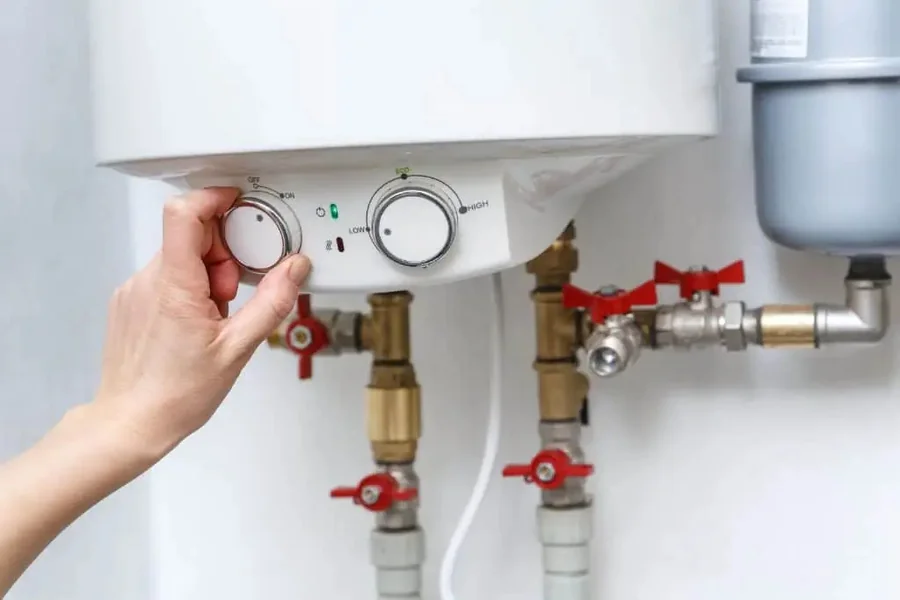
- Pressure valve. Look at the temperature and pressure relief valve and its discharge pipe. Water coming out of that pipe, even occasionally, is a real problem, not a quirk.
- Shower clock. Time how long hot water actually lasts. Compare it to last year.
Two or more flags on a tank over eight years old, and you’re in replacement territory. One flag on a younger tank, and you’re probably in maintenance territory.
Repair or Replace, Decided Honestly
I’ll give you my version of the rule. Under seven years old with a single clear fault, repair it. Failed heating element, bad thermostat, tripping breaker, those are parts. Over ten years old with two or more symptoms, replace it. Between seven and ten, it depends on what the repair costs relative to a new unit, and I’d want a real quote before deciding.
One more consideration that gets skipped: efficiency standards have moved. The Environmental Protection Agency runs the Energy Star program, and a modern unit generally outperforms a fifteen year old tank on the same usage. That doesn’t mean you should replace a working heater for the savings alone. It does mean replacement math looks better than most people assume.
| Signal | Likely meaning | My call |
| Tinted hot water, cold is clear | Internal corrosion | Check age, then decide |
| Loud popping while heating | Sediment buildup | Flush it, or replace if old |
| Water at the base or in the pan | Tank failure | Replace now |
| Hot water lasts half as long | Capacity loss or dip tube | Diagnose this week |
| Water from the relief valve pipe | Pressure or temperature fault | Call a pro today |
What Replacement Actually Involves
Replacement isn’t just swapping a cylinder. The installer deals with the gas connection, the flue or venting, the expansion tank, the drain pan, and code requirements for the discharge pipe. Those are the pieces that separate a clean job from a callback, and they’re also the pieces a homeowner can’t evaluate from a price quote alone.
Standardization around these safety and venting components is driven by organizations like the National Institute of Standards and Technology, which supports the technical standards that underpin a lot of what gets built and installed in a home. You don’t need to read any of it. You just need to know that the venting part of your quote is not optional padding.
Ask two questions when you get a quote. What’s the installed total, all in, and when can you come. If the second answer is a range longer than a week, keep calling.
The Short Version
Age first, symptoms second. Rust, rumbling, and puddles are the three that matter most, and puddles are the one that ends the debate. A ten year old tank with two flags is a planned replacement, not a repair, and the money you save by deciding early is the difference between a normal invoice and an emergency one.
Check the sticker on your tank this weekend. If it says 2013, you already have your answer, and the only question left is who you’re calling.