Key Takeaways
- Temporary support carries loads while permanent structural work is still in progress.
- Renovation plans should account for each construction phase, not only the finished building.
- Existing conditions, soil, access, weather, and nearby properties can affect the support strategy.
- Engineering, installation sequencing, inspection, and monitoring are all essential parts of the process.
Major renovations can alter the way a building carries weight long before the new structure is complete. Removing a bearing wall, opening a slab, repairing a foundation, or excavating next to an existing property can disrupt the original structural system. Carefully planned structural shoring helps create a controlled, temporary path for those loads as construction progresses.
Temporary support is not a substitute for permanent beams, walls, columns, or foundations. It is a design condition that must remain stable throughout installation, active work, inspections, and removal. For owners and project teams, recognizing this distinction can reduce avoidable delays, property damage, and safety concerns.
Why Temporary Support Matters During Renovation
A completed building and a partially demolished building do not behave the same way. During renovation, a floor may lose a supporting wall, a masonry facade may be separated from its framing, or a foundation may be exposed before replacement work is ready. Temporary support helps bridge that gap by transferring loads safely until the permanent system can take over.
Support planning also protects more than the work area. It can help safeguard workers, occupants, finished surfaces, utilities, sidewalks, and adjacent structures. The goal is to avoid unexpected movement while keeping the work sequence clear for everyone on site.
When A Renovation May Need Temporary Structural Support
Support may be required whenever construction changes a load-bearing element or creates a vulnerable temporary condition. Common examples include:
- Removing or modifying load-bearing walls, columns, beams, or floor framing.
- Creating larger openings for doors, windows, stairs, or mechanical systems.
- Repairing damaged masonry, steel, concrete, or timber members.
- Lowering a basement, underpinning foundations, or excavating beside an existing building.
- Retaining a facade while interior demolition or reconstruction takes place.
- Working on older buildings with incomplete drawings or undocumented alterations.
How Load Paths Change During Construction
A load path is the route that building weight follows to the ground. Gravity loads commonly transfer from roofs and floors to beams, walls, or columns, then through the foundations and into the supporting soil. Loads also include people, furnishings, stored materials, equipment, demolition debris, wind, vibration, and other construction-related forces.
For example, removing a bearing wall may require a temporary beam below the floor framing. Posts beneath that beam must transfer the force to a verified bearing surface or foundation. A support plan that considers only the beam, not the posts, connections, and bearing points, leaves an incomplete load path.
Common Temporary Support Systems
Vertical Posts And Shores
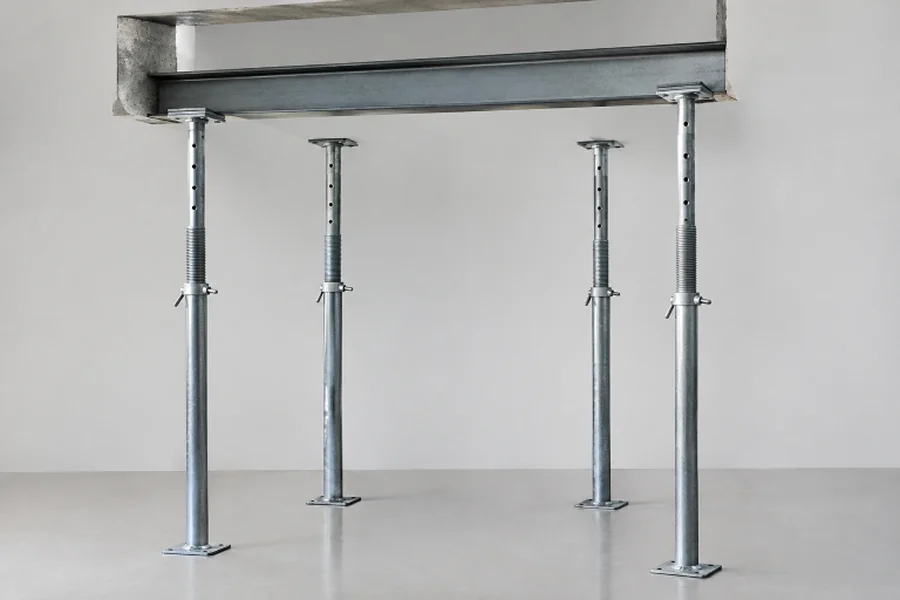
Adjustable posts, timber shores, and engineered steel supports can carry vertical loads below beams, joists, slabs, or ceilings during a limited phase of work. Their placement, spacing, bracing, and bearing surfaces must match the approved design.
Needle Beams, Rakers, And Bracing
Needle beams can transfer wall loads to temporary supports during openings or foundation repairs. Rakers and other lateral bracing systems help resist sideways movement, which can be especially important for masonry walls, facades, and partially altered frames.
Frames, Towers, And Excavation Support
Transfer beams, shoring towers, and temporary frames may be used where loads are heavier or access is limited. Excavation support serves a related but different purpose by stabilizing soil and protecting nearby foundations, utilities, and public areas around an open cut.
A Step-By-Step Planning Process
- Review records and inspect conditions.Gather drawings, surveys, prior repair information, and evidence of cracking, water damage, corrosion, deflection, or settlement.
- Map existing and temporary load paths.Identify what carries loads now, what will change, and how each phase will remain supported.
- Prepare engineered documents.Include support locations, member sizes, connections, bearing details, installation order, inspection points, and removal criteria.
- Follow the approved sequence.Do not cut, relocate, loosen, load, or remove temporary members without appropriate authorization.
- Inspect and remove deliberately.Confirm permanent work has achieved the required capacity before temporary support is released.
Local requirements can shape this process. For example, New York City guidance for shoring and underpinning calls for pre-construction reporting and monitoring programs where support of excavation affects adjacent structures, reinforcing the value of documenting conditions before work begins.
How Site Conditions Affect The Plan
A support system cannot simply be copied from one site to another. Older buildings may hide previous alterations or weak connections. Shallow footings, slabs, masonry foundations, and deep foundations can respond differently to new temporary loads. Soil type, groundwater, vibration limits, weather exposure, restricted access, and nearby occupied buildings may also change the equipment, sequence, and monitoring approach.
Monitoring Movement And Site Conditions
Monitoring provides the project team with information to guide field decisions. Depending on the work, a plan may use crack gauges, survey points, inclinometers, vibration monitors, load readings, and documented visual inspections. In July 2026, emergency crews installed temporary shoring and beams after columns buckled during a Manhattan office-to-residential conversion, illustrating why stabilization, investigation, monitoring, and permanent repair should be treated as separate stages.
Common Planning Mistakes To Avoid
- Beginning demolition before the temporary condition has been reviewed.
- Placing posts on a slab or surface that has not been verified for the added load.
- Ignoring materials, equipment, debris, or weather-related loads.
- Changing the construction sequence without engineering review.
- Failing to inspect jacks, connections, braces, and bearing points.
- Removing support before the permanent structure is ready.
Questions Owners And Project Teams Often Ask
Is Temporary Support Needed For Every Renovation?
No. The need depends on the scope of work, existing structure, and temporary conditions created during construction. A qualified design professional should review structural changes before work begins.
How Long Can Support Stay In Place?
It depends on the approved design, materials, exposure, inspections, and job conditions. Support should remain in place until the permanent structure can safely carry the intended loads.
What If Cracks Or Movement Appear?
Work may need to pause while the condition is evaluated. The response can include additional support, revised sequencing, increased monitoring, or a new engineering assessment.
Final Thoughts
Temporary structural support gives renovation teams a practical way to manage changing loads without treating construction as an afterthought. Early investigation, clear load paths, careful installation, active monitoring, and deliberate removal all help make complex renovation work safer and more predictable.