Key Takeaways
- Brown or thinning grass is not automatically a lawn disease.
- Warm, humid conditions, prolonged leaf wetness, compacted soil, and poor drainage can increase disease pressure.
- Tall fescue, bermudagrass, and zoysiagrass can show different disease patterns.
- Early warning signs include circular patches, unusual leaf spots, orange residue, matted turf, and grass that remains wet for long periods.
- Proper mowing, watering, drainage, and fertility practices can reduce many avoidable lawn stresses.
A patchy or brown lawn can be frustrating, especially when Rogers weather shifts from wet and humid to hot and dry in a short stretch. The key is not to assume every faded area is a fungus problem. Homeowners looking for experienced lawn care Rogers AR can turn to 1st Impressions Lawn And Tree, a family-owned Rogers company serving Northwest Arkansas communities including Bentonville, Springdale, and Fayetteville. Its services include lawn disease treatment, fertilization, weed control, and aeration, and its turf-management background and more than 20 years of industry experience support a practical, local approach to diagnosing lawn stress.
Start by looking at the entire lawn, then inspect individual grass blades and the soil beneath them. The pattern of damage, recent rainfall, irrigation habits, grass type, shade, mowing, and fertilizer timing can all provide useful clues before any treatment is considered.
Why Lawn Disease Appears in Rogers
Rogers sits in a region where both cool-season and warm-season grasses are grown. Tall fescue is common in many residential lawns, while bermudagrass and zoysiagrass are also used where summer heat tolerance is a priority.
Disease problems often become more visible when grass is already under stress. Humidity, rain, heavy dew, evening irrigation, shade, thick thatch, and low areas that drain slowly can keep leaf blades wet longer than usual. Rogers-area lawns may also have compacted or clay-heavy soil that makes it harder for water and air to move through the root zone.
How to Tell Disease From Other Lawn Problems
Before calling a brown area a disease, compare its symptoms with other likely causes:
- Fungal disease: Look for spreading circles, rings, leaf spots, discolored blades, white growth in morning moisture, or a distinct change between healthy and affected turf.
- Drought stress: Grass may look dull, bluish-green, gray-green, or straw-colored. Footprints may remain visible after walking across it.
- Insect damage: Check whether sod lifts easily, roots are missing or chewed, or animals have been digging in the area.
- Compaction or drainage trouble: Watch for standing water, thin turf, slow recovery, and bare areas along paths or low spots.
- Fertilizer injury: Sharp streaks, scorched tips, or sudden discoloration after an application may indicate issues with product placement or application rate.
Common Lawn Diseases in Rogers, AR
Brown Patch
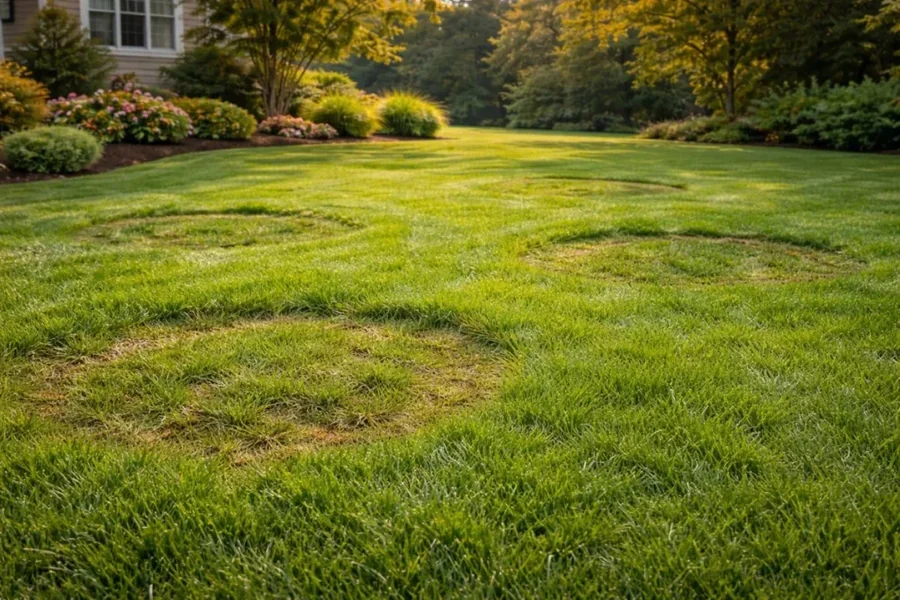
Brown patch is often associated with tall fescue during warm, humid weather. It can appear as rounded brown or tan areas, with leaf lesions sometimes visible near the edges of patches. Excess nitrogen during stressful summer weather and prolonged leaf wetness may exacerbate symptoms.
Large Patch
Large patch affects warm-season turf, including zoysiagrass and bermudagrass. Broad, irregular areas may turn yellow, orange-tan, or brown, particularly during cool, wet periods in spring or fall. Its seasonal timing can help separate it from summer diseases affecting fescue.
Dollar Spot
Dollar spot often begins as small straw-colored spots that can merge into larger irregular areas. On individual blades, lesions may appear pale or bleached. Low fertility, moisture stress, high humidity, and prolonged dew can contribute to favorable conditions. Detailed dollar spot identification information also notes that symptoms can look different depending on mowing height and turf type.
Rust, Leaf Spot, and Pythium Problems
Rust may leave orange or yellow powder on grass blades, shoes, mower tires, or hands. Leaf spot can create dark spots or streaks that eventually contribute to thinning turf. Pythium-related problems can move quickly in saturated, humid conditions and may look greasy, water-soaked, or matted. Rapid changes deserve prompt evaluation because several problems can resemble one another.
A Simple Symptom Checklist
- Are affected areas round, irregular, or ring-shaped?
- Do blades have spots, streaks, orange powder, or white growth?
- Did symptoms follow rain, irrigation, mowing, or fertilizer use?
- Is the soil overly wet, firm, compacted, or slow to drain?
- Does the turf pull up easily, suggesting root loss or grub activity?
- Are symptoms concentrated in shade, near downspouts, or in low areas?
- Is the damage spreading over several days?
Steps for Inspecting a Diseased Lawn
- Walk the whole property. Look for a pattern rather than judging one spot in isolation.
- Examine grass blades closely. Check several blades from the patch edge, where active symptoms may be easier to see.
- Compare soil moisture. Feel the soil in damaged turf and nearby healthy grass.
- Inspect roots and sod. Gently lift a small section to look for weak roots, insects, or overly wet soil.
- Review recent care. Note rainfall, irrigation, mowing height, fertilizer, and any pesticide applications.
- Take photos. Capture wide shots, close blade photos, and the boundary between healthy and affected turf.
Ways to Reduce Lawn Disease Pressure
- Mow at an appropriate height for the grass type and avoid removing too much leaf tissue at once.
- Keep mower blades sharp so the grass is cut cleanly rather than shredded.
- Water deeply when needed, preferably early enough for leaf blades to dry during the day.
- Address drainage issues in low areas, especially where Rogers’ clay-heavy soils hold water after storms, and reduce unnecessary irrigation during rainy stretches.
- Avoid heavy fertilizer applications when turf is heat-stressed or actively declining.
- Manage excess thatch, improve airflow where practical, and use soil testing to guide nutrient and lime decisions.
When to Seek Professional Help
Consider a professional diagnosis when damage spreads rapidly, recurs in the same location each year, affects a large part of the lawn, or does not improve after sensible changes to watering and mowing. A correct diagnosis matters because disease, insects, soil problems, and weather stress can create similar-looking symptoms, while the best response for each can be different.
Conclusion
Recognizing lawn disease in Rogers starts with observation, not guesswork. Check the pattern, inspect the blades, compare soil moisture levels, and consider recent weather and lawn care practices. Catching the true cause early can help protect the lawn and prevent a small stressed area from becoming a larger recovery project.