Antigravity A1 and DJI Avata 360 take two distinct paths to 8K 360° aerial filming. One emphasizes low weight, compact travel use, and a sub-250g standard configuration, while the other leans into a heavier FPV style with integrated protection and broader conventional control options. Both aim to simplify immersive capture, but they do so with different priorities in camera design, transmission, handling, and workflow. That matters for creators choosing between a portable panoramic drone for trips and quick shoots or a more enclosed platform for dynamic movement and stabilized FPV perspectives. Looking closely at how each model handles flight, live view, recording, and editing reveals which approach better fits travel videos, action footage, and interactive virtual content.
Two Different Designs for 360° Aerial Filming
Lightweight Portability, Drone Weight, and Flight Configurations
The clearest difference starts with size and weight. As a portable drone with camera, Antigravity A1 is built around convenience, with a 249g standard version and a 291g extended-range version, plus a folded size of 141.3 × 96.2 × 81.4 mm that suits travel bags and compact kits. Its maximum flight time reaches 24 minutes with the standard battery or 39 minutes with the high-capacity pack, and its range extends to 13 km or 23 km respectively. DJI Avata 360 takes a heavier C1-category approach at 455g, favoring a more FPV-oriented airframe. That makes the A1 easier to pack and launch casually, while Avata 360 feels more purpose-built for immersive flying and structured shooting sessions.
Flight Stability, Obstacle Sensing, and Propeller Protection
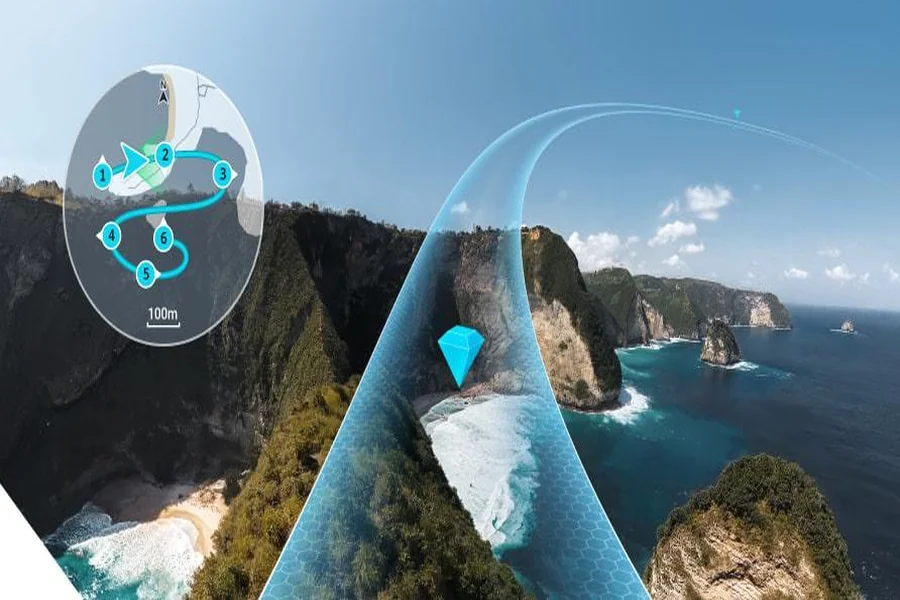
Flight behavior also reflects different design priorities. Antigravity A1 uses forward and downward binocular vision sensing with a bottom infrared sensor, supporting omnidirectional visual obstacle avoidance. That setup helps maintain stable flight during scenic routes, slower cinematic passes, and general-purpose aerial capture, especially when space is limited. It also supports GNSS positioning through GPS, BeiDou, and Galileo, with wind resistance rated at 10.7 m/s. DJI Avata 360 adds omnidirectional obstacle sensing as well, but pairs it with integrated propeller guards, giving the aircraft a more enclosed FPV character. The protected frame favors confidence around tighter routes and fast directional moves, whereas the A1 keeps a lighter, less armored travel-first balance.
Inside the Flight Control and Transmission Technology
FPV Goggles, Motion Controllers, and Traditional Flight Controls
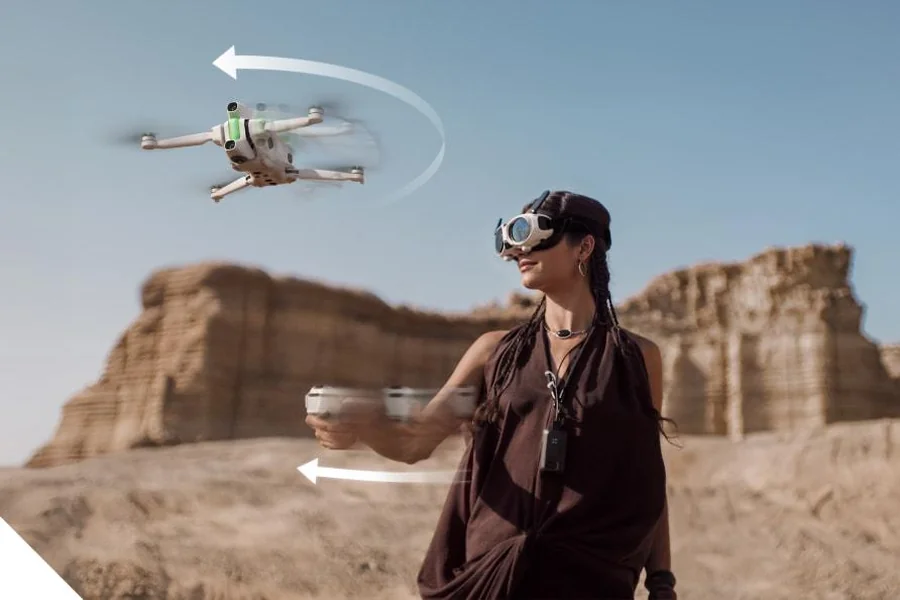
Control style shapes the flying experience as much as airframe design. Antigravity A1 supports an FPV-focused setup with Vision Goggles and a Grip Remote Controller. The goggles use dual 1.03-inch Micro-OLED displays with 2560 × 2560 resolution per eye, a 72Hz refresh rate, 90° field of view, and diopter adjustment, creating an immersive view without requiring external corrective inserts for many users. The compact grip controller keeps operation simple for direct, intuitive movement. DJI Avata 360 is broader in control philosophy. It works with FPV goggles and motion controllers, but also supports traditional controllers such as the RC 2, giving pilots a more familiar option for standard cinematic maneuvers and hybrid shooting styles.
OmniLink 360, O4+, and Real-Time Video Transmission
Live transmission affects framing confidence, especially with 360° capture where perspective choices often happen later in editing. Antigravity A1 uses OmniLink 360, delivering real-time video at 2K/30fps with a maximum transmission range of 10 km under FCC standards. That feed is designed to support immersive monitoring while keeping the aircraft compact and lightweight. DJI Avata 360 uses O4+ transmission and pushes farther on paper, offering up to 20 km under FCC or 10 km under CE, with a 1080p/60fps live feed. In practical terms, the A1 prioritizes a higher-resolution preview, while Avata 360 emphasizes smoother live video and longer stated transmission reach for FPV-oriented operation across more open environments.
Bringing 360° Drone Footage into Creative Workflows
Recording Formats, Internal Storage, and Post-Production Options
Both drones are designed for reframing-heavy workflows, but their recording profiles differ. Antigravity A1 captures 8K at 30, 25, or 24fps, 5.2K at 60fps, and 4K at 100fps, with 55MP or 14MP photo options, 170 Mbps bitrate, and support for INSV, INSP, DNG, H.264, and H.265. It includes 20GB of built-in storage and supports microSD cards up to 1TB, giving creators more flexibility for longer projects. DJI Avata 360 records 8K/60fps HDR 360° video, 120MP photos, and a swappable single-lens mode at 4K/60fps or 2.7K/120fps slow motion, with 42GB of internal storage. The result is two strong but differently tuned post-production starting points.
Using 8K 360° Footage for Travel Videos, FPV Content, and Virtual Tours
8K 360° footage gives editors freedom to crop, pan, and reframe after flight, making both models useful across several content types. For travel videos, a lighter aircraft is easier to carry between viewpoints, launch quickly, and use for sweeping overhead reveals or scenic follow shots. For FPV content, a more protected design and multiple control options support faster, more aggressive movement with fewer compromises in pilot confidence. Virtual tours benefit from high-resolution spherical capture because viewers can explore spaces interactively or editors can pull flat clips from one take. In all three cases, strong live monitoring and stable obstacle sensing matter because they reduce missed angles and make immersive aerial footage more usable.
Conclusion
Antigravity A1 and DJI Avata 360 represent two clearly defined approaches to 8K 360° drone technology. A1 focuses on portability, lower weight, flexible battery options, and an immersive FPV system built around compact travel-friendly hardware. Avata 360 centers on a more protected FPV platform with stronger conventional controller compatibility, higher live-feed frame rate, and a heavier enclosed design. Neither approach is abstract; each serves a different kind of creator. If the priority is packing light and capturing panoramic footage with minimal carry burden, the lightweight model stands out. If the goal is a guarded FPV experience with broader control choices and a more robust frame, the heavier design makes sense. The better fit comes down to how and where you plan to shoot.