
As AI agents gain the ability to act inside company systems, engineering leaders face a new kind of management problem. Alexey Tulia, Executive Leader at Coinspaid Dev, argues that the answer starts with people and ownership, and only then moves to tools.
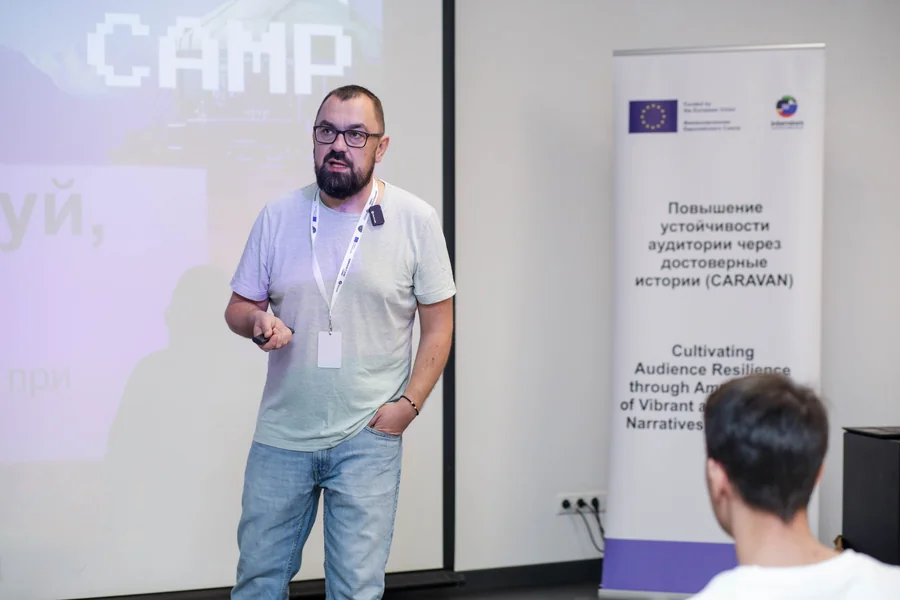
As reported by Tech Times, Tulia shared his perspective during the AI Impact in Engineering panel at Tech Race Summit 2026 in Warsaw. He described a turning point for businesses: AI that has so far assisted with drafting and analysis is starting to be connected to live systems, including sensitive data and deployment pipelines, where it can take action. Access of that kind makes permissions, and responsibility for each decision, a pressing leadership issue.
Engineers as owners of results
One of Tulia’s central ideas concerns the engineer’s role. AI is already accelerating coding and prototyping, and he believes the time saved should be spent on deeper work. Engineers can learn more about the business problem they are solving and stay with their work once it is running in production, taking responsibility for how it performs there.
Leaders play a key part in making this happen. When a team understands the business context and knows exactly what outcome is expected, it can be judged on what matters: whether the result is correct, maintainable, secure and stable in operation. The sheer amount of code produced says little about any of that.
A smaller team with a larger reach
Tulia expects this shift to deepen over the next few years. By 2029, he predicts, smaller engineering teams will oversee larger areas of responsibility, and AI will write most of the code that runs in production. Checking that code and applying sound technical judgment will therefore carry more weight than ever.
The CTO position, in his view, will still demand deep technical skill paired with business insight. As building technology becomes easier, organisations will take on more vendors and more systems generated by AI, and leaders will have to decide which of them deserve trust. “I think technical judgment becomes even more important,” Tulia said.
Drawing the line on autonomy
Tulia illustrated the accountability challenge with a single question. If an AI agent can prepare a change and deploy it to production, should it be allowed to do so with no human approval? And if that deployment fails, who is held responsible?
His answer is that access should wait until the groundwork exists. That means controls over what the agent is permitted to do, audit logs that show what it has done, a way to stop it and a reliable path to recovery after a failed release. The principle underneath is straightforward: the further AI autonomy extends in production, the more clearly authority and human responsibility need to be spelled out. “The more authority we give machines, the more important accountability becomes,” he said.
Investing so the company can change course
Tulia’s guidance on budgets follows from the same logic. He advised CTOs to direct AI spending toward a defined organisational need, and to prioritise strong APIs, reliable data, automated testing, observability, security and flexible architecture, which together let a company introduce new technology safely. Investments in architecture and in reducing dependence on vendors may bring little immediate return, but they make it much simpler to replace a provider or revise a system when conditions change. “I don’t need to predict the future perfectly. I need to make being wrong cheap,” Tulia said.
He added that teams need room to experiment. A roadmap that uses every available resource leaves no space to evaluate a promising tool or to react when priorities shift.
A company-level answer to a global question
Tulia’s remarks came during a broader debate about whether AI capabilities are advancing faster than safety practices. In September, Anthropic CEO Dario Amodei called for slowing capability development so that safety work could catch up. Tulia brought the same concern down to the level of an individual business, asking what limits a company should set once its agents can reach production systems.
For leaders, his message leaves a clear first step: define safeguards and ownership before AI agents are granted access to critical systems. Coinspaid Dev, the independent blockchain infrastructure engineering company Tulia represents, employs more than 120 engineers, has over 11 years of industry experience and builds systems running across more than 20 blockchain networks.