

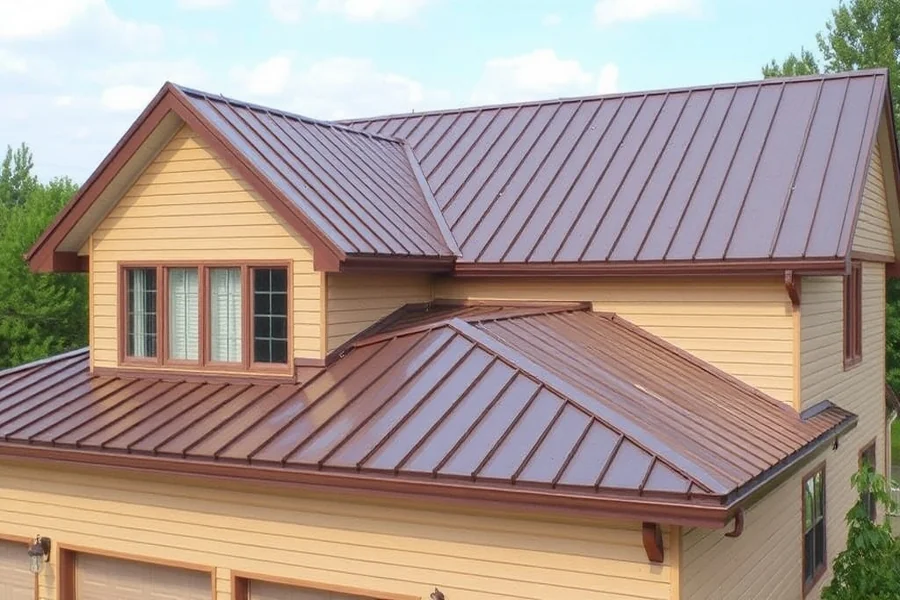
I stood in my driveway last January and counted eight loose shingle tabs, which is how most roofing decisions actually start. Not with a design vision. With a problem. If you are at that point, here is the short version: a metal roof is a different animal from asphalt in three ways that matter. It lasts far longer, it gets installed by a smaller pool of crews, and the quote you receive depends on factors most homeowners never think to ask about until the number looks wrong.
So let’s walk through how panels work, what actually moves the price, and the questions to ask before you sign.
Why Metal Handle Rain Differently Than Shingles?
Asphalt shingles shed most water and absorb the rest. They soak up a little moisture with every storm, which is exactly why they curl and crack after a decade of wet seasons. Metal does not absorb anything. Water lands on the panel and leaves.
The trade-off is at the seams. Shingles overlap enough that a small error still drains. Metal panels are joined either with exposed fasteners through the panel face or with hidden clips under a standing seam. Your roof slope, not your budget, should make that decision.
Anything steeper than a standard pitch can take a standing seam. Low-slope sections, porch roofs, and garage tie-ins need a panel that seals differently or a different material entirely. If a roofer recommends one panel everywhere on your house, ask why. They might have a reason. They might just be carrying that panel.
What Actually Moves Your Quote
Four variables do almost all the work in any roofing estimate, and you can judge a bid by which of them it names out loud.
- Roof geometry. A simple gable wastes no material. Valleys, dormers, turrets, and skylights turn every panel into a custom cut.
- Number of layers to remove. Some homes qualify for an overlay over existing shingles and some do not. Removal adds labor and dump costs.
- Panel system and gauge. Thinner steel panels cost less and dent easier. Thicker panels cost more up front and hold up better against falling branches.
- Crew availability. A two-day installation window in a dry stretch matters more than the panel brand on the box.
Here is where a lot of quotes quietly drift. Underlayment, panel gauge, trim, and warranty terms get buried in a lump sum. Ask for a line-item breakdown. Dumpsters, the plumbing boot replacements, and the trip charge are your line items too. When I compare bids on anything now, I compare the line items first and the total last, because a cheap total with no underlayment detail is not a cheap roof.
The Four-Line Framework
I sketch this grid on a legal pad before every roofing conversation, one column per bidder.
| Line | What it answers
|
| What | Panel system, gauge, and manufacturer name in writing |
| Under | Underlayment layers, ice and water barrier zones, flashings |
| Who | Installation crew or sub, and who owns the warranty |
| When | Start window, weather contingency, and completion terms |
The Budget Question, Answered Honestly
Metal sits above asphalt on price. There is no way around that sentence, and anyone who tells you otherwise is selling something. What you get for the gap is a surface that does not need replacement as often, and depending on how long you keep the house, that math can flip. Materials matter on the energy side too: the Department of Energy tracks how reflective roofing surfaces reduce heat gain in buildings, which matters less in a cool climate than in Phoenix but is still part of the value story.
What no article can tell you is the cost to install metal roof on your specific house, because your square footage, pitch, and number of penetrations are unique to your address. That is not a dodge. It is the whole reason estimates exist. Anyone quoting you a firm number over the phone without seeing the roof is guessing.
What you can do is compare bids on the same scope. Give every roofer the same list: remove or overlay, panel type you want priced, gutters handled or not. When three bidders work from one scope, the quotes become comparable.
Standing Seam vs Exposed Fastener: What I’d Pick
The two options are exactly what they sound like. Exposed fastener panels are screwed down through the face. Standing seam panels clip together and the fasteners stay hidden underneath.
Exposed fastener costs less. It also gives water a path to the screw heads. Every screw is a small hole in a roof that will need sealing eventually. On a shed or garage, that’s a reasonable trade. On the house you plan to retire in, why introduce hundreds of future leak points just to save a few dollars a square foot? I’d pay for the seam.
The hidden-fastener caveat: the clips must be installed to the manufacturer’s spec, because that is what permits the roof to move as it heats and cools. The National Institute of Standards and Technology studies how metal building components expand and contract under temperature swings, and the reason standing seam exists is to give the metal a controlled way to move instead of buckling. Poor clip spacing defeats the whole point.
What Do Roofers Wish Homeowners Knew?
Almost every roofing problem I have ever heard about traces back to the same handful of choices made before anyone touched the roof. Watch for these:
- Local building codes control attic ventilation, not your roofer’s preference. Rushing this step voids warranties.
- Charging by the square is fine. Charging by the square with an unclear cut count is not.
- Storm-chasers knock hardest after bad weather. Neighbors with new roofs are your best reference.
- Metal roofs last years longer on average, but “years longer” depends on proper installation. Material is half the equation.
One more: ask who is on the roof. A lot of companies subcontract installs, so the person you signed with is not the person sealing your fasteners. That’s not automatically bad. A specialist installer who does one thing well might beat a general crew who does ten things.
Get the panel manufacturer’s warranty, not just the installer’s, and read whether the warranty requires a specific underlayment or clip spacing. Some warranties depend on installation that nobody on your quote described.
Q: Is Metal Too Noisy When It Rains?
No, provided the system includes solid sheathing and an acoustic underlayment. Bare metal over open framing in a barn will drum. A properly assembled residential system is quieter than most people expect, especially once the attic is insulated.
Q: Can You Put a Metal Roof Over Shingles?
Often yes. The catch is weight and the condition of the existing layer. Some roofers will decline the idea entirely, one will accept. Get the trade-off, longevity versus simplicity, in writing.
Your roof is one of the few home purchases where an above-average quote is sometimes the best one. Ask about scope, panels, flashing, and long-term performance, even when the conversation gets technical, because a good contractor likes those questions. Your roofer should educate you, not just quote you.


