

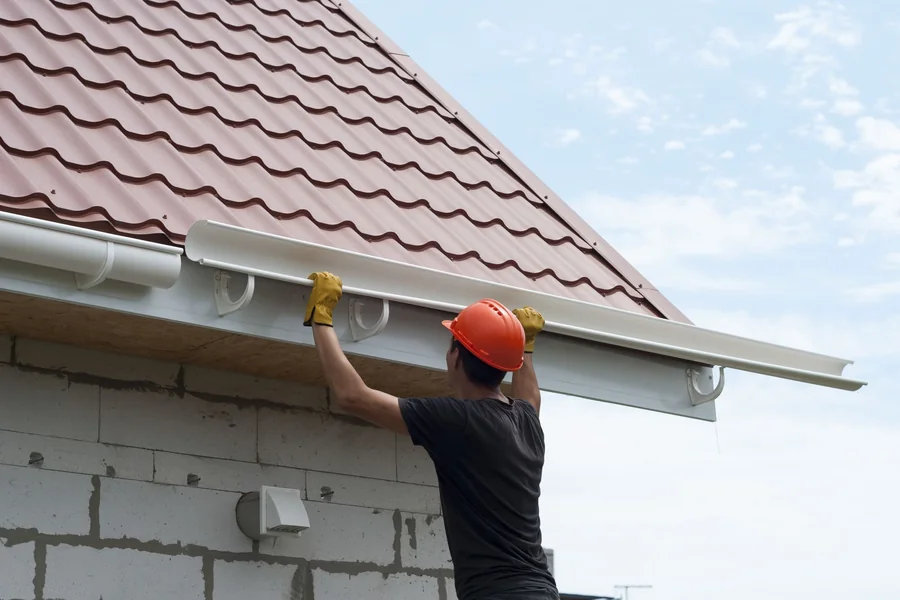
Most homeowners replace gutters only after something goes visibly, expensively wrong. A flooded basement. A cracked foundation. A wall with water stains spreading behind the drywall. The frustrating reality is that all of those problems are downstream consequences of a gutter system that sent signals weeks or months earlier and got ignored.
Gutters are not glamorous. Nobody walks past a house and thinks, “great downspout placement.” But they are genuinely one of the hardest-working systems on your exterior, and they fail in predictable ways. Catch those ways early enough, and you swap a manageable replacement job for a catastrophic repair. Miss them, and you are looking at the kind of water intrusion that FEMA calculates can cost $25,000 in damage from just one inch of standing water, according to the agency’s flood preparedness guidance at fema.gov.
Here are five signs that your gutters are telling you it is time for a replacement, not another patch job.
1. Sagging Sections That Never Recover
A gutter that sags in the middle has failed structurally. Gutters are designed to maintain a slight downward pitch toward the downspout, typically about a quarter inch of drop for every ten feet of run. When a section sags, water pools in the low spot instead of draining. That pooled water adds weight, which increases the sag, which holds more water. It is a cycle that only ends one of two ways: you replace the section, or the gutter pulls away from the fascia entirely.
Sagging is almost always caused by one of three things: hangers that have worked loose over years of freeze-thaw cycles, a fascia board that has rotted underneath the gutter bracket, or a gutter that is simply at the end of its service life. Standard aluminum gutters last roughly 20 years when properly maintained. If yours are pushing that age and sagging, a full replacement beats spot repairs every time.
You can check for this yourself by watching your gutters during a rainstorm. If water stands visibly in any section rather than moving toward the downspout, that section is sagging. Mark it with a piece of tape the next dry day and call a contractor before the first freeze locks everything in place.
2. Cracks, Gaps, or Separated Seams
Small cracks look minor. They are not. A crack in an aluminum gutter will not stay small through a Midwest winter, where daytime thaws and overnight refreezes expand metal and flex seams repeatedly. What starts as a hairline gap that leaks a thin stream of water in November becomes a split seam pouring a sheet of water down your siding by February.
The seams on sectional gutters are the most vulnerable spots. Caulk can buy you a season, but repeated expansion and contraction breaks fresh sealant down fast. If you are finding cracked seams every fall, that is the system telling you it is done. Seamless gutters eliminate most of this problem because they run in a single continuous piece between corners, removing the joints where sectional systems almost always fail first. Run your hand along the inside of your gutters on a dry day. Discoloration, orange rust streaks, or visible daylight showing through a seam are all immediate replacement flags.
3. Water Stains or Mold on Your Fascia and Siding
Your fascia board sits directly behind your gutter. When a gutter leaks or overflows consistently, that fascia takes the hit first. Soft, spongy wood along the roofline, dark water staining, or visible mold on the siding just below the gutter are not cosmetic problems. They signal that water has been escaping the channel long enough to penetrate and begin rotting the structure underneath.
This is where the cost math gets unfavorable fast. A gutter replacement is a defined, predictable job. A fascia board replacement adds cost and time. Structural wood rot that reaches the rafter tails or the wall sheathing adds significantly more. The window to act at the lowest possible price closes every week you wait.
Look for paint that is peeling in a horizontal band just below the gutter line. That pattern almost always means water is running behind or over the lip of the gutter, not through the downspout where it belongs.
4. Gutters Overflowing During Routine Rainstorms
An overflowing gutter during a severe storm is understandable. An overflowing gutter during an ordinary rainstorm is a system failure. Either the gutters are undersized for your roof’s square footage, they are pitched incorrectly, or they are clogged with debris that routine cleaning has not cleared. All three of those are fixable, but the fix is different in each case.
Undersized gutters cannot be cleaned into adequacy. A typical 4-inch-wide gutter can handle
about 1 inch of rain per hour per 100 square feet of roof. Larger roofs with steeper pitches need 5-inch or 6-inch systems. If your installer sized them incorrectly or your home has been reroofed with a steeper pitch since the gutters were installed, overflow during normal rainfall is structural, not maintenance.
Replacing undersized gutters before winter matters because snowmelt puts a sustained load on your drainage system. A gutter that barely manages a summer rainstorm will fail dramatically when 6 inches of snow starts melting over several hours.
5. Basement Flooding or Foundation Erosion at the Drip Line
This is the sign homeowners most often attribute to the wrong cause. If your basement takes on water or you see soil washing away in a band around your foundation, the instinct is to blame the foundation or the grade. The real culprit is often a gutter system dumping water at the foundation line instead of carrying it away.
Gutters are the first line of defense against roof runoff going straight into the soil beside your footings. When they fail, that concentrated volume of water saturates the ground against your foundation, works into any existing cracks, and creates hydrostatic pressure. Over seasons, this cycle damages footings that were perfectly sound when the house was built.
A simple test: walk your perimeter after the next substantial rain. If the soil looks disturbed in a line that matches your roofline, and especially if it is concentrated near a corner where two roof planes meet, your gutters are not moving water far enough from the house. That could mean clogged downspouts, disconnected extensions, or a failed gutter run that needs full replacement.
The SAGGING Diagnostic: A Quick Field Checklist
Before you call a contractor, use this six-point framework to document what you are seeing. Walk the perimeter once with your phone camera and check each item. A contractor who gives a quote based on your observations rather than a site visit is guessing. One who walks through this checklist with you is doing their job properly.
| Letter | Check | What to Look For | Likely Fix
|
| S | Sag | Standing water visible in channel | Hanger replacement or full section swap |
| A | Age | System over 15 to 20 years old | Full replacement, budget now |
| G | Gaps | Cracked seams or separated joints | Seamless replacement preferred |
| G | Gushing | Overflow during routine rain | Resize or regrade system |
| I | Interior | Basement water along foundation wall | Gutter and downspout extension audit |
| N | Nails / Fascia | Loose hangers, soft or stained fascia wood | Fascia repair plus gutter replacement |
| G | Growth | Mold, rust, or plant growth inside channel | Clean and inspect; likely replace |
Why Timing Before Winter Matters More Than You Think
Gutter replacement is a warm-weather job in most of the country. Sealants do not cure correctly in cold temperatures, and frozen fascia boards make proper bracket installation nearly impossible. Once the ground freezes and November arrives in a region like the Midwest, scheduling a quality installation becomes harder and lead times stretch.
The window is right now. According to Angi’s 2023 State of Home Spending report, regular maintenance, including gutter upkeep, was the most common home improvement project that year, cited by 39% of homeowners, a figure reported at ir.angi.com. That means a lot of homeowners are paying attention to exterior maintenance, but attention and action are different things.
If any of the five signs above match what you are seeing on your home right now, action this fall pays off across every winter that follows. For homeowners in the Illinois Quad Cities area, working with local specialists who understand regional freeze-thaw patterns makes a measurable difference. Contractors experienced with gutter installation in Moline understand the specific pitch and material requirements that Illinois winters demand, rather than applying a one-size-fits-all approach designed for a milder climate. Your gutters have been signaling for a while. The question is whether you act before the first hard freeze or after the first expensive repair bill.


