

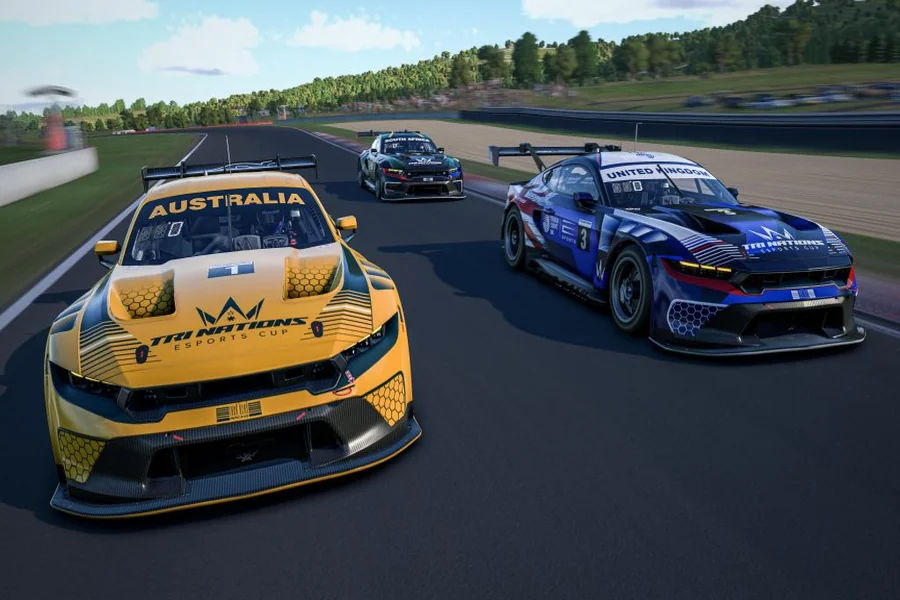
The competition offers a very different kind of gaming contest from mainstream shooters, sports releases or online slots. Every driver uses the Ford Mustang GT3 with the same fixed setup, so qualification depends on braking points, steering inputs, throttle control and the ability to repeat a quick lap under pressure.
Only ten drivers from each country will reach the final. Those 30 qualifiers will then race at Mount Panorama and Silverstone, with national points deciding which team wins the cup.
Spa gives drivers 48 hours to find one clean lap
The opening qualifier uses iRacing’s version of Circuit de Spa-Francorchamps. Drivers have two days to record their fastest time, but the length of the session does not make the task simple.
Spa is a demanding circuit for time-trial competition because its quickest lap depends on several connected sections. Carrying extra speed through Eau Rouge and Raidillon can improve the run along the Kemmel Straight, while a poor exit from La Source costs time before the lap has properly developed.
The middle sector presents a different problem. Les Combes rewards controlled braking, and the downhill sequence through Bruxelles and the corner commonly known as No Name can punish drivers who turn in too aggressively. Pouhon requires commitment, but running wide can invalidate the lap.
A fast final sector is equally important. Drivers must remain stable through Blanchimont before braking for the Bus Stop chicane. An error there wastes the entire attempt, even if the previous sectors were personal bests.
Time Attack therefore tests more than outright pace. Leading qualifiers will need to decide when to push, when to abandon a weak lap and how to manage the frustration of losing a strong run in the final corners.
The Ford Mustang GT3 keeps the machinery equal
Every entrant will drive the Ford Mustang GT3 throughout the qualifier and final. The car uses a front-engine, rear-wheel-drive layout, which creates a different balance from mid-engine GT3 models.
Drivers must control weight transfer when braking into slow corners. If too much steering lock is applied while the car is still slowing, the front tyres can lose grip and push wide. Applying the throttle too sharply on corner exit can unsettle the rear.
The fixed setup removes a large area of technical preparation. Competitors cannot gain time by changing suspension settings, gear ratios or aerodynamic balance to suit their driving style. They must adapt to the same car configuration as everyone else.
That decision makes comparisons clearer. A difference of two tenths of a second is more likely to come from the driver’s line, braking technique or use of the throttle than from hours spent adjusting the setup menu.
Fixed setups can also expose habits. A driver who normally relies on a very responsive front end may struggle with understeer, while someone who prefers a stable rear may have to be gentler when accelerating away from slower corners.
Mount Panorama will punish small errors
The first 30-minute final will take place at Mount Panorama, one of the least forgiving circuits available in iRacing. Its long straights provide opportunities to pass, but the mountain section leaves almost no room for correction.
The climb from Griffin’s Bend towards The Cutting demands patience. Drivers who attack the kerbs too hard risk hitting the wall or compromising their line for the next corner. Across the top of the mountain, Skyline begins a steep descent where the car becomes light and braking stability is difficult to maintain.
The Dipper and Forrest’s Elbow are narrow enough to turn a small slide into race-ending damage. Forrest’s Elbow also controls the exit onto Conrod Straight, so a slow run through the corner leaves a driver vulnerable to a slipstream pass.
Thirty cars will make traffic a major factor. Qualifying position will help, but drivers also need to avoid incidents during the opening lap. Contact that bends the steering or damages the car’s aerodynamics can affect the remainder of the race.
Silverstone requires a different approach
The second race moves to Silverstone, where wide corners and larger run-off areas create more opportunities for side-by-side driving. The circuit is safer than Mount Panorama in some respects, but it places a heavier load on the tyres through long, fast turns.
Maggotts, Becketts and Chapel form the most recognisable sequence. Each change of direction affects the next, and a poor line through the opening part can reduce speed all the way onto the Hangar Straight.
Drivers also need a plan for overtaking. Brooklands and the Loop offer possible moves under braking, while a strong exit from Chapel can create a slipstream opportunity into Stowe. Going off line, however, may leave less grip and a tighter entry.
Because national points are counted across both races, the Silverstone contest may change according to the Mount Panorama result. A country holding the lead could prioritise bringing several cars home. A team trying to recover may need its quickest drivers to take more risks near the front.
National scoring changes the racing decisions
Most online races focus on individual finishing position. The Tri-Nations Esports Cup asks drivers to consider how their result contributes to a ten-person national team.
A driver running eighth may gain little by attempting a low-percentage move on a teammate in seventh. Contact could cost the country two points-scoring finishes. The same driver may need to defend firmly against a rival nation, even when an individual podium is out of reach.
This creates tactical questions that do not appear in a standard public lobby. Drivers must judge when cooperation helps and when holding position allows another country to build an advantage.
Communication before the event will be useful, particularly at the start of each race and during periods of heavy traffic. There are limits, though. Every competitor controls a separate car, and unexpected incidents can disrupt any national plan within seconds.
Who can enter the qualifier?
The competition is open to eligible drivers from Australia, the United Kingdom and South Africa. Australian entrants do not need a Motorsport Australia Esports Licence for the Time Attack stage. Anyone who qualifies for the final must obtain the appropriate licence before competing in September.
That distinction keeps the initial barrier relatively low while applying formal competition requirements to the final field. Entrants should read their national organiser’s rules before attempting a qualifying time, particularly the sections covering registration, accounts, sporting conduct and eligibility.
The best-placed driver from each country will receive a Next Level Racing HF8 Pro Haptic Feedback Pad. The larger target, however, is a place in a 30-car international race where every driver has qualified through the same car and circuit combination.
With Spa deciding the teams and two very different circuits determining the result, the 2026 cup rewards a broad set of skills. One fast qualifying lap earns entry, but race judgement at Mount Panorama and Silverstone will decide which country takes the title.